

Integrated & Holistic Homeopathic Treatment for Allergic Conditions in Dubai
Comprehensive Homeopathic Care for Allergic Diseases in Dubai
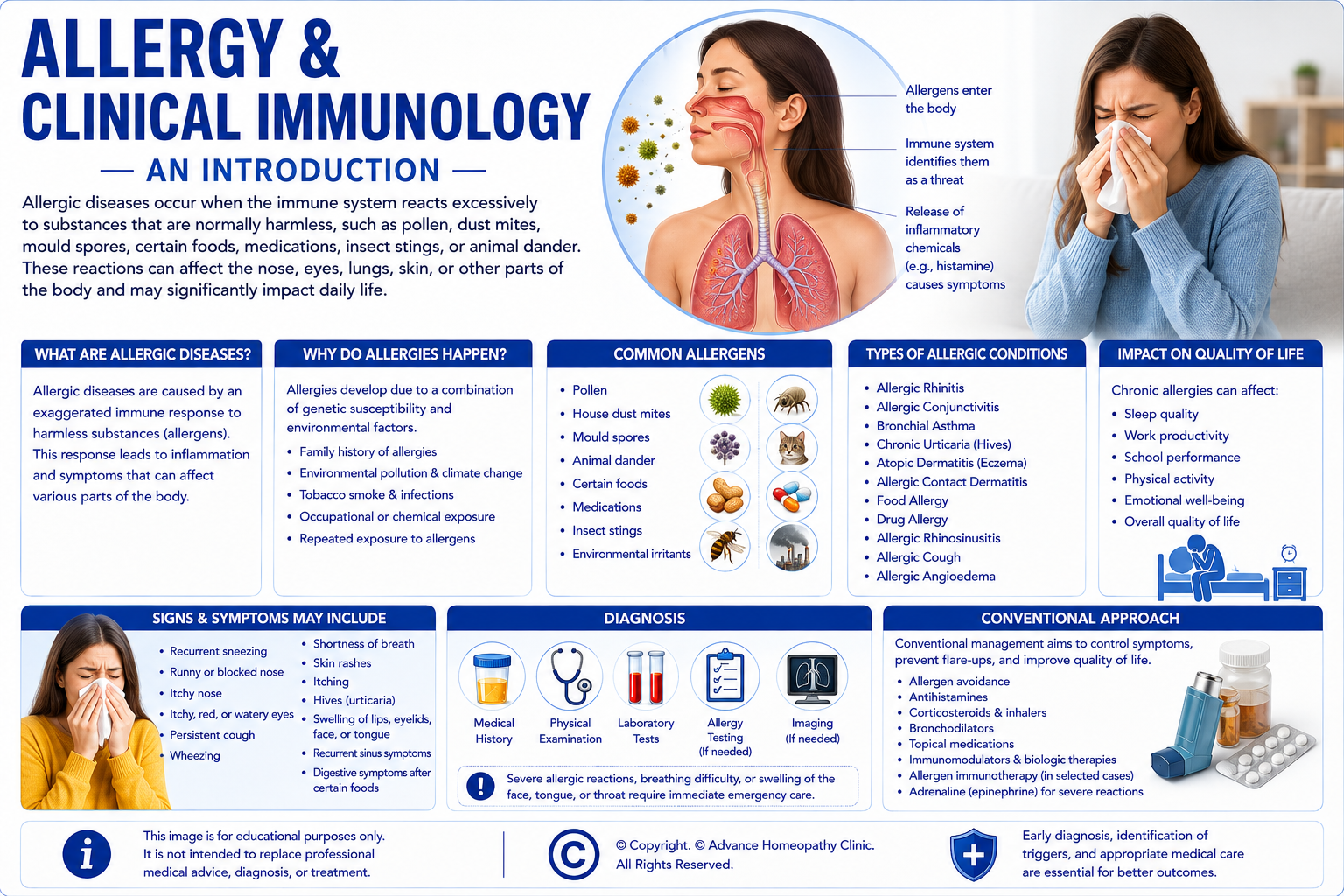
Allergic diseases are among the most common chronic health conditions affecting both children and adults worldwide. They occur when the body's immune system reacts excessively to substances that are normally harmless, such as pollen, house dust mites, mould spores, animal dander, certain foods, medications, insect stings, or environmental allergens. Depending on the type of allergy, individuals may experience recurrent sneezing, nasal congestion, itchy or watery eyes, skin rashes, persistent cough, wheezing, breathing difficulties, or swelling affecting different parts of the body.
Some allergic conditions occur only during specific seasons, while others persist year-round or recur when an individual is exposed to a particular allergen. Chronic allergic diseases can affect sleep, work productivity, school performance, physical activity, and overall quality of life. Early diagnosis, identification of allergy triggers, and appropriate medical management play an important role in controlling symptoms and reducing recurrent flare-ups.
At Advance Homeopathy Clinic Dubai, we believe that successful treatment begins with understanding the individual rather than focusing solely on the allergic diagnosis. During your consultation, our experienced homeopathic doctors perform a comprehensive medical evaluation that includes your symptom pattern, possible allergy triggers, previous treatments, associated medical conditions, family history of allergic diseases, environmental exposures, and your overall health before developing an individualized homeopathic treatment plan.
Our clinic provides individualized homeopathic care for a wide range of allergic and immunological disorders, including Allergic Rhinitis, Allergic Conjunctivitis, Bronchial Asthma, Chronic Urticaria, Atopic Dermatitis (Atopic Eczema), Allergic Contact Dermatitis, Food Allergy, Drug Allergy, Allergic Rhinosinusitis, Allergic Cough, and Allergic Angioedema.
Patients from more than 20 countries and over 100 nationalities have trusted Advance Homeopathy Clinic Dubai for individualized homeopathic care. We provide both in-clinic and online consultations, together with a Free First Consultation, allowing you to understand whether homeopathy may be an appropriate complementary approach for your condition.
Understanding Allergic Diseases
The immune system protects the body against bacteria, viruses, fungi, parasites, and other potentially harmful substances. In people with allergies, however, the immune system mistakenly identifies otherwise harmless substances, known as allergens, as a threat. This exaggerated immune response results in the release of inflammatory chemicals, including histamine, producing symptoms that may affect the nose, eyes, lungs, skin, digestive system, or multiple organs.
Allergic diseases develop due to a combination of genetic susceptibility and environmental factors. Individuals with a family history of allergies, asthma, eczema, or allergic rhinitis have a higher risk of developing allergic disorders. Environmental pollution, climate change, occupational exposure, tobacco smoke, infections, and repeated exposure to allergens may also contribute to the development or worsening of allergic diseases.
Common symptoms of allergic diseases include:
- Recurrent sneezing
- Runny or blocked nose
- Itchy nose
- Itchy, red, or watery eyes
- Persistent cough
- Wheezing
- Shortness of breath
- Skin rashes
- Itching
- Hives (urticaria)
- Swelling of the lips, eyelids, face, or tongue
- Recurrent sinus symptoms
- Allergic skin reactions following contact with specific substances
- Digestive symptoms following certain foods in susceptible individuals
Depending on the diagnosis and severity, conventional medical management may include allergen avoidance, antihistamines, corticosteroids, bronchodilators, inhalers, topical medications, immunomodulators, biologic therapies, adrenaline (epinephrine) for severe allergic reactions, and allergen immunotherapy in selected patients. Individuals experiencing breathing difficulty, severe facial or tongue swelling, or symptoms of anaphylaxis require immediate emergency medical attention.
At Advance Homeopathy Clinic Dubai, our homeopathic doctors conduct a detailed assessment that extends beyond the diagnosis. We evaluate the pattern of symptoms, possible allergy triggers, previous treatments, family history, associated medical conditions, environmental factors, and the individual's overall health before recommending an individualized homeopathic treatment plan. Homeopathy may be considered as a complementary approach alongside conventional medical care where appropriate.
1. Allergic Rhinitis
What is Allergic Rhinitis?
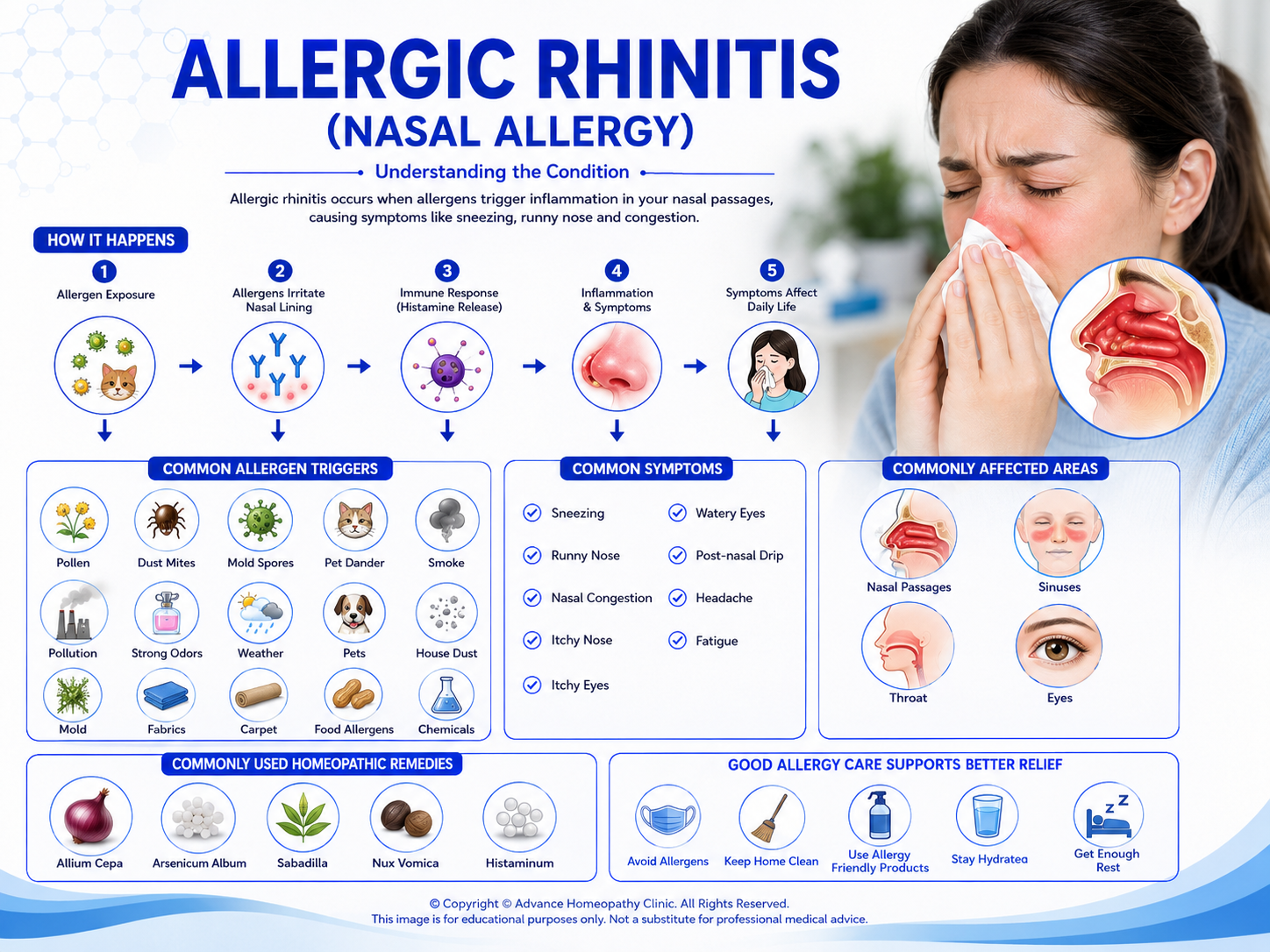
Allergic rhinitis is one of the most common allergic diseases and occurs when the immune system reacts to airborne allergens such as pollen, house dust mites, mould spores, or animal dander. This allergic reaction causes inflammation of the lining of the nose, resulting in recurrent sneezing, watery nasal discharge, itching, and nasal congestion. Symptoms may occur seasonally or persist throughout the year depending on the individual's allergy triggers.
Although allergic rhinitis is not a life-threatening condition, persistent symptoms can interfere with sleep, concentration, work productivity, school performance, and overall quality of life. Many individuals with allergic rhinitis also have associated conditions such as asthma, allergic conjunctivitis, sinusitis, or atopic dermatitis.
Common Symptoms of Allergic Rhinitis
- Recurrent sneezing
- Runny nose
- Nasal congestion
- Itching of the nose
- Postnasal drip
- Itchy throat
- Reduced sense of smell
- Mouth breathing due to nasal blockage
Common Causes of Allergic Rhinitis
- House dust mites
- Pollen
- Animal dander
- Mould spores
- Environmental pollution
- Occupational allergens
- Family history of allergic diseases
Conventional Treatment for Allergic Rhinitis
Treatment focuses on reducing inflammation, controlling symptoms, and minimizing exposure to allergy triggers. Depending on symptom severity, conventional management may include allergen avoidance, oral antihistamines, intranasal corticosteroid sprays, saline nasal irrigation, leukotriene receptor antagonists, and allergen immunotherapy in selected individuals.
Commonly Considered Homeopathic Medicines for Allergic Rhinitis
Some homeopathic medicines commonly considered by experienced homeopathic physicians for allergic rhinitis include:
- Allium Cepa
- Sabadilla
- Arsenicum Album
- Natrum Muriaticum
- Arundo Mauritanica
Homeopathic medicines should only be prescribed by a qualified homeopathic physician after an individualized clinical evaluation.
Important: Complementary Care for Allergic Rhinitis
Allergic rhinitis should be appropriately evaluated to confirm the diagnosis, identify the responsible allergens where possible, assess symptom severity, and exclude other conditions that may produce similar nasal symptoms, such as viral upper respiratory tract infections, chronic rhinosinusitis, nasal polyps, structural nasal abnormalities, or non-allergic rhinitis. Depending on the clinical presentation, evaluation may include a detailed allergy history, physical examination, and, where appropriate, allergy testing or referral to an allergy specialist.
Patients with mild to moderate allergic rhinitis, whether seasonal or perennial, may be considered for individualized homeopathic treatment as a complementary approach following appropriate medical evaluation. Homeopathy may be used alongside allergen avoidance measures, environmental control strategies, saline nasal irrigation, antihistamines, intranasal corticosteroid sprays, allergen immunotherapy, and other treatments recommended by the treating physician. Identification and avoidance of relevant allergens, where feasible, remain an important component of long-term management.
Patients with persistent or poorly controlled allergic rhinitis associated with significant nasal obstruction, recurrent bacterial sinusitis, nasal polyps, uncontrolled asthma, sleep disturbance, or marked impairment of daily activities require comprehensive conventional medical assessment and management. Homeopathy should not be regarded as a substitute for evidence-based medical treatment when specialist evaluation or additional therapy has been recommended.
Patients who develop difficulty breathing, rapidly progressive facial or throat swelling, symptoms suggestive of anaphylaxis, persistent unilateral nasal obstruction, recurrent nosebleeds, or severe facial pain associated with fever should seek immediate medical attention, as these symptoms may indicate a medical emergency or another underlying condition requiring urgent evaluation.
2. Allergic Conjunctivitis
What is Allergic Conjunctivitis?
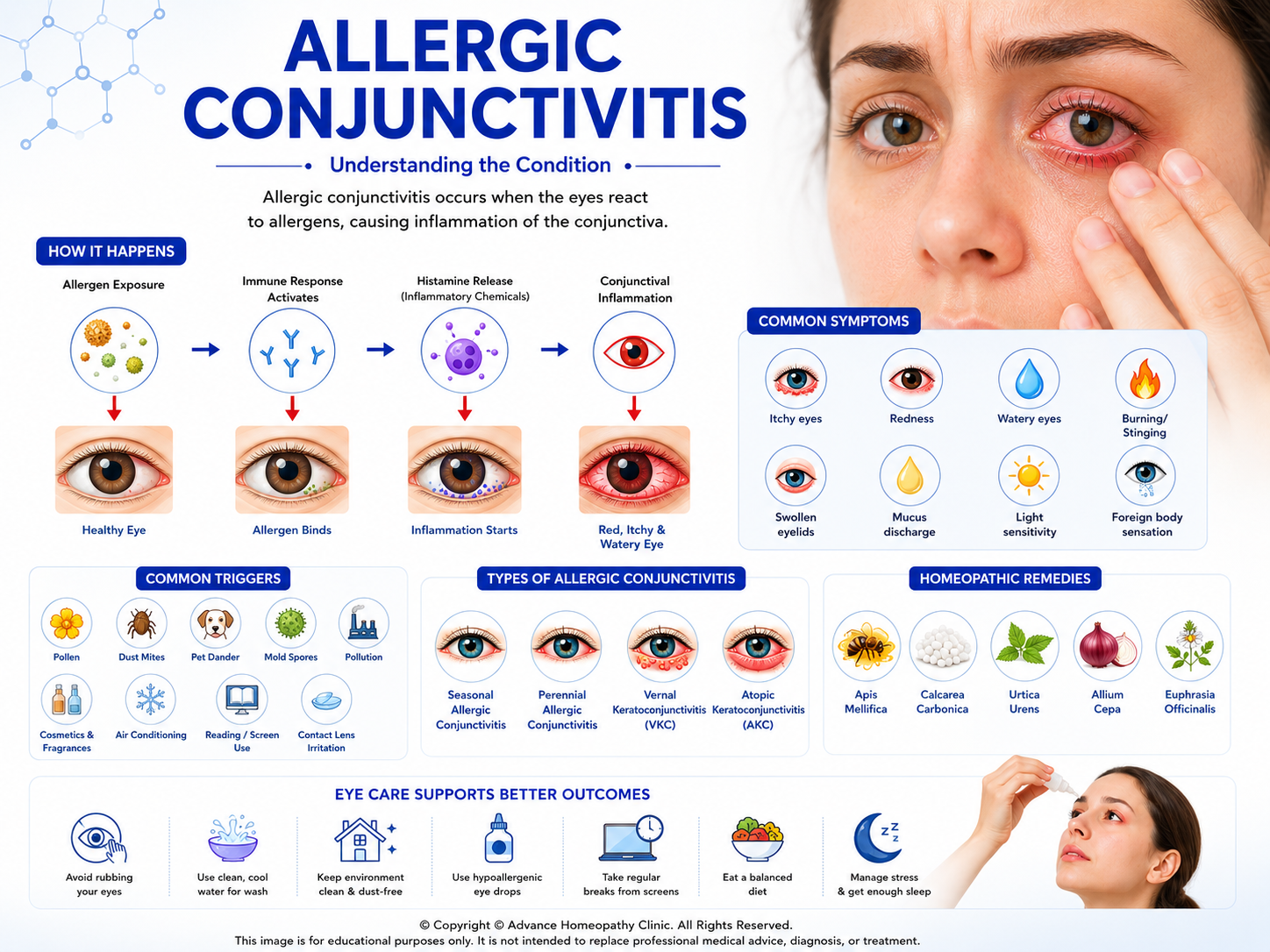
Allergic conjunctivitis is an inflammation of the conjunctiva—the thin transparent membrane covering the white part of the eye and the inner surface of the eyelids—caused by an allergic reaction to airborne allergens such as pollen, dust mites, mould spores, or animal dander. It commonly occurs together with allergic rhinitis and is one of the most frequent causes of itchy, watery eyes.
Although allergic conjunctivitis is not contagious, recurrent itching, redness, excessive tearing, and eye irritation can significantly affect comfort, daily activities, and quality of life.
Common Symptoms of Allergic Conjunctivitis
- Itchy eyes
- Red eyes
- Excessive watering
- Burning sensation
- Swollen eyelids
- Light sensitivity
- Frequent eye rubbing
Common Causes of Allergic Conjunctivitis
- Pollen
- House dust mites
- Animal dander
- Mould spores
- Air pollution
- Cosmetic allergens
Conventional Treatment for Allergic Conjunctivitis
Treatment aims to reduce allergen exposure and relieve inflammation. Conventional management may include artificial tears, antihistamine eye drops, mast cell stabilizers, oral antihistamines, and short courses of topical corticosteroid eye drops under specialist supervision.
Commonly Considered Homeopathic Medicines for Allergic Conjunctivitis
Some homeopathic medicines commonly considered by experienced homeopathic physicians for allergic conjunctivitis include:
- Euphrasia Officinalis
- Allium Cepa
- Apis Mellifica
- Argentum Nitricum
- Pulsatilla
Homeopathic medicines should only be prescribed by a qualified homeopathic physician after an individualized clinical evaluation.
Important: Complementary Care for Allergic Conjunctivitis
Allergic conjunctivitis should be appropriately evaluated to confirm the diagnosis, identify the responsible allergens where possible, and distinguish it from other eye conditions that may present with redness, watering, or eye discomfort, including viral or bacterial conjunctivitis, dry eye disease, blepharitis, keratitis, uveitis, and glaucoma. Depending on the clinical presentation, patients may require examination by an ophthalmologist, particularly when symptoms are severe, persistent, or atypical.
Patients with mild to moderate allergic conjunctivitis may be considered for individualized homeopathic treatment as a complementary approach as part of a comprehensive allergy management plan following appropriate medical evaluation. Homeopathy may be used alongside allergen avoidance measures, environmental control strategies, lubricating eye drops (artificial tears), antihistamine or mast cell stabilizer eye drops, oral antihistamines, and other treatments recommended by the treating physician. Identification and avoidance of relevant allergens, where feasible, remain an important component of long-term management.
Patients with persistent or severe allergic conjunctivitis, significant eyelid swelling, recurrent symptoms affecting vision, vernal keratoconjunctivitis, atopic keratoconjunctivitis, or associated corneal involvement require comprehensive ophthalmological assessment and conventional management. Homeopathy should not be regarded as a substitute for evidence-based ophthalmic treatment when specialist evaluation or additional therapy has been recommended.
Patients who develop severe eye pain, sudden reduction in vision, marked sensitivity to light, inability to open the eye, purulent eye discharge, corneal opacity, eye injury, or rapidly worsening eye redness should seek immediate medical attention, as these symptoms may indicate a serious eye disorder requiring urgent ophthalmological evaluation.
3. Bronchial Asthma
What is Bronchial Asthma?
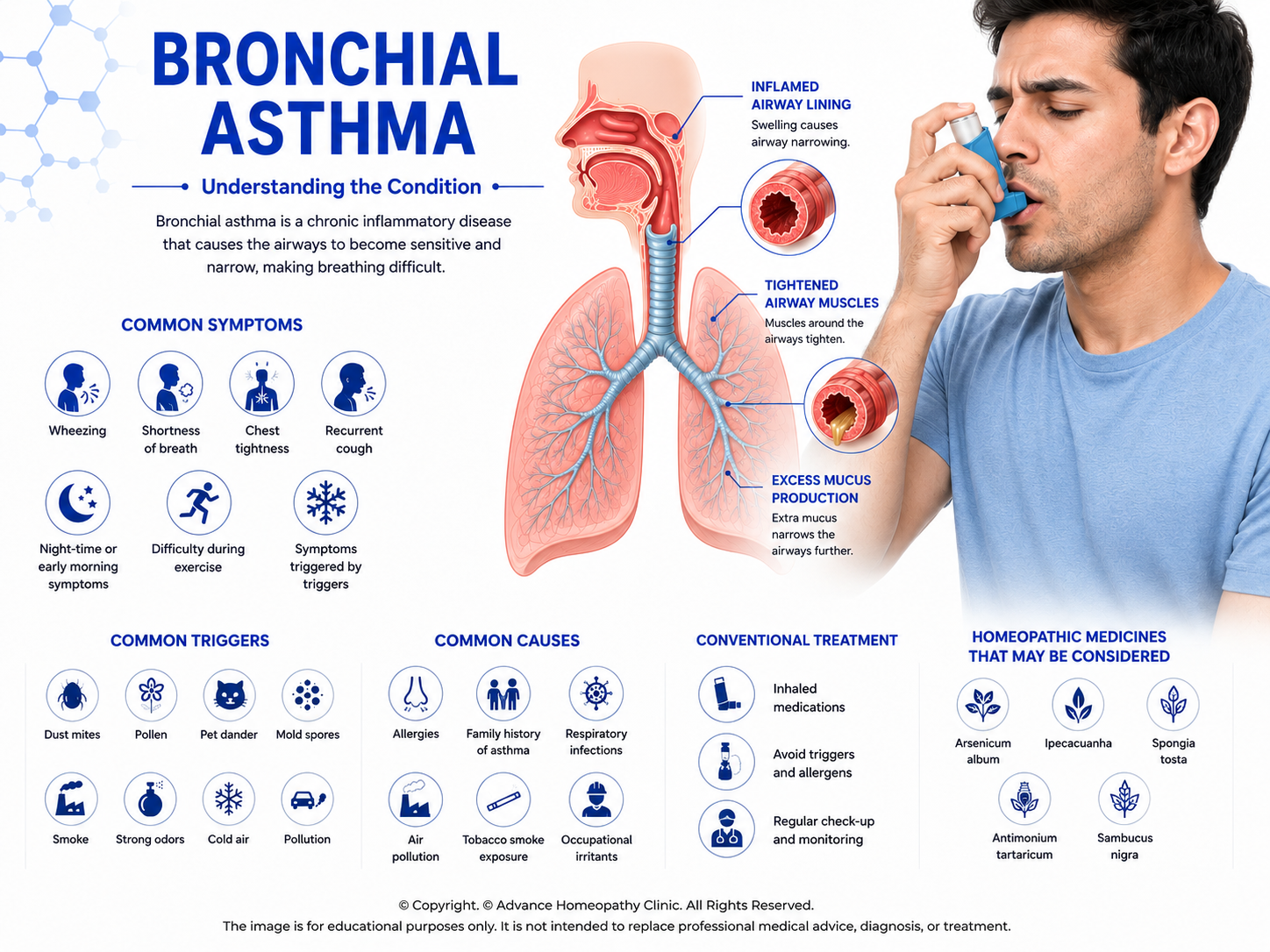
Bronchial asthma is a chronic inflammatory disease of the airways in which the bronchial tubes become inflamed and overly sensitive to various triggers. This inflammation causes narrowing of the airways, increased mucus production, and tightening of the muscles surrounding the airways, resulting in difficulty breathing. Asthma symptoms may occur intermittently with symptom-free periods or may persist as a chronic condition requiring long-term medical management.
Asthma commonly develops in individuals with a personal or family history of allergies and is frequently associated with allergic rhinitis, eczema, and other allergic disorders. Symptoms may worsen after exposure to allergens, respiratory infections, exercise, cold air, smoke, environmental pollution, or emotional stress.
Although asthma is a chronic condition, most individuals can achieve good symptom control with appropriate medical treatment and regular follow-up. Poorly controlled asthma may increase the risk of severe asthma attacks that require urgent medical attention.
Common Symptoms of Bronchial Asthma
- Wheezing
- Shortness of breath
- Persistent cough
- Chest tightness
- Difficulty breathing during exercise
- Night-time or early morning cough
- Recurrent episodes of breathlessness
- Symptoms triggered by allergens or respiratory infections
Common Causes and Triggers of Bronchial Asthma
- House dust mites
- Pollen
- Animal dander
- Mould spores
- Respiratory viral infections
- Air pollution
- Cigarette smoke
- Exercise
- Cold air
- Occupational allergens
- Family history of asthma or allergies
Conventional Treatment for Bronchial Asthma
Treatment aims to reduce airway inflammation, prevent asthma attacks, and maintain normal lung function. Conventional management commonly includes inhaled corticosteroids, bronchodilators (reliever and controller inhalers), combination inhalers, leukotriene receptor antagonists, and biologic therapies for selected patients with severe asthma. Patients should continue using prescribed inhalers and follow their asthma action plan unless advised otherwise by their treating physician.
Commonly Considered Homeopathic Medicines for Bronchial Asthma
Some homeopathic medicines commonly considered by experienced homeopathic physicians for bronchial asthma include:
- Arsenicum Album
- Ipecacuanha
- Spongia Tosta
- Antimonium Tartaricum
- Blatta Orientalis
Homeopathic medicines should only be prescribed by a qualified homeopathic physician after an individualized clinical evaluation.
Important: Complementary Care for Bronchial Asthma
Bronchial asthma should always be appropriately evaluated to confirm the diagnosis, determine disease severity, identify individual triggers, and assess the level of asthma control. Evaluation may include a detailed medical history, physical examination, pulmonary function tests (spirometry), peak expiratory flow measurements, allergy assessment where appropriate, and additional investigations to exclude other respiratory conditions that may produce similar symptoms.
Patients with well-controlled or mild to moderate persistent bronchial asthma may be considered for individualized homeopathic treatment as a complementary approach as part of a comprehensive asthma management plan following appropriate medical evaluation. Homeopathy may be used alongside trigger avoidance, smoking cessation where applicable, prescribed inhaled corticosteroids, bronchodilator inhalers, written asthma action plans, allergen immunotherapy in selected patients, and other treatments recommended by the treating physician. Patients should continue their prescribed controller and reliever inhalers unless specifically advised otherwise by their physician.
Patients with poorly controlled asthma, frequent exacerbations, severe persistent asthma, recurrent hospital admissions, reduced lung function, or those requiring biologic therapy require comprehensive management by their treating physician or respiratory specialist. Homeopathy should not be regarded as a substitute for evidence-based asthma treatment, particularly inhaled corticosteroids and other controller therapies that are essential for reducing airway inflammation and preventing severe asthma attacks.
Patients who develop severe breathlessness, difficulty speaking because of breathlessness, chest tightness that rapidly worsens, bluish discoloration of the lips or fingertips, poor response to reliever inhalers, drowsiness, confusion, or symptoms of a severe asthma attack should seek immediate emergency medical attention, as these features may indicate a life-threatening asthma exacerbation requiring urgent treatment.
4. Chronic Urticaria (Chronic Hives)
What is Chronic Urticaria?
Chronic urticaria, commonly known as chronic hives, is a condition characterized by the repeated appearance of itchy, raised skin welts that persist or recur for more than six weeks. Individual hives usually disappear within 24 hours, but new lesions continue to develop, making the condition persistent and often unpredictable.
In many individuals, no definite cause can be identified despite extensive evaluation. In others, chronic urticaria may be associated with autoimmune disorders, infections, medications, food additives, or physical triggers such as pressure, heat, cold, or sunlight. Persistent itching and recurrent flare-ups can significantly affect sleep, emotional well-being, work performance, and overall quality of life.
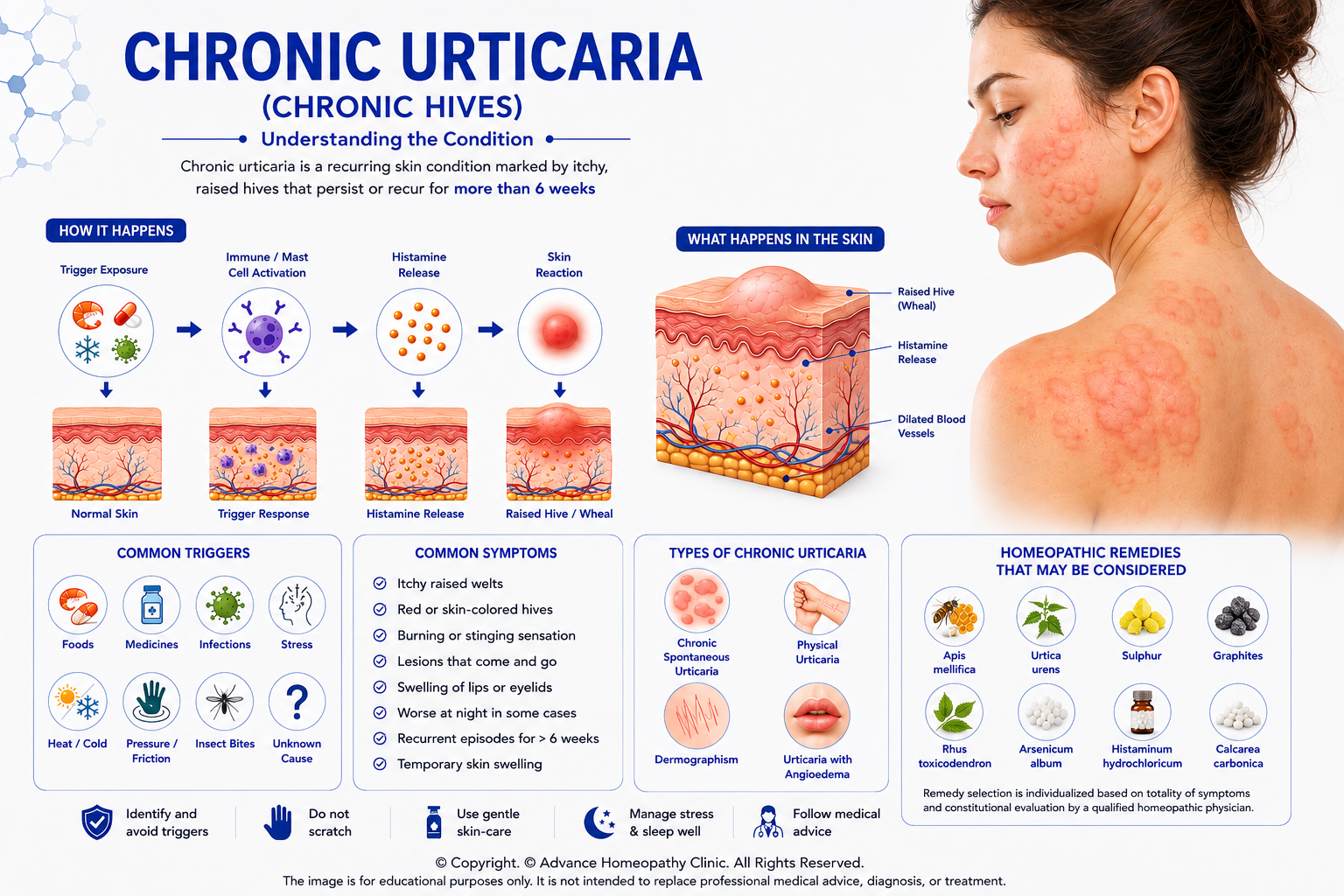
Common Symptoms of Chronic Urticaria
- Raised itchy skin welts (hives)
- Red or skin-coloured swellings
- Severe itching
- Recurrent episodes lasting longer than six weeks
- Lesions appearing and disappearing in different areas
- Burning or stinging sensation
- Associated swelling of the lips or eyelids in some individuals
Common Causes of Chronic Urticaria
- Autoimmune disorders
- Viral or bacterial infections
- Certain medications
- Food additives
- Physical triggers (heat, cold, pressure, exercise)
- Emotional stress
- Often no identifiable cause (Chronic Spontaneous Urticaria)
Conventional Treatment for Chronic Urticaria
Treatment aims to control symptoms, reduce itching, and prevent recurrent flare-ups. Conventional management commonly includes second-generation antihistamines, increased-dose antihistamines for persistent symptoms, leukotriene receptor antagonists, short courses of corticosteroids during severe flare-ups, and biologic therapy such as omalizumab for selected patients with difficult-to-control disease.
Commonly Considered Homeopathic Medicines for Chronic Urticaria
Some homeopathic medicines commonly considered by experienced homeopathic physicians for chronic urticaria include:
- Urtica Urens
- Apis Mellifica
- Rhus Toxicodendron
- Natrum Muriaticum
- Dulcamara
Important: Complementary Care for Chronic Urticaria (Chronic Hives)
Chronic urticaria should be appropriately evaluated to confirm the diagnosis, identify possible underlying causes where present, assess disease severity, and exclude other conditions that may resemble chronic hives. Evaluation may include a detailed medical history, physical examination, and selected investigations to assess for autoimmune disorders, infections, thyroid disease, physical urticarias, medication-related reactions, or other contributing factors. However, in many patients with Chronic Spontaneous Urticaria, no specific underlying cause is identified despite appropriate medical evaluation.
Patients with Chronic Spontaneous Urticaria or chronic inducible urticaria with mild to moderate symptoms may be considered for individualized homeopathic treatment as a complementary approach as part of a comprehensive allergy management plan following appropriate medical evaluation. Homeopathy may be used alongside identification and avoidance of known triggers where possible, second-generation antihistamines, lifestyle measures, and other treatments recommended by the treating physician. Patients should continue prescribed medications unless advised otherwise by their healthcare professional.
Patients with persistent symptoms despite optimized antihistamine therapy, severe impairment of quality of life, recurrent angioedema, autoimmune-associated urticaria requiring advanced therapy, or those requiring biologic treatment such as omalizumab or immunomodulatory therapy require comprehensive management by an allergy specialist or dermatologist. Homeopathy should not be regarded as a substitute for evidence-based medical treatment when escalation of conventional therapy has been recommended.
Patients who develop rapid swelling of the lips, tongue, throat, difficulty breathing, difficulty swallowing, dizziness, collapse, or symptoms suggestive of anaphylaxis should seek immediate emergency medical attention, as these features may indicate a severe allergic reaction requiring urgent treatment with adrenaline (epinephrine) and supportive medical care.
5. Atopic Dermatitis (Atopic Eczema)
What is Atopic Dermatitis?
Atopic dermatitis is the most common type of eczema and is a chronic inflammatory skin disease closely associated with allergic conditions such as asthma and allergic rhinitis. It commonly begins during infancy or childhood but may also develop in adults. The condition is characterized by recurrent episodes of dry, itchy, inflamed skin with periods of improvement and flare-ups.
Many individuals with atopic dermatitis have a family history of allergic diseases. Although the condition is not contagious, persistent scratching may damage the skin barrier, increase the risk of secondary bacterial infections, and significantly affect sleep and quality of life.
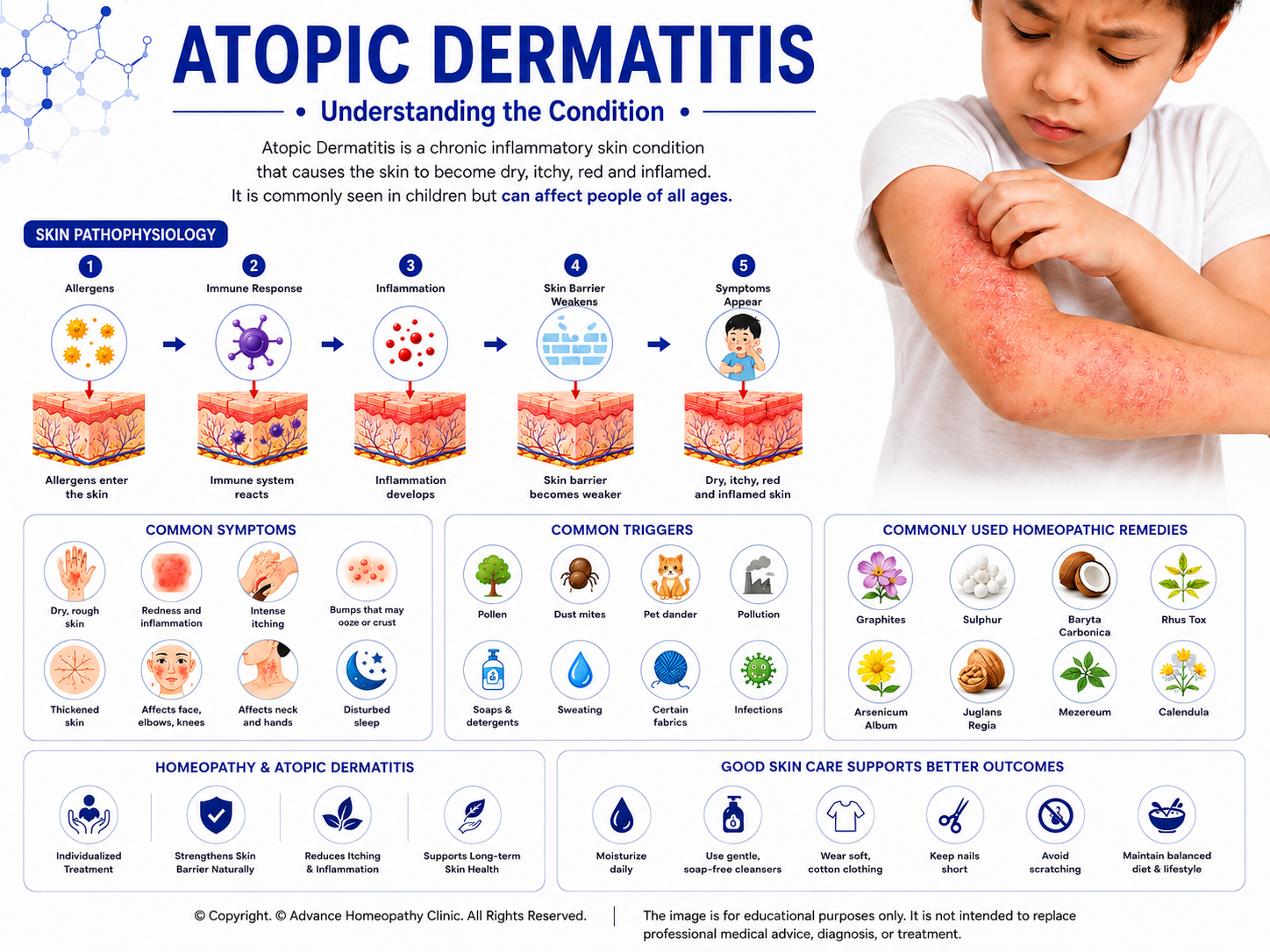
Common Symptoms of Atopic Dermatitis
- Persistent itching
- Dry skin
- Red, inflamed skin
- Thickened skin
- Cracking of the skin
- Oozing during flare-ups
- Sleep disturbance due to itching
- Recurrent skin infections
Common Causes of Atopic Dermatitis
- Genetic predisposition
- Skin barrier dysfunction
- Environmental allergens
- Food allergies in selected individuals
- Irritating fabrics or chemicals
- Climate changes
- Emotional stress
Conventional Treatment for Atopic Dermatitis
Treatment focuses on maintaining skin hydration, reducing inflammation, preventing flare-ups, and controlling itching. Conventional management commonly includes moisturizers, topical corticosteroids, topical calcineurin inhibitors, antihistamines, biologic therapies, and antibiotics when secondary bacterial infection develops.
Commonly Considered Homeopathic Medicines for Atopic Dermatitis
Some homeopathic medicines commonly considered by experienced homeopathic physicians for atopic dermatitis include:
- Sulphur
- Graphites
- Calcarea Carbonica
- Natrum Muriaticum
- Arsenicum Album
Homeopathic medicines should only be prescribed by a qualified homeopathic physician after an individualized clinical evaluation.
Important: Complementary Care for Atopic Dermatitis (Atopic Eczema)
Atopic dermatitis should be appropriately evaluated to confirm the diagnosis, assess disease severity, identify factors that contribute to flare-ups, and exclude other inflammatory or infectious skin disorders that may present with similar symptoms. Evaluation may include a detailed medical history, physical examination, assessment of the distribution and severity of eczema, review of associated allergic conditions such as asthma or allergic rhinitis, and consideration of secondary bacterial or viral skin infections where clinically indicated.
Patients with mild to moderate atopic dermatitis may be considered for individualized homeopathic treatment as a complementary approach as part of a comprehensive eczema management plan following appropriate medical evaluation. Homeopathy may be used alongside regular skin hydration with emollients, avoidance of known irritants and triggers where possible, appropriate skin care measures, topical corticosteroids, topical calcineurin inhibitors, and other treatments recommended by the treating physician. Maintaining the skin barrier through consistent moisturization remains a fundamental component of long-term eczema management.
Patients with severe or widespread atopic dermatitis, recurrent skin infections, significant sleep disturbance, marked impairment of quality of life, or those requiring systemic immunosuppressive or biologic therapy should remain under the care of a dermatologist or allergy specialist. Homeopathy should not be regarded as a substitute for evidence-based dermatological treatment when escalation of conventional therapy has been recommended.
Patients who develop rapidly spreading skin redness, increasing pain, fever, extensive oozing or pus formation, clusters of painful blisters, or signs of secondary bacterial or viral skin infection should seek prompt medical attention, as these features may indicate complications requiring urgent conventional treatment.
6. Allergic Contact Dermatitis
What is Allergic Contact Dermatitis?
Allergic contact dermatitis is an inflammatory skin condition that develops when the immune system reacts to a substance that comes into direct contact with the skin. Unlike irritant contact dermatitis, which results from direct chemical irritation, allergic contact dermatitis is a delayed hypersensitivity reaction that occurs only after the individual has become sensitized to a specific allergen.
Common triggers include cosmetics, perfumes, nickel-containing jewellery, hair dyes, rubber products, adhesives, topical medications, and certain plants. The rash usually develops at the site of contact but may spread beyond the original area if the reaction is severe.
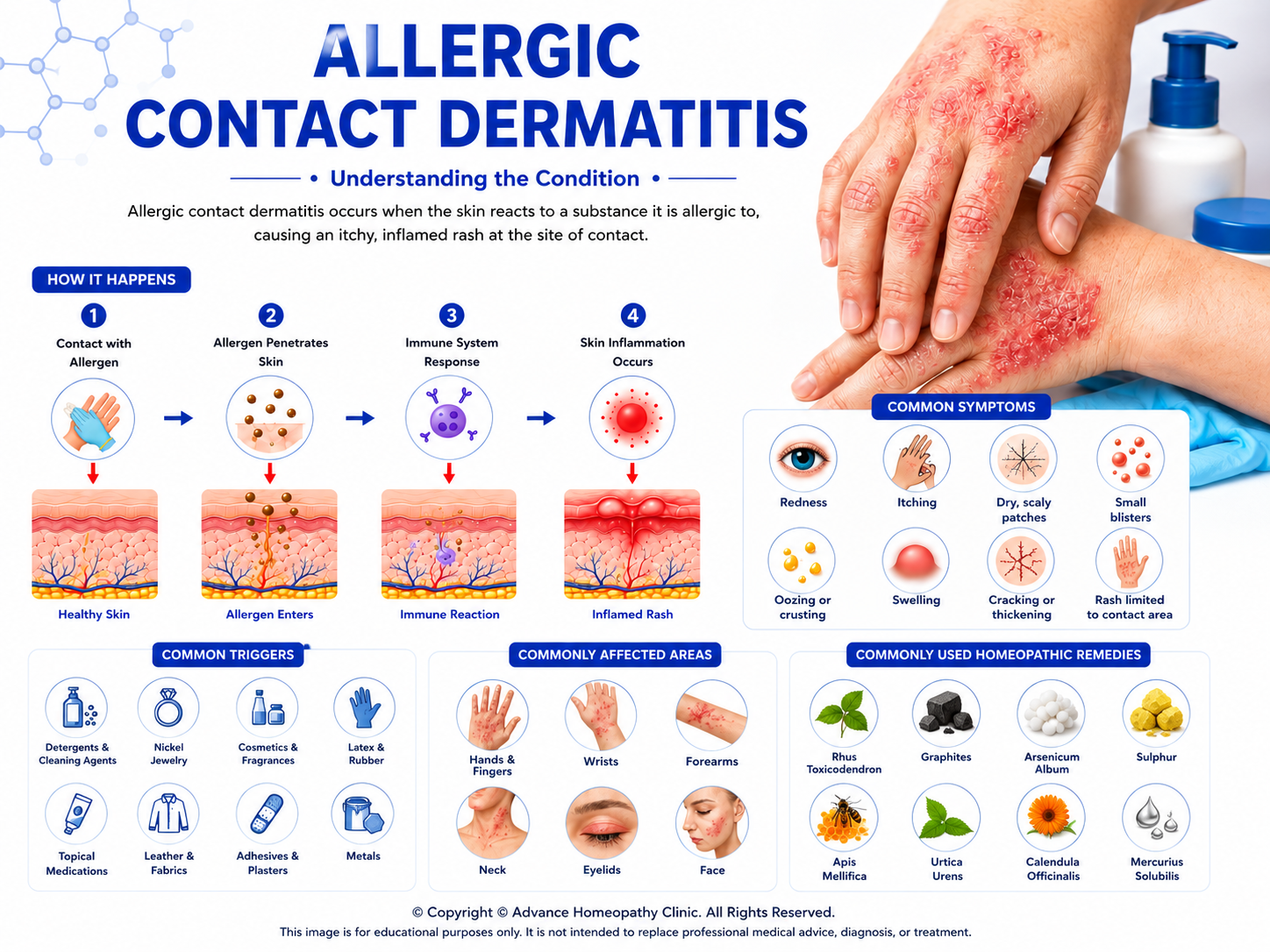
Common Symptoms of Allergic Contact Dermatitis
- Red itchy rash
- Skin swelling
- Small blisters
- Oozing or crusting
- Dry or cracked skin
- Burning sensation
- Thickened skin in long-standing cases
Common Causes of Allergic Contact Dermatitis
- Nickel jewellery
- Cosmetics
- Hair dyes
- Fragrances
- Rubber products
- Adhesives
- Topical medications
- Certain plants
Conventional Treatment for Allergic Contact Dermatitis
Treatment focuses on identifying and avoiding the responsible allergen while reducing skin inflammation. Conventional management may include topical corticosteroids, moisturizers, oral antihistamines, wet dressings for severe reactions, and short courses of oral corticosteroids in selected cases.
Commonly Considered Homeopathic Medicines for Allergic Contact Dermatitis
Some homeopathic medicines commonly considered by experienced homeopathic physicians for allergic contact dermatitis include:
- Rhus Toxicodendron
- Graphites
- Sulphur
- Petroleum
- Mezereum
Homeopathic medicines should only be prescribed by a qualified homeopathic physician after an individualized clinical evaluation.
Important: Complementary Care for Allergic Contact Dermatitis
Allergic contact dermatitis should be appropriately evaluated to confirm the diagnosis, identify the responsible allergen, assess the severity of skin involvement, and distinguish it from other skin disorders such as irritant contact dermatitis, atopic dermatitis, psoriasis, fungal infections, or bacterial skin infections. A detailed exposure history, physical examination, and, where appropriate, patch testing may help identify the allergen responsible for the reaction.
Patients with mild to moderate allergic contact dermatitis may be considered for individualized homeopathic treatment as a complementary approach as part of a comprehensive dermatitis management plan following appropriate medical evaluation. Homeopathy may be used alongside identification and avoidance of the responsible allergen, appropriate skin care, regular use of emollients, topical corticosteroids, topical calcineurin inhibitors where indicated, and other treatments recommended by the treating physician. Long-term control depends primarily upon recognizing and avoiding the triggering allergen whenever possible.
Patients with severe, widespread, recurrent, or occupational allergic contact dermatitis, extensive blistering, secondary skin infection, or those requiring systemic corticosteroids or other immunosuppressive treatment should remain under the care of a dermatologist or allergy specialist. Homeopathy should not be regarded as a substitute for evidence-based dermatological treatment when specialist management has been recommended.
Patients who develop rapidly spreading redness, severe pain, fever, extensive blistering, increasing swelling, pus formation, or signs of secondary bacterial skin infection should seek prompt medical attention, as these features may indicate complications requiring urgent conventional treatment.
7. Food Allergy
What is Food Allergy?
Food allergy is an immune-mediated condition in which the body's immune system mistakenly identifies certain foods as harmful and produces an allergic reaction. Unlike food intolerance, which primarily affects digestion, food allergy involves the immune system and may cause symptoms ranging from mild itching or skin rashes to severe, life-threatening allergic reactions known as anaphylaxis.
Common food allergens include milk, eggs, peanuts, tree nuts, fish, shellfish, soy, wheat, and sesame. While some food allergies resolve during childhood, others may persist into adulthood and require lifelong avoidance of the offending food.
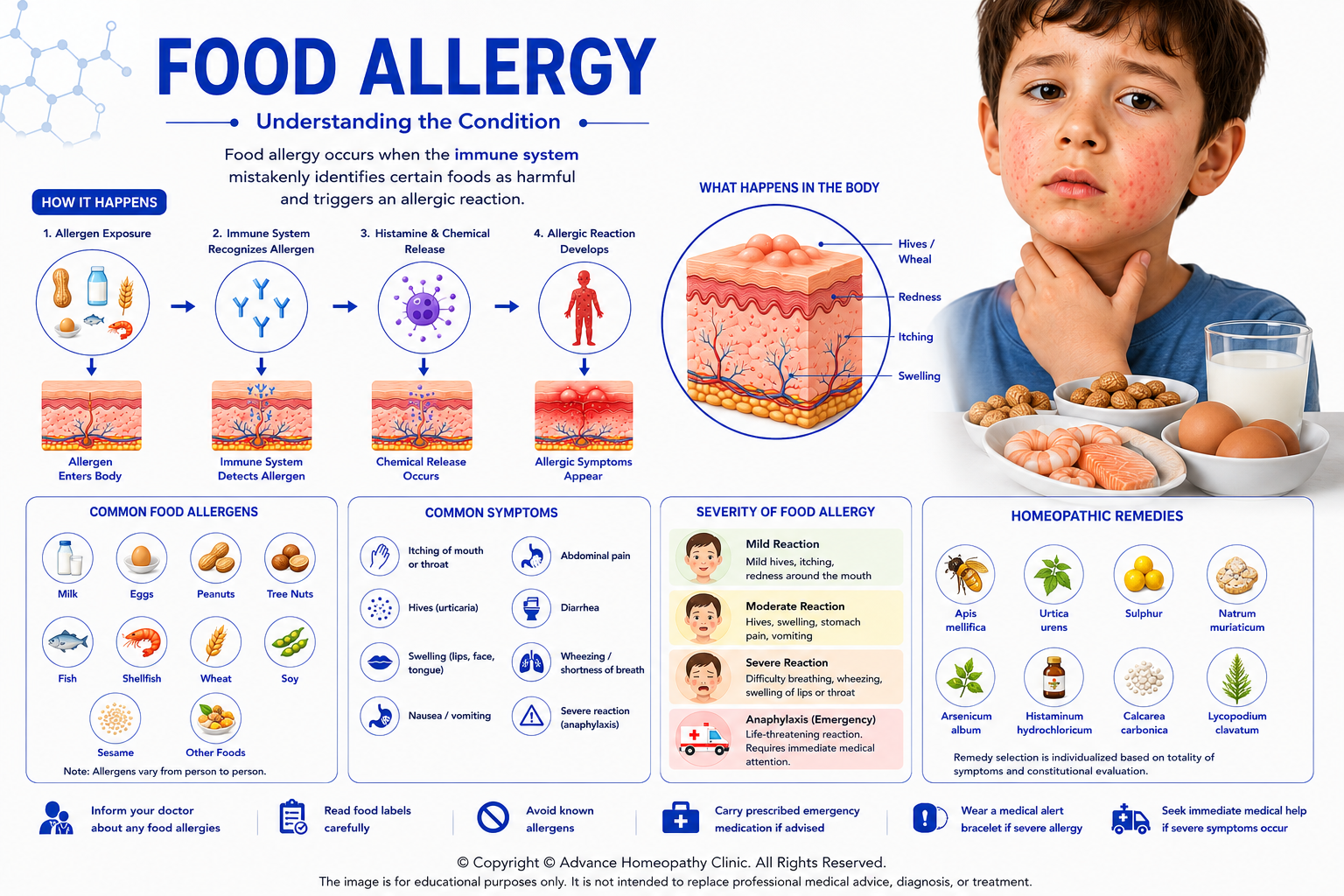
Common Symptoms of Food Allergy
- Itching of the mouth or throat
- Hives (urticaria)
- Skin rash
- Swelling of the lips, tongue, face, or throat
- Nausea and vomiting
- Abdominal pain
- Diarrhea
- Wheezing or shortness of breath
- Severe allergic reaction (anaphylaxis)
Common Causes of Food Allergy
- Milk
- Eggs
- Peanuts
- Tree nuts
- Fish
- Shellfish
- Soy
- Wheat
- Sesame
Conventional Treatment for Food Allergy
The primary treatment is strict avoidance of the identified food allergen. Patients at risk of severe allergic reactions are usually advised to carry an adrenaline (epinephrine) auto-injector for emergency use. Antihistamines may help relieve mild allergic reactions, while anaphylaxis requires immediate emergency medical treatment.
Commonly Considered Homeopathic Medicines for Food Allergy
Some homeopathic medicines commonly considered by experienced homeopathic physicians for food allergy include:
- Arsenicum Album
- Lycopodium Clavatum
- Nux Vomica
- Natrum Muriaticum
- Carbo Vegetabilis
Homeopathic medicines should only be prescribed by a qualified homeopathic physician after an individualized clinical evaluation.
Important: Complementary Care for Food Allergy
Food allergy should always be appropriately evaluated to confirm the diagnosis, identify the responsible food allergen, assess the severity of previous allergic reactions, and distinguish food allergy from food intolerance or other gastrointestinal disorders that may produce similar symptoms. Evaluation may include a detailed clinical history, allergy testing where appropriate, supervised oral food challenges in selected patients, and assessment by an allergy specialist when indicated.
Patients with confirmed food allergy who experience mild, non-life-threatening allergic symptoms may be considered for individualized homeopathic treatment as a complementary approach as part of a comprehensive allergy management plan following appropriate medical evaluation. Homeopathy may be used alongside strict avoidance of the identified food allergen, careful label reading, dietary counselling when appropriate, and other treatments recommended by the treating physician or allergy specialist. Avoidance of the confirmed allergen remains the cornerstone of long-term management.
Patients with a history of moderate to severe allergic reactions, recurrent anaphylaxis, multiple food allergies affecting nutritional status, or those requiring specialist allergy management should remain under the care of an allergy specialist. Homeopathy should not be regarded as a substitute for evidence-based allergy management, including dietary supervision, emergency preparedness, or the use of adrenaline (epinephrine) auto-injectors when prescribed.
Patients who develop difficulty breathing, throat tightness, swelling of the tongue or throat, persistent vomiting, dizziness, fainting, widespread hives associated with breathing difficulty, or symptoms of anaphylaxis after food ingestion should seek immediate emergency medical attention. If an adrenaline (epinephrine) auto-injector has been prescribed, it should be administered promptly according to the patient's emergency action plan while awaiting emergency medical care.
8. Drug Allergy
What is Drug Allergy?
Drug allergy is an abnormal immune response that occurs when the body reacts to a medication as though it were harmful. Reactions may develop within minutes or several days after taking a medicine and can vary from mild skin eruptions to severe allergic reactions requiring emergency treatment.
Common medicines associated with allergic reactions include antibiotics, pain-relieving medications (NSAIDs), anticonvulsants, and certain injectable drugs. Once a true drug allergy has been identified, the responsible medication should generally be avoided unless specifically advised otherwise by a healthcare professional.
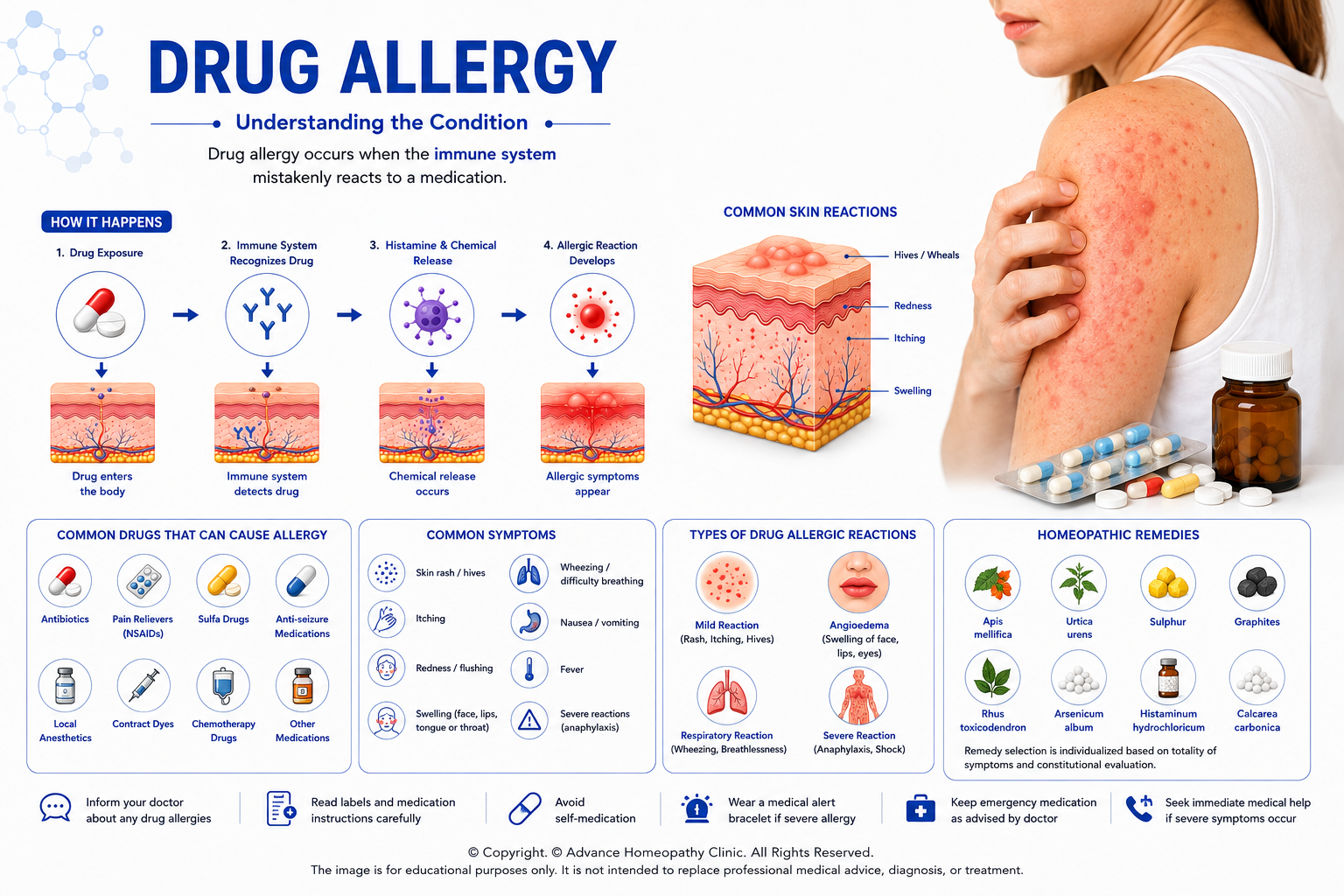
Common Symptoms of Drug Allergy
- Skin rash
- Hives (urticaria)
- Itching
- Facial swelling
- Wheezing
- Shortness of breath
- Fever with skin rash
- Severe allergic reaction (anaphylaxis)
Common Causes of Drug Allergy
- Antibiotics
- Non-steroidal anti-inflammatory drugs (NSAIDs)
- Anticonvulsants
- Injectable medications
- Contrast media used during imaging procedures
- Certain vaccines (rare)
Conventional Treatment for Drug Allergy
Treatment involves discontinuing the suspected medication under medical supervision and managing the allergic reaction according to its severity. Conventional treatment may include antihistamines, corticosteroids, adrenaline (epinephrine) for severe reactions, and supportive emergency care. Patients with confirmed drug allergies should always inform healthcare providers before receiving future treatment.
Commonly Considered Homeopathic Medicines for Drug Allergy
Some homeopathic medicines commonly considered by experienced homeopathic physicians for drug allergy include:
- Apis Mellifica
- Arsenicum Album
- Urtica Urens
- Sulphur
- Histaminum
Homeopathic medicines should only be prescribed by a qualified homeopathic physician after an individualized clinical evaluation.
Important: Complementary Care for Drug Allergy
Drug allergy should always be appropriately evaluated to confirm the diagnosis, identify the responsible medication, assess the severity of the previous allergic reaction, and distinguish true drug allergy from non-allergic adverse drug reactions or medication side effects. Evaluation may include a detailed clinical history, review of previous medical records, and, where appropriate, referral to an allergy specialist for further assessment or drug allergy testing.
Patients with a confirmed history of mild drug allergy who have fully recovered from the acute allergic reaction may be considered for individualized homeopathic treatment as a complementary approach as part of a comprehensive allergy management plan following appropriate medical evaluation. Homeopathy may be used alongside careful documentation of the drug allergy, avoidance of the responsible medication, patient education, and other recommendations provided by the treating physician or allergy specialist. Patients should always inform healthcare professionals of any confirmed drug allergies before receiving new medications.
Patients with a history of severe drug allergy, recurrent reactions, Stevens–Johnson syndrome (SJS), Toxic Epidermal Necrolysis (TEN), Drug Reaction with Eosinophilia and Systemic Symptoms (DRESS), or drug-induced anaphylaxis require ongoing specialist medical care and should avoid re-exposure to the offending medication unless specifically advised by an allergy specialist. Homeopathy should not be regarded as a substitute for evidence-based allergy management, emergency treatment, or specialist evaluation when indicated.
Patients who develop difficulty breathing, swelling of the lips, tongue, or throat, widespread blistering skin rash, painful skin lesions, peeling skin, high fever associated with a rash, dizziness, collapse, or symptoms suggestive of anaphylaxis following medication use should seek immediate emergency medical attention, as these reactions may be life-threatening and require urgent conventional medical treatment.
9. Allergic Rhinosinusitis
What is Allergic Rhinosinusitis?
Allergic rhinosinusitis is an allergic condition in which inflammation affects both the nasal passages and the paranasal sinuses. Persistent allergic inflammation may interfere with normal sinus drainage, leading to nasal blockage, facial pressure, postnasal drip, and recurrent sinus symptoms. Many individuals with allergic rhinosinusitis also suffer from allergic rhinitis.
If symptoms become persistent, recurrent, or are accompanied by fever or severe facial pain, medical evaluation is recommended to exclude bacterial sinus infection or other underlying conditions.
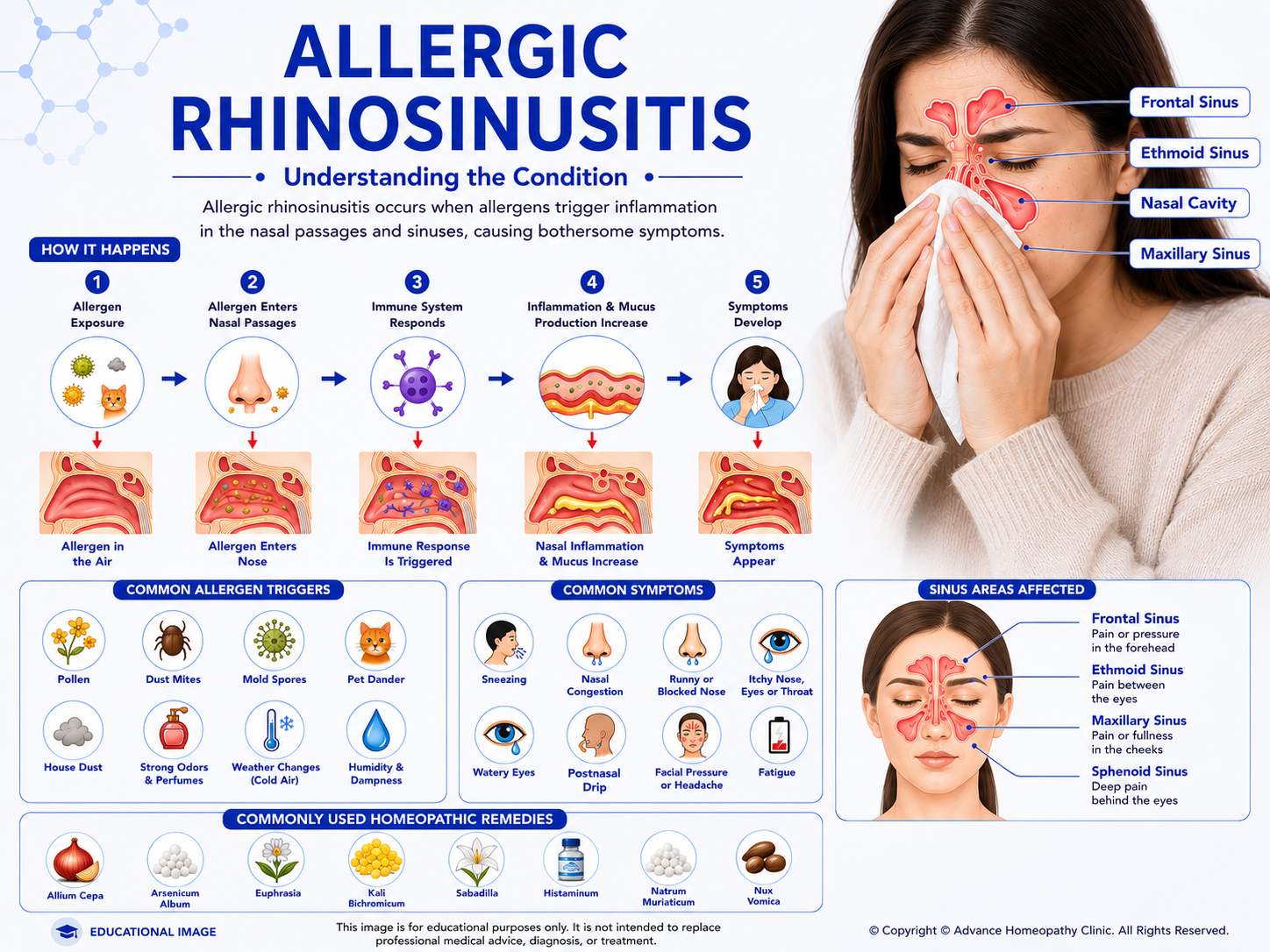
Common Symptoms of Allergic Rhinosinusitis
- Nasal congestion
- Runny nose
- Facial pressure
- Postnasal drip
- Sneezing
- Reduced sense of smell
- Headache
- Recurrent sinus discomfort
Common Causes of Allergic Rhinosinusitis
- House dust mites
- Pollen
- Animal dander
- Mould spores
- Environmental pollution
- Seasonal allergens
Conventional Treatment for Allergic Rhinosinusitis
Treatment focuses on controlling allergic inflammation and restoring normal sinus drainage. Conventional management may include allergen avoidance, antihistamines, intranasal corticosteroids, saline nasal irrigation, leukotriene receptor antagonists, and antibiotics only when a bacterial infection has been confirmed.
Commonly Considered Homeopathic Medicines for Allergic Rhinosinusitis
Some homeopathic medicines commonly considered by experienced homeopathic physicians for allergic rhinosinusitis include:
- Kali Bichromicum
- Pulsatilla
- Arsenicum Album
- Mercurius Solubilis
- Silicea
Homeopathic medicines should only be prescribed by a qualified homeopathic physician after an individualized clinical evaluation.
Important: Complementary Care for Allergic Rhinosinusitis
Allergic rhinosinusitis should be appropriately evaluated to confirm the diagnosis, identify contributing allergens where possible, assess the severity of sinus involvement, and distinguish allergic inflammation from acute bacterial sinusitis, chronic rhinosinusitis with nasal polyps, structural nasal abnormalities, or other sinonasal disorders. Evaluation may include a detailed clinical history, physical examination, nasal endoscopy where indicated, allergy assessment, and imaging studies in selected patients with persistent or recurrent symptoms.
Patients with mild to moderate allergic rhinosinusitis may be considered for individualized homeopathic treatment as a complementary approach as part of a comprehensive allergy management plan following appropriate medical evaluation. Homeopathy may be used alongside identification and avoidance of relevant allergens, saline nasal irrigation, intranasal corticosteroid sprays, antihistamines, leukotriene receptor antagonists, and other treatments recommended by the treating physician. Maintaining good control of the underlying allergic inflammation remains an important component of preventing recurrent sinus symptoms.
Patients with persistent or recurrent sinus infections, nasal polyps, marked nasal obstruction, recurrent bacterial sinusitis, chronic rhinosinusitis requiring prolonged medical treatment, or those requiring endoscopic sinus surgery should remain under the care of an otolaryngologist (ENT specialist) or allergy specialist. Homeopathy should not be regarded as a substitute for evidence-based medical or surgical treatment when specialist management has been recommended.
Patients who develop high fever, severe facial pain or swelling, swelling around the eyes, double vision, reduced vision, severe persistent headache, confusion, neck stiffness, or rapidly worsening symptoms should seek immediate medical attention, as these features may indicate serious complications of sinus disease requiring urgent specialist evaluation.
10. Allergic Cough
What is Allergic Cough?
Allergic cough is a persistent cough caused by allergic inflammation of the airways. Unlike cough associated with respiratory infections, allergic cough usually occurs without fever and may persist for several weeks. It is commonly triggered by exposure to allergens such as dust, pollen, mould spores, animal dander, or environmental pollutants and is frequently associated with allergic rhinitis or bronchial asthma.
Persistent cough should always be medically evaluated to identify the underlying cause and exclude other respiratory diseases.
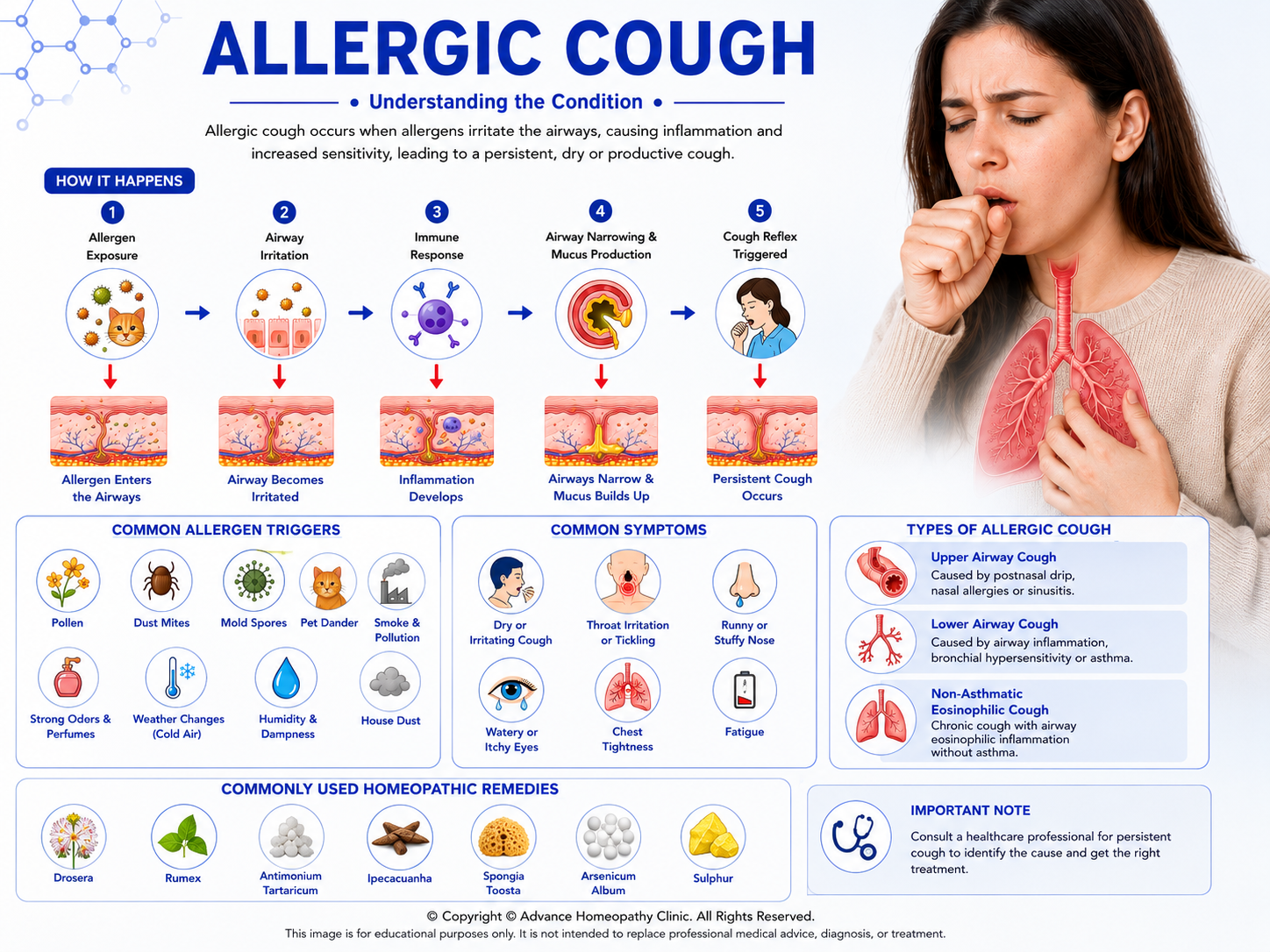
Common Symptoms of Allergic Cough
- Persistent dry cough
- Throat irritation
- Frequent throat clearing
- Night-time cough
- Cough triggered by dust or pollen
- Associated sneezing or nasal allergy
- Wheezing in some individuals
Common Causes of Allergic Cough
- House dust mites
- Pollen
- Animal dander
- Mould spores
- Environmental pollution
- Cigarette smoke
- Allergic airway inflammation
Conventional Treatment for Allergic Cough
Treatment depends on the underlying allergic condition. Conventional management may include allergen avoidance, antihistamines, inhaled medications when asthma is present, intranasal corticosteroids for associated allergic rhinitis, and treatment of any underlying respiratory disease.
Commonly Considered Homeopathic Medicines for Allergic Cough
Some homeopathic medicines commonly considered by experienced homeopathic physicians for allergic cough include:
- Rumex Crispus
- Drosera Rotundifolia
- Spongia Tosta
- Bromium
- Arsenicum Album
Homeopathic medicines should only be prescribed by a qualified homeopathic physician after an individualized clinical evaluation.
Important: Complementary Care for Allergic Cough
Allergic cough should be appropriately evaluated to identify its underlying cause, confirm whether the cough is related to allergic airway inflammation, and exclude other respiratory or systemic conditions that may present with a persistent cough. Evaluation may include a detailed medical history, physical examination, pulmonary function tests (spirometry) where indicated, chest imaging in selected patients, allergy assessment, and additional investigations to exclude bronchial asthma, upper airway cough syndrome, gastroesophageal reflux disease (GERD), chronic respiratory infections, chronic obstructive pulmonary disease (COPD), or other respiratory disorders.
Patients with allergic cough associated with mild allergic airway inflammation, allergic rhinitis, or well-controlled asthma may be considered for individualized homeopathic treatment as a complementary approach as part of a comprehensive allergy management plan following appropriate medical evaluation. Homeopathy may be used alongside allergen avoidance measures, environmental control strategies, treatment of associated allergic rhinitis or asthma, prescribed inhalers where indicated, antihistamines, and other treatments recommended by the treating physician. Identifying and managing the underlying cause of the cough remains the most important aspect of long-term treatment.
Patients with persistent cough lasting more than eight weeks, poorly controlled asthma, chronic lung disease, abnormal chest imaging, recurrent chest infections, unexplained weight loss, coughing up blood, or other concerning respiratory symptoms require comprehensive evaluation by a respiratory physician or other appropriate specialist. Homeopathy should not be regarded as a substitute for evidence-based medical investigation and treatment when further respiratory assessment has been recommended.
Patients who develop severe breathlessness, chest pain, coughing up blood, high fever, bluish discoloration of the lips, persistent wheezing unresponsive to prescribed treatment, or rapidly worsening respiratory symptoms should seek immediate medical attention, as these features may indicate a serious respiratory condition requiring urgent medical evaluation.
11. Allergic Angioedema
What is Allergic Angioedema?
Allergic angioedema is characterized by sudden swelling involving the deeper layers of the skin and underlying tissues. It commonly affects the eyelids, lips, face, tongue, hands, and feet and may occur together with urticaria (hives). In severe cases, swelling of the tongue or throat can interfere with breathing and requires immediate emergency medical treatment.
Episodes are commonly triggered by foods, medications, insect stings, or other allergens.

Common Symptoms of Allergic Angioedema
- Swelling of the lips
- Swelling of the eyelids
- Facial swelling
- Tongue swelling
- Throat tightness
- Difficulty swallowing
- Difficulty breathing in severe cases
Common Causes of Allergic Angioedema
- Food allergens
- Medications
- Insect stings
- Latex allergy
- Environmental allergens
Conventional Treatment for Allergic Angioedema
Treatment depends on the severity of the reaction. Mild cases may be managed with antihistamines and corticosteroids, while severe reactions involving breathing difficulty require immediate emergency treatment with adrenaline (epinephrine) and supportive medical care.
Commonly Considered Homeopathic Medicines for Allergic Angioedema
Some homeopathic medicines commonly considered by experienced homeopathic physicians for allergic angioedema include:
- Apis Mellifica
- Urtica Urens
- Arsenicum Album
- Histaminum
- Belladonna
Homeopathic medicines should only be prescribed by a qualified homeopathic physician after an individualized clinical evaluation.
Important: Complementary Care for Allergic Angioedema
Allergic angioedema should always be appropriately evaluated to confirm the diagnosis, identify the underlying trigger where possible, assess the severity of previous episodes, and distinguish allergic angioedema from other causes of recurrent swelling, including hereditary angioedema, medication-induced angioedema (particularly associated with ACE inhibitors), and other non-allergic conditions. Evaluation may include a detailed medical history, physical examination, allergy assessment where appropriate, and referral to an allergy specialist when indicated.
Patients with mild, recurrent allergic angioedema that has been appropriately evaluated and does not involve airway compromise may be considered for individualized homeopathic treatment as a complementary approach as part of a comprehensive allergy management plan following appropriate medical evaluation. Homeopathy may be used alongside identification and avoidance of known allergens, patient education, prescribed antihistamines where indicated, and other treatments recommended by the treating physician. Identifying and avoiding the responsible trigger remains an essential component of long-term management.
Patients with recurrent severe angioedema, uncertain diagnosis, hereditary angioedema, medication-induced angioedema, recurrent episodes requiring emergency treatment, or those requiring specialist allergy care should remain under the supervision of an allergy or immunology specialist. Homeopathy should not be regarded as a substitute for evidence-based medical management or emergency preparedness when specialist treatment has been recommended.
Patients who develop swelling of the tongue, throat, or voice box, difficulty breathing, difficulty swallowing, hoarseness, noisy breathing (stridor), dizziness, collapse, or symptoms suggestive of anaphylaxis should seek immediate emergency medical attention, as these features may indicate life-threatening airway obstruction requiring urgent treatment with adrenaline (epinephrine) and advanced airway management.
A Note About Homeopathic Medicines
The homeopathic medicines listed above are among the remedies that may be considered by experienced homeopathic physicians for various allergic diseases. Homeopathic treatment is highly individualized, and the selection of a medicine is based on a detailed evaluation of each person's symptoms, allergy triggers, medical history, disease progression, associated health conditions, and overall constitution.
The most appropriate homeopathic medicine for one individual may differ from that selected for another person with the same medical diagnosis. For this reason, homeopathic medicines should always be prescribed after a comprehensive consultation with a qualified homeopathic doctor.
Our Approach to Homeopathic Care
At Advance Homeopathy Clinic Dubai, we believe that effective homeopathic care begins with understanding the individual rather than focusing solely on the allergic disease. During your consultation, our homeopathic doctors conduct a comprehensive assessment that includes:
- Your current allergic symptoms and how they have progressed over time
- Possible allergy triggers and environmental exposures
- Previous treatments and your response to treatment
- Past medical and family history
- Associated allergic and medical conditions
- Lifestyle factors that may influence your health
This comprehensive evaluation helps us develop an individualized homeopathic treatment plan tailored to your specific health needs. Homeopathy may be considered as a complementary approach alongside conventional medical care where appropriate, and patients should continue prescribed medications unless advised otherwise by their treating physician.
Why Choose Advance Homeopathy Clinic Dubai?
Patients from Dubai, across the UAE, and from more than 20 countries and over 100 nationalities have trusted Advance Homeopathy Clinic Dubai for individualized homeopathic care.
Why patients choose us
- More than 35 years of clinical experience under the leadership of Dr. Aalim Dhandhukia
- Dubai Health Authority (DHA) licensed clinic and homeopathic doctors
- Individualized treatment plans based on a comprehensive medical evaluation
- Care for acute and chronic allergic diseases
- In-clinic and online consultations for patients in Dubai, across the UAE, and internationally
- Free First Consultation to help you understand whether homeopathy may be an appropriate complementary approach for your condition
Frequently Asked Questions About Allergic Diseases
Can homeopathy be used together with allergy medications?
Yes. Many patients choose homeopathic care while continuing treatment prescribed by their physician or allergy specialist. Any changes to prescription medications should only be made under the guidance of the treating physician.
Can children receive homeopathic treatment for allergic diseases?
Yes. Homeopathy is commonly used for children with conditions such as allergic rhinitis, bronchial asthma, atopic dermatitis, and recurrent allergic disorders. Treatment is individualized after a detailed consultation.
How long does homeopathic treatment usually take?
The duration of treatment depends on the diagnosis, severity of symptoms, frequency of allergic episodes, duration of illness, and the individual's overall health. Your homeopathic doctor will discuss a personalized treatment plan during your consultation.
Are online consultations available?
Yes. We provide both online and in-clinic consultations, allowing patients within the UAE and internationally to access our services.
When should I consult a homeopathic doctor for an allergic disease?
You may consider consulting a homeopathic doctor if you experience recurrent allergic rhinitis, bronchial asthma, chronic urticaria, eczema, allergic cough, or other persistent allergic conditions that continue to affect your quality of life. A detailed consultation can help determine whether homeopathy may be an appropriate complementary approach as part of your overall healthcare.
Research in Homeopathy and Allergy & Clinical Immunology
Research Overview
Homeopathy has been investigated as a complementary approach in several allergic and immunological disorders, including allergic rhinitis, bronchial asthma, chronic urticaria, atopic dermatitis, allergic conjunctivitis, and other chronic allergic diseases. Over the past few decades, published research has included observational studies, pragmatic clinical studies, randomized controlled trials, systematic reviews, and meta-analyses evaluating individualized homeopathic treatment in selected allergic conditions.
The quantity and quality of available research vary considerably between different diseases. Allergic rhinitis, bronchial asthma, chronic urticaria, and atopic dermatitis have received comparatively greater research attention than many other allergic conditions, whereas evidence for disorders such as allergic contact dermatitis, allergic cough, food allergy, drug allergy, allergic angioedema, and allergic rhinosinusitis remains relatively limited.
Because homeopathy emphasizes individualized prescribing rather than diagnosis-based treatment, designing and interpreting clinical trials presents unique methodological challenges. Consequently, the available literature should be interpreted within the context of these challenges as well as the strengths and limitations of existing clinical research.
Current State of Research
Published research in homeopathy for allergic disorders includes observational studies, pragmatic clinical studies, randomized controlled trials, and systematic reviews. Some studies have reported improvements in symptom severity, quality of life, medication use, and patient-reported outcomes in selected chronic allergic conditions, particularly allergic rhinitis, chronic urticaria, bronchial asthma, and atopic dermatitis.
However, the overall body of scientific evidence remains heterogeneous and condition specific. Many published studies involve relatively small patient populations, differences in study design, individualized prescribing methods, variations in outcome measures, and methodological limitations that make comparison between studies difficult.
Systematic reviews generally conclude that although some individual studies report encouraging findings, the current evidence is insufficient to establish definitive clinical effectiveness across the full spectrum of allergic and immunological disorders. Further well-designed, adequately powered clinical trials using rigorous methodology are required to better define the role of homeopathy as a complementary approach in allergy and clinical immunology.
Current international allergy guidelines continue to recommend evidence-based conventional management as the foundation of treatment for allergic diseases. This includes allergen identification and avoidance where possible, environmental control measures, antihistamines, intranasal corticosteroids, inhaled corticosteroids, bronchodilators, allergen immunotherapy, biologic therapies, and emergency treatment with adrenaline (epinephrine) for anaphylaxis when indicated. Homeopathy should therefore be regarded as a complementary approach rather than a replacement for established medical care.
Our Clinical Perspective
At Advance Homeopathy Clinic Dubai, we believe that patients with allergic disorders benefit most from accurate diagnosis, identification of allergy triggers, appropriate investigations, and evidence-based conventional medical management whenever indicated. Individualized homeopathic care may be considered as a complementary approach for selected chronic allergic conditions following appropriate medical evaluation, while patients continue recommended medical treatment and regular follow-up with their healthcare professionals.
The potential role of complementary homeopathic care depends upon the individual patient, the specific allergic condition, disease severity, associated medical conditions, and the goals of treatment. Throughout this article, we have emphasized that mild and stable allergic diseases may be appropriate for complementary individualized homeopathic care as part of an integrated management plan, whereas more severe or progressive conditions require specialist allergy care and evidence-based conventional treatment.
Conditions such as anaphylaxis, severe acute asthma, airway-threatening angioedema, and other life-threatening allergic emergencies require immediate conventional medical treatment and should never be managed with complementary therapies alone. We believe that clearly defining these boundaries reflects responsible clinical practice, promotes patient safety, and enables patients to make informed healthcare decisions.
Our approach combines individualized homeopathic prescribing, careful clinical assessment, collaboration with allergy specialists and other healthcare professionals, and an evidence-informed understanding of current medical research. As scientific knowledge continues to evolve, we remain committed to integrating emerging evidence into clinical practice while maintaining the principles of individualized patient care.
