
Integrated & Holistic Homeopathic Treatment for Chronic & Recurrent Skin Conditions in Dubai
Comprehensive Homeopathic Care for Inflammatory, Autoimmune, Pigmentary & Chronic Skin Disorders in Dubai
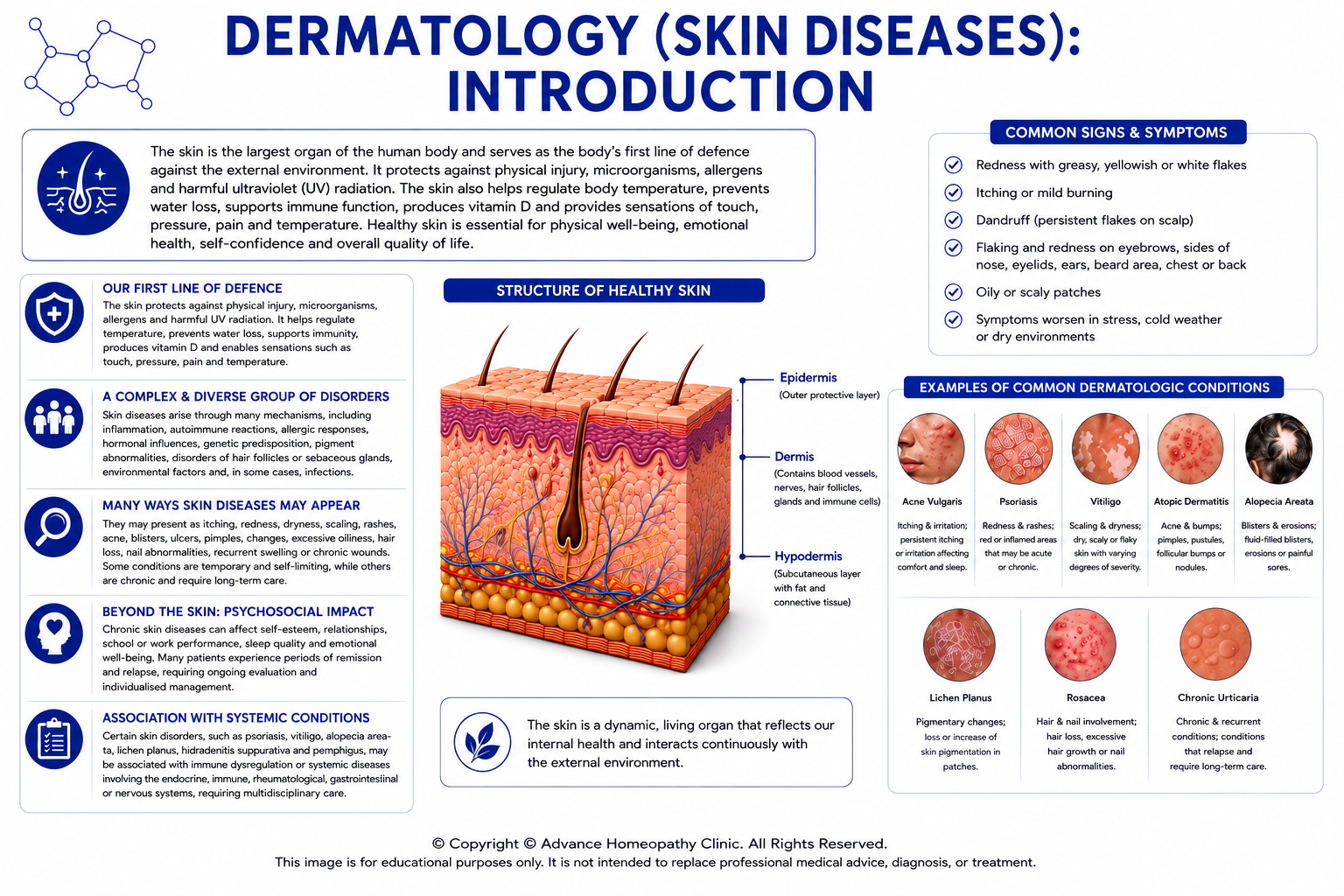
The skin is the largest organ of the human body and serves as the body's first line of defence against the external environment. Beyond protecting the body from physical injury, microorganisms, allergens, and harmful ultraviolet (UV) radiation, the skin plays an essential role in maintaining body temperature, preventing excessive water loss, supporting immune function, producing vitamin D, and providing the sensations of touch, pressure, pain, and temperature. Healthy skin is therefore essential not only for physical well-being but also for emotional health, self-confidence, and overall quality of life.
Dermatological disorders comprise a diverse group of conditions affecting the skin, hair, nails, and associated glands. These diseases arise through many different mechanisms, including inflammation, autoimmune reactions, allergic responses, hormonal influences, genetic predisposition, pigment abnormalities, disorders of the hair follicles or sebaceous glands, environmental factors, and, in some cases, infections. Although many skin conditions may appear similar to the naked eye, they often have entirely different underlying causes, making an accurate diagnosis essential before treatment is considered.
Skin diseases may present in many ways, including itching, redness, dryness, scaling, rashes, acne, blisters, ulcers, pigmentary changes, excessive oiliness, hair loss, nail abnormalities, recurrent swelling, or chronic wounds. While some dermatological conditions are temporary and self-limiting, others follow a chronic relapsing course requiring long-term medical care and regular follow-up. Certain disorders, such as psoriasis, vitiligo, alopecia areata, lichen planus, hidradenitis suppurativa, and pemphigus, may also be associated with immune dysregulation or systemic diseases requiring multidisciplinary management.
In addition to causing physical discomfort, chronic skin diseases frequently have a significant psychosocial impact. Persistent itching, visible skin lesions, facial involvement, pigmentary disorders, or hair loss may affect self-esteem, interpersonal relationships, school or work performance, sleep quality, and emotional well-being. Many patients experience periods of remission and relapse, requiring ongoing evaluation and individualised treatment strategies rather than a one-time intervention.
At Advance Homeopathy Clinic Dubai, we provide individualized homeopathic care for a wide range of dermatological conditions, including Acne Vulgaris, Folliculitis, Atopic Dermatitis (Atopic Eczema), Psoriasis, Vitiligo, Alopecia Areata, Seborrheic Dermatitis, Chronic Urticaria, Lichen Planus, Melasma, Rosacea, Hidradenitis Suppurativa, Pemphigus and Warts. Our homeopathic approach considers each patient's complete clinical picture, including the nature and progression of the skin disease, associated symptoms, constitutional characteristics, medical history, lifestyle, emotional well-being, environmental influences, and overall health rather than focusing solely on the diagnosis or appearance of the skin lesions.
Homeopathy is offered as a complementary approach alongside conventional dermatological care. Our goal is to support overall patient care through an individualized treatment plan while encouraging patients to continue appropriate dermatological evaluation, recommended investigations, prescribed medications, skin-care measures, and regular follow-up with their dermatologist and other healthcare professionals whenever required. Responsible homeopathic practice begins with an accurate medical diagnosis and recognises the importance of integrating care whenever specialist treatment is indicated.
Understanding Skin Diseases
Dermatology is the branch of medicine concerned with the diagnosis and management of diseases affecting the skin, hair, nails, and associated glands. Although skin disorders are often recognised by their visible appearance, the changes seen on the surface of the skin represent only the final manifestation of a wide variety of underlying biological processes. Two patients may present with similar redness, itching, scaling, or pigmentary changes, yet the underlying cause, disease mechanism, prognosis, and treatment may be entirely different.
Skin diseases develop through several different mechanisms, including:
- Chronic inflammation affecting the skin and surrounding tissues
- Autoimmune reactions in which the immune system mistakenly attacks healthy skin, pigment cells, hair follicles, or mucous membranes
- Allergic or hypersensitivity reactions triggered by environmental or occupational exposures
- Hormonal influences affecting the sebaceous glands and hair follicles
- Disorders of pigmentation resulting from abnormalities in melanin production or destruction of pigment-producing cells
- Dysfunction of hair follicles, sweat glands, or sebaceous glands
- Genetic predisposition and inherited skin disorders
- Environmental factors such as ultraviolet (UV) radiation, climate, pollution, friction, and irritants
- Microbial factors including bacteria, fungi, viruses, and alterations in the normal skin microbiome
- Physical or emotional stress, which may contribute to disease exacerbation in susceptible individuals
Some dermatological conditions primarily affect the skin alone, whereas others may also involve the hair, nails, joints, mucous membranes, or internal organs. For example, psoriasis may be associated with psoriatic arthritis, vitiligo may coexist with autoimmune thyroid disease or other autoimmune disorders, and pemphigus is a potentially serious autoimmune blistering disease that often requires specialised multidisciplinary management. Because many skin diseases have systemic associations, a comprehensive medical evaluation is often essential to ensure that associated conditions are recognised and appropriately managed.
Many chronic skin diseases follow a relapsing and remitting course, with periods of improvement alternating with disease flare-ups. The severity, distribution, duration, associated symptoms, response to previous treatments, and impact on quality of life vary considerably from one patient to another. Even among patients sharing the same diagnosis, the clinical presentation may differ substantially, emphasising the importance of individualized assessment rather than relying solely on the disease name.
An accurate diagnosis is the cornerstone of effective management. Dermatologists use clinical examination together with investigations such as dermoscopy, skin biopsy, microbiological studies, allergy testing, and laboratory investigations when required to distinguish between conditions that may appear similar clinically. Establishing the correct diagnosis helps guide appropriate treatment, monitor disease progression, identify associated medical conditions, and minimise the risk of long-term complications.
How Homeopathy May Support Patients with Skin Diseases
Homeopathy is an individualized system of medicine in which treatment is selected according to the patient's unique symptom pattern rather than the diagnosis alone. During consultation, the homeopathic physician evaluates the dermatological condition together with the patient's constitutional characteristics, medical history, progression of the disease, associated medical conditions, lifestyle, environmental influences, emotional well-being, previous treatments, and the overall pattern of symptoms before selecting an appropriate homeopathic medicine.
Because skin diseases differ considerably in their underlying mechanisms, severity, chronicity, and associated systemic involvement, every patient requires an individualized assessment. Two individuals diagnosed with the same skin disorder may experience different symptoms, patterns of aggravation, triggers, associated complaints, and treatment goals. Consequently, the same homeopathic medicine is not appropriate for every patient with the same diagnosis.
Depending on the individual's clinical presentation, homeopathic treatment may be considered as a complementary approach for patients experiencing:
- Chronic inflammatory skin diseases
- Recurrent eczema and dermatitis
- Psoriasis and other autoimmune skin disorders
- Chronic urticaria
- Acne vulgaris
- Rosacea
- Pigmentary disorders such as vitiligo and melasma
- Hair loss associated with alopecia areata
- Seborrheic dermatitis
- Chronic relapsing skin conditions affecting quality of life
Homeopathy should complement—not replace—conventional dermatological care. Patients are encouraged to continue prescribed medications, topical treatments, phototherapy, biologic therapies where indicated, recommended skin-care measures, regular dermatological follow-up, and all investigations advised by their healthcare professionals. An integrated approach allows patients to benefit from accurate diagnosis, appropriate medical management, and individualized homeopathic care while ensuring that potentially serious skin diseases receive timely specialist attention.
1. Acne Vulgaris
What is Acne Vulgaris?
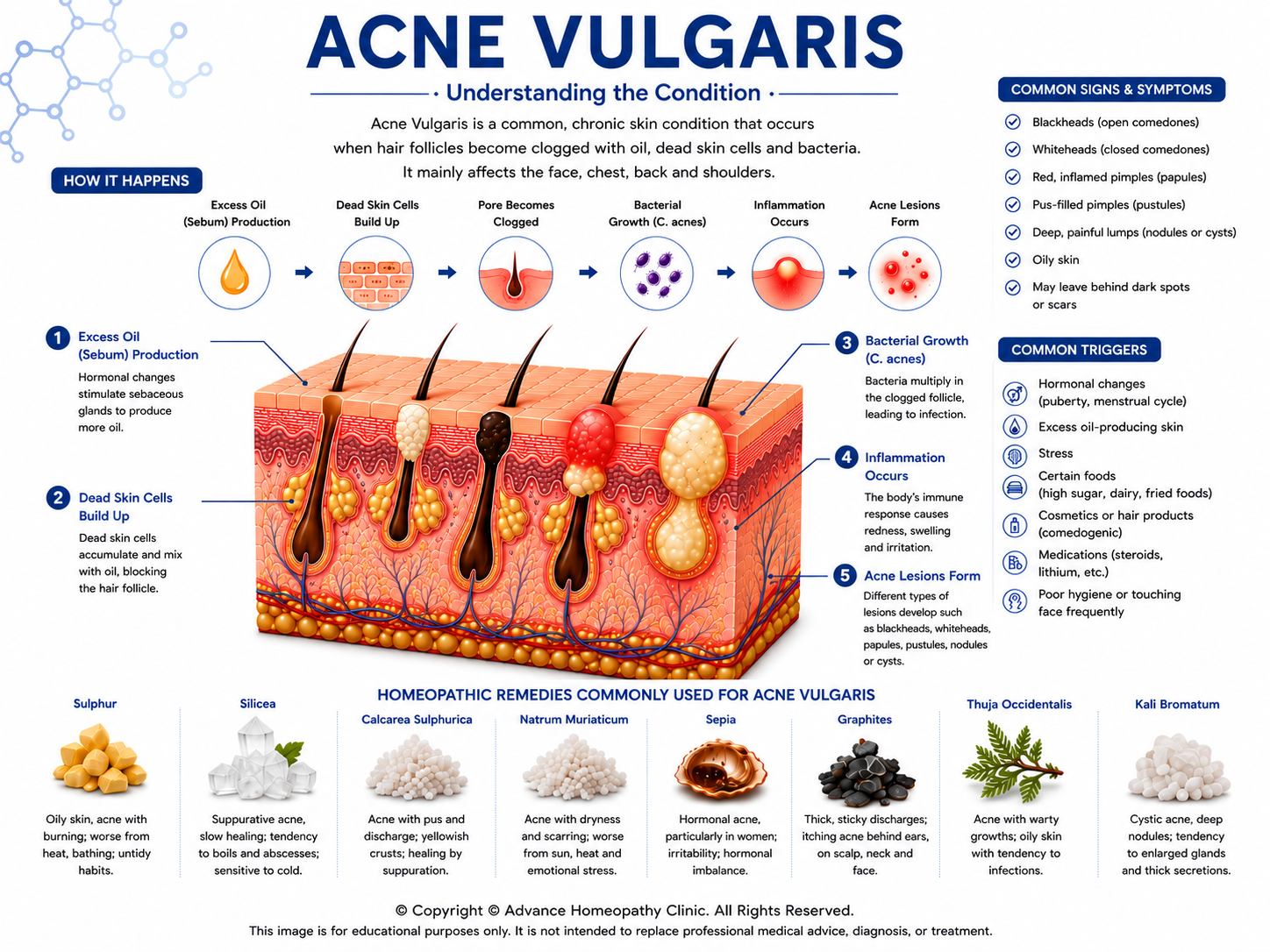
Acne Vulgaris is one of the most common chronic inflammatory disorders of the pilosebaceous unit, the structure consisting of the hair follicle and its associated sebaceous (oil) gland. Although acne is most frequently seen during adolescence due to hormonal changes, it can affect people of all ages, including adults. The condition develops through a combination of increased sebum production, blockage of hair follicles, colonisation by Cutibacterium acnes (formerly Propionibacterium acnes), inflammation, and individual genetic susceptibility.
Acne most commonly affects areas rich in sebaceous glands, including the face, chest, shoulders, and upper back. The severity varies considerably, ranging from occasional comedones (blackheads and whiteheads) to extensive inflammatory papules, pustules, nodules, and cysts. Without appropriate management, persistent inflammation may result in permanent scarring, post-inflammatory hyperpigmentation, and significant psychological distress. Early assessment and appropriate treatment are therefore important to reduce long-term complications and improve quality of life.
Common Signs & Symptoms of Acne Vulgaris
Patients with acne vulgaris may experience one or more of the following:
- Blackheads (open comedones)
- Whiteheads (closed comedones)
- Red inflammatory papules
- Pustules containing pus
- Painful nodules or cysts in more severe disease
- Excessively oily skin (seborrhoea)
- Acne affecting the face, chest, shoulders, or back
- Post-inflammatory hyperpigmentation after lesions heals
- Permanent acne scars in longstanding or severe cases
Risk Factors for Acne Vulgaris
Several factors may increase the likelihood or severity of acne, including:
- Hormonal changes during puberty
- Adult hormonal fluctuations, particularly in women
- Family history of acne
- Increased sebum production
- Occlusion of hair follicles
- Cosmetic products that block pores (comedogenic products)
- Certain medications, including corticosteroids and anabolic steroids
- Mechanical friction from helmets, masks, or tight clothing
- High glycaemic dietary patterns may contribute in susceptible individuals
- Emotional stress, which may aggravate existing acne in some patients
Conventional Management of Acne Vulgaris
Treatment is individualised according to the severity of acne, the type of lesions present, the risk of scarring, and the patient's age. The primary goals are to reduce inflammation, prevent new lesions, minimise scarring, and improve long-term skin health.
Conventional management may include:
- Gentle skin cleansing and appropriate skincare
- Topical retinoids
- Benzoyl peroxide preparations
- Topical antibiotics where indicated
- Azelaic acid
- Oral antibiotics for moderate inflammatory acne
- Hormonal therapy for selected female patients
- Oral isotretinoin for severe or treatment-resistant acne
- Chemical peels or procedural treatments in selected patients
- Laser or scar management procedures where appropriate
- Regular dermatological follow-up
Homeopathic Medicines Commonly Considered for Acne Vulgaris
Some homeopathic medicines that may be considered by experienced homeopathic physicians for patients with acne vulgaris include:
- Sulphur
- Hepar Sulphuris Calcareum
- Kali Bromatum
- Natrum Muriaticum
- Pulsatilla Nigricans
- Silicea
- Calcarea Sulphurica
- Berberis Aquifolium
Homeopathic medicines should only be prescribed by a qualified homeopathic physician after an individualized clinical evaluation.
Important: Complementary Care for Acne Vulgaris
Acne Vulgaris should always be evaluated by a qualified dermatologist or appropriately trained healthcare professional to determine the severity of the disease, identify the type of acne lesions present, assess the risk of permanent scarring, and exclude other skin conditions such as rosacea, folliculitis, hidradenitis suppurativa, steroid-induced acne, or other inflammatory disorders that may require different management. Early dermatological assessment is particularly important in patients with severe inflammatory acne, nodulocystic acne, rapidly progressive disease, or acne associated with hormonal disorders.
Patients with mild to moderate acne vulgaris may be considered for individualized homeopathic treatment as a complementary approach following appropriate dermatological evaluation. Homeopathy may be integrated alongside conventional skincare measures, prescribed topical or systemic medications, lifestyle advice, and regular dermatological follow-up. Individualized homeopathic prescribing is based on the patient's complete clinical presentation, constitutional characteristics, associated symptoms, medical history, and overall health rather than the diagnosis alone.
Patients should continue all recommended skincare measures, non-comedogenic skin care products, prescribed topical treatments, oral medications when indicated, hormonal evaluation where appropriate, and regular follow-up with their dermatologist. Individuals receiving oral isotretinoin or other systemic therapies should continue treatment and appropriate laboratory monitoring as advised by their treating physician. Homeopathy should not be regarded as a substitute for evidence-based dermatological management.
Patients with severe nodulocystic acne, rapidly progressive inflammatory acne, extensive acne associated with a high risk of permanent scarring, significant hormonal disorders requiring endocrine evaluation, or severe psychological distress related to acne should receive appropriate conventional medical management. Homeopathy should not replace systemic medical therapy when such treatment is recommended by a dermatologist, particularly when early intervention may reduce the risk of irreversible scarring and long-term complications.
Patients who develop rapidly spreading skin infection, severe facial swelling, high fever associated with skin lesions, painful fluctuant abscesses, rapidly worsening inflammation despite treatment, or signs of severe adverse reactions to prescribed medications should seek immediate medical attention, as these situations may require urgent dermatological assessment and medical treatment.
2. Folliculitis
What is Folliculitis?
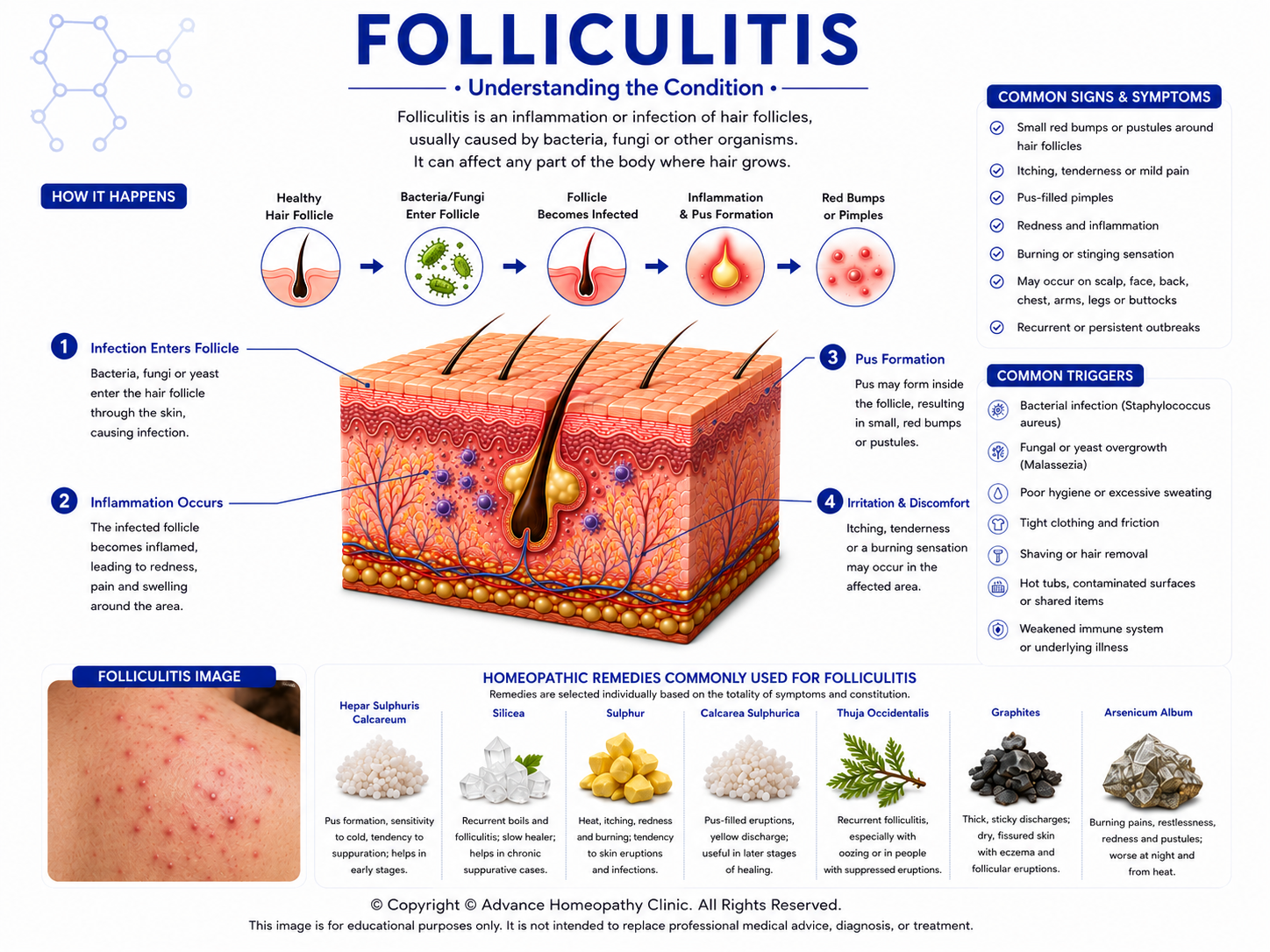
Folliculitis is an inflammatory condition of the hair follicles that may result from bacterial, fungal, viral, or parasitic infections, as well as physical irritation, friction, shaving, occlusion, or certain inflammatory skin disorders. It presents as small red bumps or pus-filled lesions centred around individual hair follicles and can occur anywhere on the body where hair is present.
Unlike acne vulgaris, which develops through blockage and inflammation of the pilosebaceous unit, folliculitis primarily involves inflammation of the hair follicle itself. The most common cause is infection with Staphylococcus aureus, although other microorganisms, including fungi such as Malassezia and dermatophytes, viruses, and mites, may also be responsible in selected cases. In some individuals, folliculitis develops without infection and is related to repeated friction, excessive sweating, tight clothing, frequent shaving, hot tub exposure, or occlusive topical products.
Folliculitis may affect the scalp, beard area, neck, chest, back, buttocks, arms, thighs, or legs. Most cases are mild and resolve with appropriate treatment; however, recurrent or untreated folliculitis may lead to deeper infections such as furuncles (boils) or carbuncles, permanent scarring, or pigmentary changes in susceptible individuals.
Because folliculitis may resemble acne, hidradenitis suppurativa, fungal infections, or other inflammatory skin disorders, an accurate diagnosis is important to identify the underlying cause and guide appropriate management.
Common Signs & Symptoms of Folliculitis
Patients with folliculitis may experience one or more of the following:
- Small red bumps centred around hair follicles
- Pustules containing pus
- Itching or burning sensation
- Mild pain or tenderness
- Clusters of inflamed hair follicles
- Crusting after lesions rupture
- Scalp, beard, chest, back, buttock, or thigh involvement
- Recurrent episodes of follicular inflammation
- Post-inflammatory pigmentation or scarring in severe or recurrent cases
Risk Factors for Folliculitis
Several factors may increase the likelihood of developing folliculitis, including:
- Bacterial skin colonisation, particularly Staphylococcus aureus
- Frequent shaving or waxing
- Tight clothing causing friction
- Excessive sweating
- Hot tubs or inadequately chlorinated swimming pools
- Occlusive oils or topical products
- Diabetes mellitus
- Reduced immune function
- Long-term antibiotic use altering the skin microbiome
- Obesity in some individuals
Conventional Management of Folliculitis
Treatment depends on the underlying cause, severity, and extent of skin involvement. The primary goals are to eliminate infection where present, reduce inflammation, prevent recurrence, and minimise complications.
Conventional management may include:
- Clinical assessment to identify the underlying cause
- Skin swabs or cultures in recurrent or resistant cases
- Topical antiseptic cleansers
- Topical antibiotics for bacterial folliculitis
- Oral antibiotics for extensive or recurrent bacterial infection
- Topical or oral antifungal medications for fungal folliculitis
- Modification of shaving techniques
- Avoidance of friction and occlusive clothing
- Good skin hygiene and appropriate skin-care measures
- Dermatological follow-up for recurrent disease
Homeopathic Medicines Commonly Considered for Folliculitis
Some homeopathic medicines that may be considered by experienced homeopathic physicians for patients with folliculitis include:
- Hepar Sulphuris Calcareum
- Silicea
- Calcarea Sulphurica
- Sulphur
- Belladonna
- Mercurius Solubilis
- Gunpowder
- Myristica Sebifera
Homeopathic medicines should only be prescribed by a qualified homeopathic physician after an individualized clinical evaluation.
Important: Complementary Care for Folliculitis
Folliculitis should always be evaluated by a qualified dermatologist or appropriately trained healthcare professional to determine the underlying cause, assess the severity of the condition, and distinguish it from other skin disorders such as acne vulgaris, hidradenitis suppurativa, fungal infections, boils (furuncles), carbuncles, or other inflammatory skin diseases. When folliculitis is recurrent, extensive, resistant to treatment, or occurs in individuals with diabetes, reduced immunity, or other chronic medical conditions, additional investigations such as skin swabs, microbial cultures, or other diagnostic tests may be required to identify the underlying cause and guide appropriate treatment.
Patients with mild or recurrent folliculitis may be considered for individualized homeopathic treatment as a complementary approach following appropriate dermatological evaluation. Homeopathy may be integrated alongside recommended skin hygiene measures, avoidance of contributing factors such as repeated friction or improper shaving techniques, prescribed topical or oral antimicrobial therapy where indicated, and regular dermatological follow-up. Individualized homeopathic prescribing is based on the patient's complete clinical presentation, constitutional characteristics, associated symptoms, medical history, and overall health rather than the diagnosis alone.
Patients should continue all recommended skin-care measures, prescribed topical antiseptics, topical or oral antibiotics for bacterial folliculitis, antifungal treatment when fungal infection is confirmed or suspected, and regular follow-up with their dermatologist. Homeopathy should not be regarded as a substitute for appropriate antimicrobial treatment when an active bacterial or fungal infection has been identified or is strongly suspected.
Patients with deep or recurrent folliculitis, furuncles, carbuncles, widespread skin involvement, folliculitis associated with diabetes or immunosuppression, persistent disease despite appropriate treatment, or complications such as abscess formation should receive appropriate conventional medical management. Homeopathy should not replace medical treatment when systemic antimicrobial therapy, drainage procedures, or further investigations are recommended by the treating dermatologist or physician.
Patients who develop rapidly spreading redness, increasing pain, high fever, extensive swelling, pus-filled abscesses, red streaks extending from the affected area, facial involvement around the eyes or nose, or any signs of systemic infection should seek immediate medical attention, as these situations may indicate a deeper skin or soft tissue infection requiring urgent medical treatment.
3. Atopic Dermatitis (Atopic Eczema)
What is Atopic Dermatitis?
Atopic Dermatitis, commonly known as Atopic Eczema, is a chronic inflammatory skin disease characterised by recurrent episodes of itching, dry skin, and eczema. It is one of the most common dermatological conditions affecting infants and children, although many individuals continue to experience symptoms into adolescence and adulthood or may develop the condition later in life.
Atopic dermatitis develops through a complex interaction between genetic predisposition, impairment of the skin barrier, immune system dysregulation, environmental factors, and alterations in the skin microbiome. A weakened skin barrier allows increased loss of moisture and greater penetration of irritants, allergens, and microorganisms, making the skin more susceptible to inflammation and recurrent flare-ups.
The disease often follows a relapsing and remitting course, with periods of improvement alternating with episodes of worsening symptoms. Persistent itching may lead to repeated scratching, further damaging the skin barrier and increasing the risk of bacterial or viral skin infections. Although atopic dermatitis primarily affects the skin, it is frequently associated with other atopic disorders such as asthma, allergic rhinitis, and food allergies in some individuals. Early diagnosis and appropriate long-term management are important to reduce disease activity, improve skin barrier function, minimise complications, and enhance quality of life.

Common Signs & Symptoms of Atopic Dermatitis
Patients with atopic dermatitis may experience one or more of the following:
- Persistent itching, often worse at night
- Dry, rough, or sensitive skin
- Red, inflamed patches of skin
- Recurrent eczema affecting the face, neck, hands, wrists, elbows, knees, ankles, or skin folds
- Thickened skin due to repeated scratching (lichenification)
- Cracking or oozing of the skin during acute flare-ups
- Crusting caused by secondary bacterial infection
- Increased skin sensitivity to soaps, detergents, wool, or environmental irritants
- Sleep disturbance due to persistent itching
Risk Factors for Atopic Dermatitis
Several factors may increase the likelihood of developing atopic dermatitis, including:
- Family history of eczema, asthma, or allergic rhinitis
- Genetic predisposition affecting the skin barrier
- Personal history of other atopic diseases
- Dry skin (xerosis)
- Environmental allergens
- Irritants such as soaps, detergents, fragrances, and wool
- Climate changes, particularly cold, dry weather
- Emotional stress, which may aggravate flare-ups in some individuals
- Bacterial colonisation of the skin, particularly Staphylococcus aureus
Conventional Management of Atopic Dermatitis
Treatment aims to restore the skin barrier, control inflammation, relieve itching, prevent infections, reduce flare-ups, and improve long-term skin health. Management is individualised according to disease severity, age, and the extent of skin involvement.
Conventional management may include:
- Regular use of emollients and moisturisers
- Avoidance of known irritants and individual triggers
- Topical corticosteroids during flare-ups
- Topical calcineurin inhibitors where appropriate
- Topical phosphodiesterase-4 (PDE-4) inhibitors in selected patients
- Wet-wrap therapy for severe eczema in selected cases
- Oral antihistamines in selected patients
- Phototherapy for moderate to severe disease
- Systemic immunomodulatory medications or biologic therapies for severe or treatment-resistant cases
- Treatment of secondary bacterial or viral skin infections when present
- Regular dermatological follow-up
Homeopathic Medicines Commonly Considered for Atopic Dermatitis
Some homeopathic medicines that may be considered by experienced homeopathic physicians for patients with atopic dermatitis include:
- Graphites
- Sulphur
- Petroleum
- Mezereum
- Rhus Toxicodendron
- Arsenicum Album
- Calcarea Carbonica
- Psorinum
Homeopathic medicines should only be prescribed by a qualified homeopathic physician after an individualized clinical evaluation.
Important: Complementary Care for Atopic Dermatitis (Atopic Eczema)
Atopic Dermatitis (Atopic Eczema) should always be evaluated by a qualified dermatologist or appropriately trained healthcare professional to confirm the diagnosis, assess disease severity, identify potential triggers, evaluate the extent of skin barrier impairment, and exclude other dermatological conditions such as contact dermatitis, seborrheic dermatitis, psoriasis, scabies, fungal infections, immunodeficiency disorders, or other inflammatory skin diseases that may present with similar symptoms. Patients with severe, persistent, or atypical eczema may require additional investigations or specialist evaluation to identify associated allergic, immunological, or systemic conditions.
Patients with mild to moderate atopic dermatitis may be considered for individualized homeopathic treatment as a complementary approach following appropriate dermatological assessment. Homeopathy may be integrated alongside regular moisturization, avoidance of known irritants and triggers, prescribed topical or systemic medications, appropriate skin-care measures, allergy management where indicated, and regular dermatological follow-up. Individualized homeopathic prescribing is based on the patient's complete clinical presentation, constitutional characteristics, associated allergic conditions, medical history, environmental influences, and overall health rather than the diagnosis alone.
Patients should continue all recommended skin barrier care, regular use of emollients and moisturizers, prescribed topical corticosteroids or calcineurin inhibitors, systemic medications or biologic therapies when indicated, infection control measures, and regular follow-up with their dermatologist. Homeopathy should not be regarded as a substitute for evidence-based dermatological treatment, particularly in patients requiring immunomodulatory or biologic therapy for moderate to severe disease.
Patients with extensive eczema, severe or treatment-resistant disease, recurrent bacterial or viral skin infections, rapidly worsening eczema, significant sleep disturbance, growth concerns in children due to poorly controlled disease, or associated severe asthma or other atopic disorders should receive appropriate conventional medical management. Homeopathy should not replace specialist dermatological care when advanced medical therapy or multidisciplinary management is recommended.
Patients who develop rapidly spreading redness, painful skin lesions, widespread blistering, high fever, extensive oozing or crusting, rapidly increasing swelling, severe skin pain, eye involvement, or symptoms suggestive of eczema herpeticum should seek immediate medical attention, as these situations may represent serious dermatological emergencies requiring urgent specialist treatment.
4. Psoriasis
What is Psoriasis?
Psoriasis is a chronic immune-mediated inflammatory skin disease in which the immune system accelerates the growth and turnover of skin cells. Instead of the normal skin renewal process occurring over several weeks, new skin cells are produced within a few days. As these cells accumulate on the surface of the skin, they form well-defined, thickened, red plaques covered with characteristic silvery-white scales.
Psoriasis is not contagious and cannot be transmitted from one person to another. The disease develops through a complex interaction between genetic susceptibility, immune system dysregulation, and environmental factors. Although the exact cause remains incompletely understood, factors such as infections, physical trauma to the skin, certain medications, psychological stress, smoking, obesity, and excessive alcohol consumption may trigger or worsen the disease in susceptible individuals.
While psoriasis primarily affects the skin, it is now recognised as a systemic inflammatory disease. Approximately one-third of patients may develop Psoriatic Arthritis, an inflammatory joint disease that can cause pain, stiffness, swelling, and progressive joint damage if left untreated. Individuals with psoriasis may also have an increased risk of metabolic syndrome, obesity, type 2 diabetes mellitus, cardiovascular disease, and certain other inflammatory disorders. Early diagnosis, regular medical follow-up, and comprehensive management are therefore important to reduce disease activity, minimise complications, and improve long-term quality of life.
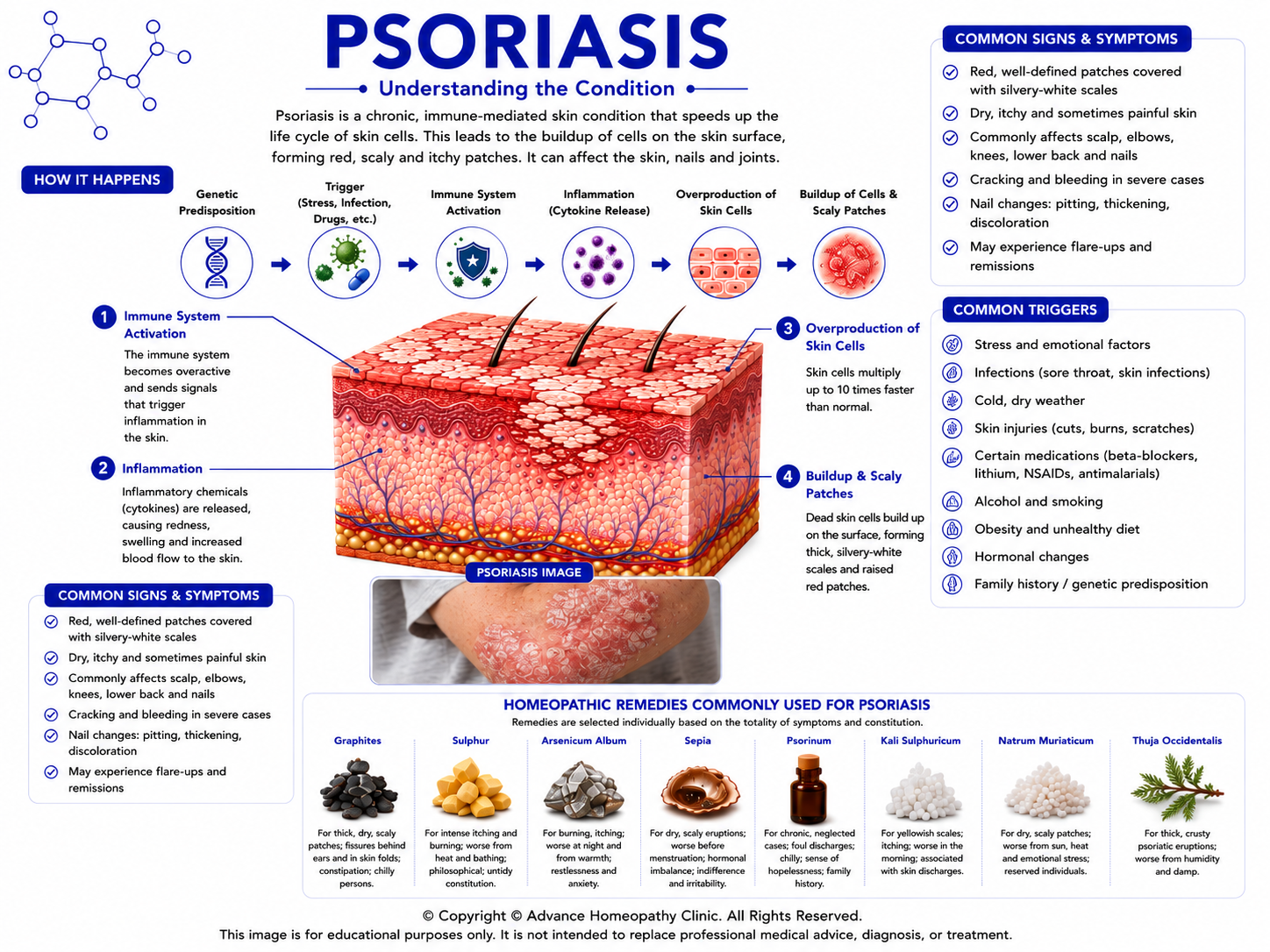
Common Signs & Symptoms of Psoriasis
Patients with psoriasis may experience one or more of the following:
- Well-defined red plaques covered with silvery-white scales
- Persistent dry, thickened, or cracked skin
- Itching, burning, or soreness of affected areas
- Scalp psoriasis with excessive scaling
- Plaques affecting the elbows, knees, scalp, lower back, or other body areas
- Nail changes, including pitting, thickening, discoloration, or separation from the nail bed
- Cracking or bleeding of plaques
- Episodes of disease flare-ups and remission
- Joint pain, stiffness, or swelling suggestive of psoriatic arthritis in some individuals
Risk Factors for Psoriasis
Several factors may increase the likelihood of developing psoriasis or triggering disease flare-ups, including:
- Family history of psoriasis
- Genetic predisposition
- Immune system dysregulation
- Streptococcal throat infections, particularly in guttate psoriasis
- Skin injury or trauma (Koebner phenomenon)
- Emotional stress
- Cigarette smoking
- Excessive alcohol consumption
- Obesity
- Certain medications, including lithium, beta-blockers, and antimalarial drugs
Conventional Management of Psoriasis
Treatment is individualised according to the type of psoriasis, severity of skin involvement, impact on quality of life, presence of psoriatic arthritis, and associated medical conditions. The primary goals are to reduce inflammation, control symptoms, minimise flare-ups, and improve long-term skin health.
Conventional management may include:
- Regular use of moisturisers and emollients
- Topical corticosteroids
- Vitamin D analogues
- Topical retinoids
- Calcineurin inhibitors for selected anatomical sites
- Coal tar or salicylic acid preparations where appropriate
- Phototherapy (narrowband UVB or PUVA) for moderate disease
- Oral systemic medications such as methotrexate, cyclosporine, or acitretin
- Biologic therapies targeting specific immune pathways for moderate to severe psoriasis
- Regular dermatology follow-up and screening for psoriatic arthritis
Homeopathic Medicines Commonly Considered for Psoriasis
Some homeopathic medicines that may be considered by experienced homeopathic physicians for patients with psoriasis include:
- Graphites
- Arsenicum Album
- Sulphur
- Petroleum
- Mezereum
- Sepia
- Lycopodium Clavatum
- Kali Arsenicosum
Homeopathic medicines should only be prescribed by a qualified homeopathic physician after an individualized clinical evaluation.
Important: Complementary Care for Psoriasis
Psoriasis should always be evaluated by a qualified dermatologist or appropriately trained healthcare professional to confirm the diagnosis, determine the clinical subtype and severity of the disease, assess the extent of skin involvement, and identify associated conditions such as Psoriatic Arthritis, metabolic syndrome, obesity, diabetes mellitus, cardiovascular disease, or other immune-mediated disorders. In selected patients, additional investigations or referral to a rheumatologist or other specialists may be required to evaluate joint symptoms or associated systemic conditions.
Patients with mild to moderate psoriasis may be considered for individualized homeopathic treatment as a complementary approach following appropriate dermatological evaluation. Homeopathy may be integrated alongside regular skin-care measures, prescribed topical therapies, phototherapy where indicated, lifestyle modification, management of associated medical conditions, and regular dermatological follow-up. Individualized homeopathic prescribing is based on the patient's complete clinical presentation, constitutional characteristics, associated symptoms, medical history, disease pattern, and overall health rather than the diagnosis alone.
Patients should continue all recommended emollients, prescribed topical medications, phototherapy, systemic medications, biologic therapies where indicated, and regular follow-up with their dermatologist or rheumatologist. Homeopathy should not be regarded as a substitute for evidence-based dermatological treatment, particularly in patients with moderate to severe psoriasis, extensive skin involvement, or psoriatic arthritis requiring systemic therapy.
Patients with extensive psoriasis, rapidly progressive disease, erythrodermic psoriasis, generalized pustular psoriasis, significant nail involvement affecting function, persistent joint pain or swelling suggestive of psoriatic arthritis, or severe impairment of quality of life should receive appropriate conventional medical management. Homeopathy should not replace systemic immunomodulatory treatment or biologic therapy when these treatments are recommended by the treating dermatologist or rheumatologist.
Patients who develop widespread redness involving most of the body, generalized pustules, high fever, severe skin pain, dehydration, rapidly worsening skin lesions, sudden swelling and pain of multiple joints, or any acute deterioration in their general condition should seek immediate medical attention, as these situations may represent serious dermatological or rheumatological emergencies requiring urgent specialist care.
5. Vitiligo
What is Vitiligo?
Vitiligo is a chronic autoimmune pigmentary disorder characterised by the gradual loss of melanocytes, the specialised cells responsible for producing melanin, the pigment that gives colour to the skin, hair, and, in some cases, the eyes. As melanocytes are destroyed, sharply defined white patches develop on different parts of the body.
Vitiligo affects people of all ages, ethnic backgrounds, and skin colours. Although the condition is more noticeable in individuals with darker skin tones, it can occur equally in lighter skin. The disease is not contagious, cannot be transmitted from one person to another, and is not caused by poor hygiene or an infection.
The exact cause of vitiligo is not fully understood, but current evidence suggests that it results from a combination of autoimmune mechanisms, genetic susceptibility, environmental influences, and oxidative stress. In some individuals, emotional stress, skin injury, severe sunburn, or certain chemical exposures may contribute to the onset or progression of the disease. Vitiligo may also occur in association with other autoimmune conditions, particularly autoimmune thyroid disorders, type 1 diabetes mellitus, pernicious anaemia, and alopecia areata.
Although vitiligo usually causes no physical pain or itching, its visible appearance may have a profound emotional and psychological impact, particularly when exposed areas such as the face, hands, or neck are affected. Early diagnosis and appropriate management can help monitor disease activity, discuss treatment options, and provide psychological support where needed.
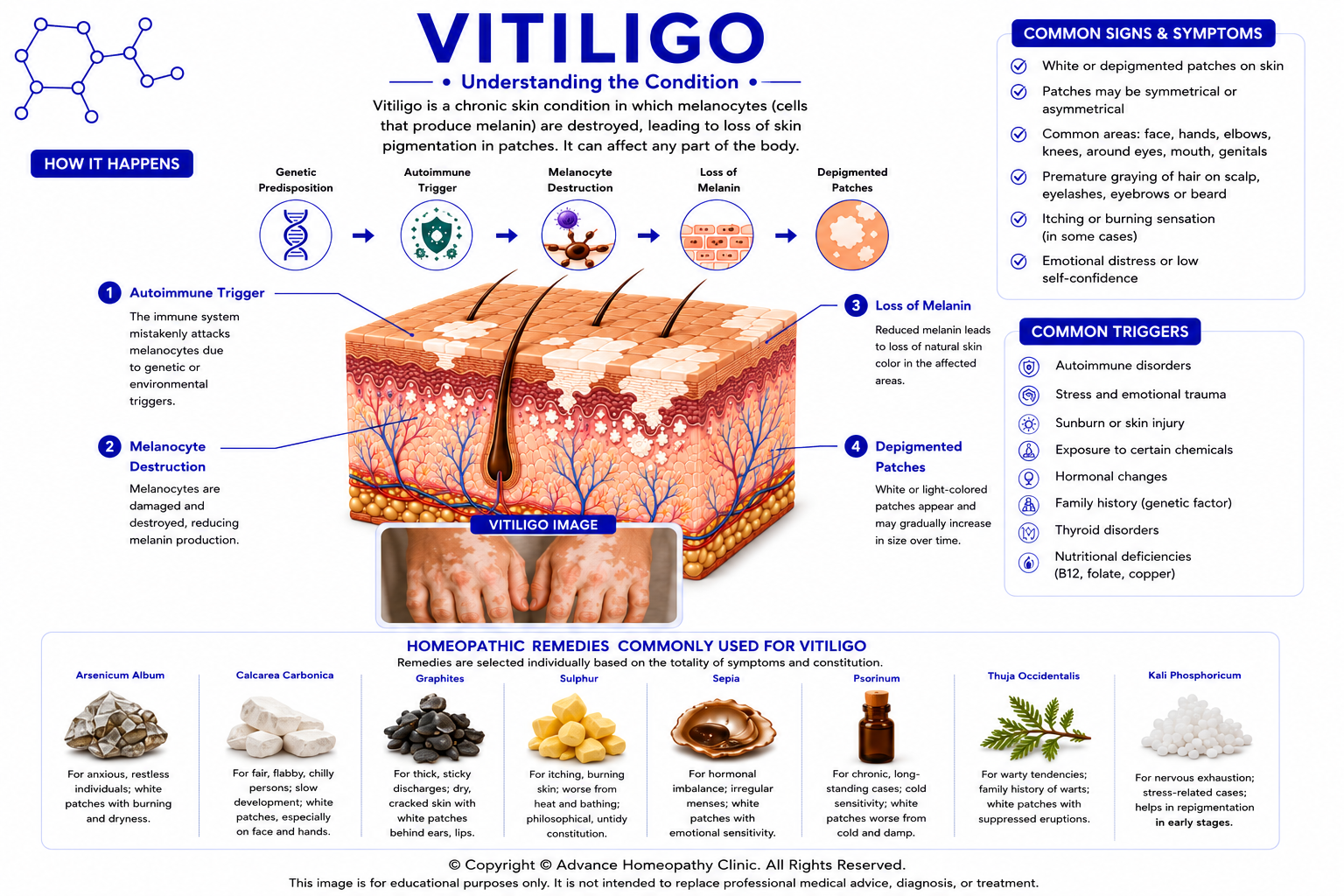
Common Signs & Symptoms of Vitiligo
Patients with vitiligo may experience one or more of the following:
- Well-defined white or depigmented patches on the skin
- Symmetrical involvement of both sides of the body in many patients
- Early whitening of scalp hair, eyebrows, eyelashes, or beard hair (leukotrichia)
- Pigment loss around body openings such as the mouth, eyes, or genital region
- Depigmentation over the hands, fingers, feet, elbows, knees, or face
- Areas of pigment loss at sites of repeated friction or previous skin injury (Koebner phenomenon)
- Gradual enlargement or appearance of new depigmented patches over time
- Emotional distress or reduced self-confidence due to visible skin changes
Risk Factors for Vitiligo
Several factors are associated with an increased likelihood of developing vitiligo, including:
- Family history of vitiligo
- Genetic predisposition
- Autoimmune diseases, particularly autoimmune thyroid disorders
- Personal or family history of other autoimmune conditions
- Skin trauma or repeated friction (Koebner phenomenon)
- Severe sunburn
- Emotional stress, which may contribute to disease progression in some individuals
- Exposure to certain industrial chemicals in susceptible individuals
Conventional Management of Vitiligo
Treatment is individualised according to the type of vitiligo, extent of skin involvement, disease activity, patient age, and cosmetic concerns. The primary goals are to stabilise disease progression where possible, encourage repigmentation, protect depigmented skin, and improve quality of life.
Conventional management may include:
- Dermatological assessment and regular follow-up
- Topical corticosteroids
- Topical calcineurin inhibitors
- Narrowband ultraviolet B (NB-UVB) phototherapy
- Excimer laser therapy for selected localised lesions
- Systemic corticosteroids in selected rapidly progressive cases
- Surgical grafting procedures for stable vitiligo in carefully selected patients
- Cosmetic camouflage where desired
- Sunscreen use to protect depigmented skin from sunburn
- Screening for associated autoimmune diseases when clinically indicated
Homeopathic Medicines Commonly Considered for Vitiligo
Some homeopathic medicines that may be considered by experienced homeopathic physicians for patients with vitiligo include:
- Arsenicum Sulphuratum Flavum
- Natrum Muriaticum
- Silicea
- Sepia
- Sulphur
- Lycopodium Clavatum
- Calcarea Carbonica
- Phosphorus
Homeopathic medicines should only be prescribed by a qualified homeopathic physician after an individualized clinical evaluation.
Important: Complementary Care for Vitiligo
Vitiligo should always be evaluated by a qualified dermatologist or appropriately trained healthcare professional to confirm the diagnosis, determine the type and extent of skin involvement, assess whether the disease is stable or actively progressing, and identify associated autoimmune conditions such as autoimmune thyroid disease, type 1 diabetes mellitus, pernicious anaemia, alopecia areata, or other immune-mediated disorders. In selected patients, additional laboratory investigations or specialist referral may be recommended to evaluate associated medical conditions and guide comprehensive management.
Patients with localized, generalized, or stable vitiligo may be considered for individualized homeopathic treatment as a complementary approach following appropriate dermatological evaluation. Homeopathy may be integrated alongside prescribed topical medications, phototherapy, sun protection measures, cosmetic camouflage where desired, psychological support, and regular dermatological follow-up. Individualized homeopathic prescribing is based on the patient's complete clinical presentation, constitutional characteristics, associated autoimmune conditions, medical history, disease progression, emotional well-being, and overall health rather than the diagnosis alone.
Patients should continue all recommended dermatological treatment, including topical corticosteroids, topical calcineurin inhibitors, narrowband ultraviolet B (NB-UVB) phototherapy, excimer laser therapy where appropriate, surgical procedures for carefully selected stable cases, and regular follow-up with their dermatologist. Homeopathy should not be regarded as a substitute for evidence-based dermatological management, particularly in patients with active or rapidly progressive disease where early intervention may improve the likelihood of disease stabilization and repigmentation.
Patients with rapidly progressive vitiligo, extensive body surface involvement, associated autoimmune diseases requiring specialist management, significant psychological distress, or vitiligo affecting the eyes or other specialised areas should continue appropriate conventional medical care and multidisciplinary follow-up where indicated. Homeopathy should not replace dermatological treatment or recommended investigations for associated autoimmune conditions.
Patients who experience rapid appearance of multiple new depigmented patches over a short period, sudden visual symptoms, significant eye inflammation, severe sunburn involving depigmented skin, or symptoms suggestive of an associated autoimmune disorder such as unexplained weight loss, persistent fatigue, palpitations, or other systemic symptoms should seek prompt medical evaluation, as these situations may require further investigation and specialist management.
6. Alopecia Areata
What is Alopecia Areata?
Alopecia Areata is a chronic autoimmune disorder in which the body's immune system mistakenly attacks the hair follicles, resulting in non-scarring hair loss. The affected hair follicles remain alive, which means that hair regrowth is often possible, although the course of the disease is unpredictable and varies considerably between individuals.
The condition most commonly presents as one or more well-defined, smooth, round or oval patches of hair loss on the scalp. However, it may also involve the beard, eyebrows, eyelashes, and other hair-bearing areas of the body. In some patients, the disease progresses to involve the entire scalp (Alopecia Totalis) or all body hair (Alopecia Universalis).
Although the exact cause remains incompletely understood, alopecia areata is believed to result from a combination of genetic susceptibility, immune system dysregulation, and environmental factors. The condition is frequently associated with other autoimmune disorders, particularly autoimmune thyroid disease, vitiligo, type 1 diabetes mellitus, and pernicious anaemia. Emotional stress does not directly cause alopecia areata but may contribute to disease onset or trigger relapses in susceptible individuals.
Alopecia areata is not contagious and does not permanently destroy the hair follicles. While many patients experience spontaneous regrowth, others may have recurrent episodes of hair loss over several years. The visible nature of the disease can significantly affect self-esteem, confidence, and emotional well-being, making early medical assessment and appropriate counselling an important part of patient care.
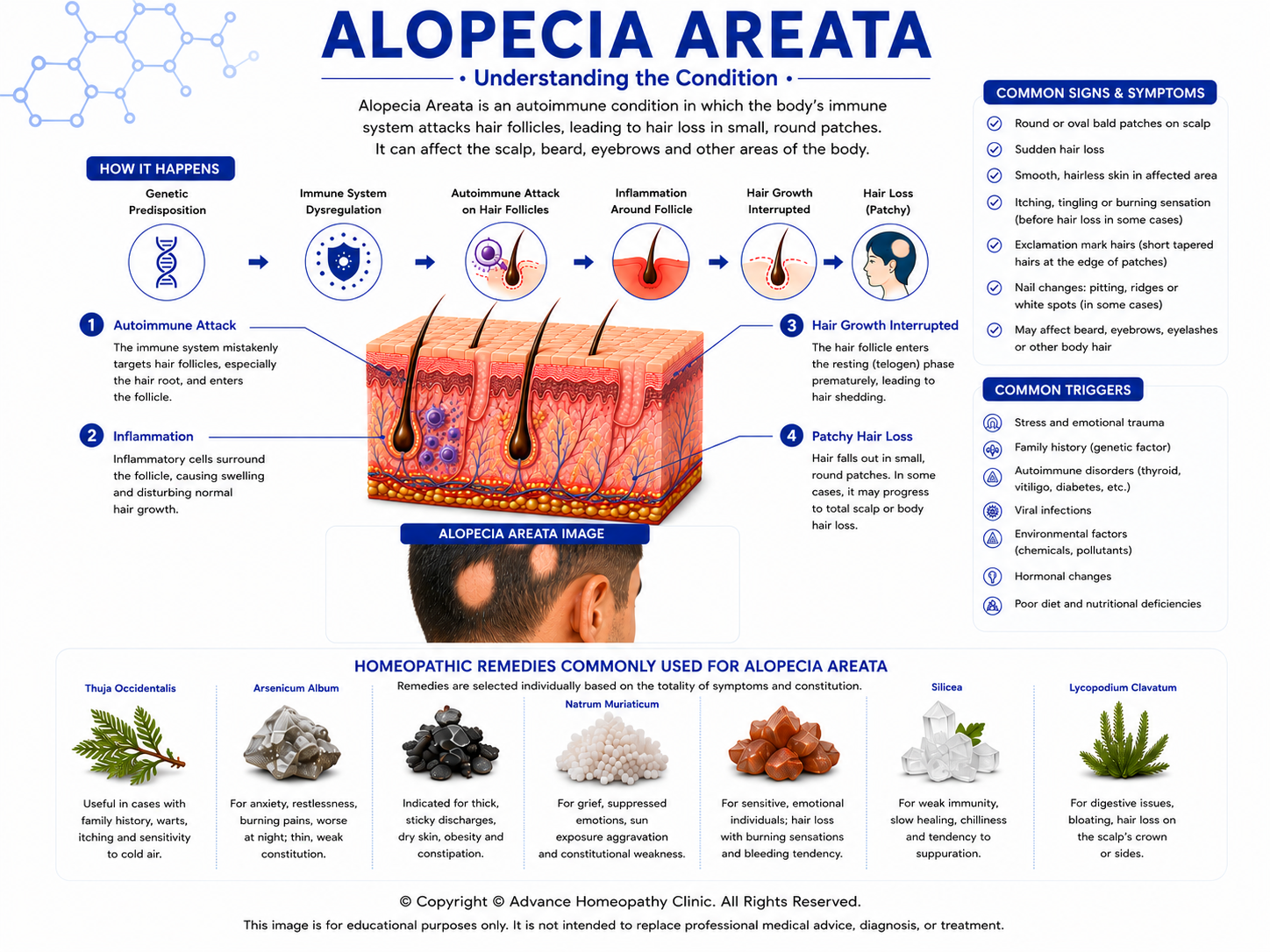
Common Signs & Symptoms of Alopecia Areata
Patients with alopecia areata may experience one or more of the following:
- One or more smooth, well-defined patches of hair loss
- Hair loss affecting the scalp, beard, eyebrows, eyelashes, or other body areas
- Sudden onset of patchy hair loss
- "Exclamation mark" hairs around the margins of active lesions
- Nail abnormalities such as pitting, ridging, or rough nails in some patients
- Recurrent episodes of hair loss and regrowth
- Extensive hair loss involving the entire scalp (Alopecia Totalis) in severe cases
- Complete loss of scalp and body hair (Alopecia Universalis) in rare cases
Risk Factors for Alopecia Areata
Several factors are associated with an increased likelihood of developing alopecia areata, including:
- Family history of alopecia areata
- Genetic predisposition
- Personal or family history of autoimmune diseases
- Autoimmune thyroid disease
- Vitiligo
- Type 1 diabetes mellitus
- Down syndrome
- Emotional stress, which may contribute to disease recurrence in susceptible individuals
Conventional Management of Alopecia Areata
Treatment depends on the patient's age, extent of hair loss, disease activity, duration, and previous response to therapy. The primary goals are to suppress immune-mediated inflammation, encourage hair regrowth, minimise disease progression, and provide psychological support where appropriate.
Conventional management may include:
- Clinical assessment by a dermatologist
- Dermoscopy (trichoscopy) to evaluate hair follicles
- Intralesional corticosteroid injections for localised disease
- Topical corticosteroids
- Topical immunotherapy in selected patients
- Topical minoxidil as an adjunct in selected cases
- Systemic corticosteroids for rapidly progressive disease
- Janus kinase (JAK) inhibitors for selected patients with extensive disease
- Screening for associated autoimmune disorders when clinically indicated
- Regular dermatological follow-up
Homeopathic Medicines Commonly Considered for Alopecia Areata
Some homeopathic medicines that may be considered by experienced homeopathic physicians for patients with alopecia areata include:
- Fluoric Acid
- Phosphorus
- Lycopodium Clavatum
- Silicea
- Natrum Muriaticum
- Calcarea Carbonica
- Selenium
- Vinca Minor
Homeopathic medicines should only be prescribed by a qualified homeopathic physician after an individualized clinical evaluation.
Important: Complementary Care for Alopecia Areata
Alopecia Areata should always be evaluated by a qualified dermatologist or appropriately trained healthcare professional to confirm the diagnosis, assess the extent and pattern of hair loss, determine disease activity, and exclude other causes of hair loss such as tinea capitis, trichotillomania, androgenetic alopecia, telogen effluvium, scarring alopecias, nutritional deficiencies, or endocrine disorders. Patients with extensive or rapidly progressive hair loss may require additional investigations to identify associated autoimmune diseases, particularly thyroid disorders, or other contributing medical conditions.
Patients with localized or stable alopecia areata may be considered for individualized homeopathic treatment as a complementary approach following appropriate dermatological evaluation. Homeopathy may be integrated alongside prescribed topical or intralesional treatments, systemic therapy where indicated, management of associated autoimmune conditions, psychological support, and regular dermatological follow-up. Individualized homeopathic prescribing is based on the patient's complete clinical presentation, constitutional characteristics, disease progression, associated symptoms, medical history, emotional well-being, and overall health rather than the diagnosis alone.
Patients should continue all recommended dermatological treatment, including topical corticosteroids, intralesional corticosteroid injections, topical immunotherapy, systemic immunomodulatory medications, Janus kinase (JAK) inhibitors where clinically indicated, and regular follow-up with their dermatologist. Homeopathy should not be regarded as a substitute for evidence-based dermatological management, particularly in patients with rapidly progressive, extensive, or treatment-resistant disease.
Patients with alopecia totalis, alopecia universalis, rapidly progressive hair loss, extensive scalp involvement, significant eyebrow or eyelash loss, associated autoimmune diseases, or marked psychological distress should continue appropriate conventional medical care and multidisciplinary support where indicated. Homeopathy should not replace recommended dermatological treatment or investigations for associated autoimmune or endocrine disorders.
Patients who experience sudden, extensive hair loss over a short period, scarring of the scalp, painful or inflamed scalp lesions, signs of secondary skin infection, or symptoms suggestive of associated autoimmune or endocrine disease such as unexplained weight changes, persistent fatigue, heat or cold intolerance, or other systemic symptoms should seek prompt medical evaluation, as these situations may require further investigation and specialist management.
7. Seborrheic Dermatitis
What is Seborrheic Dermatitis?
Seborrheic Dermatitis is a chronic inflammatory skin disorder that primarily affects areas of the body rich in sebaceous (oil-producing) glands. It commonly involves the scalp, face, eyebrows, sides of the nose, ears, beard area, chest, and upper back. The condition is characterised by redness, greasy scales, flaking, and varying degrees of itching.
Although the exact cause remains incompletely understood, seborrheic dermatitis is believed to result from a combination of increased sebaceous gland activity, an inflammatory response to Malassezia, a naturally occurring yeast present on the skin, individual immune susceptibility, and genetic and environmental factors. It is important to understand that Malassezia normally exists on healthy skin and does not cause disease in most individuals. In susceptible people, however, an exaggerated inflammatory response leads to the characteristic skin changes.
Seborrheic dermatitis is not contagious and cannot be transmitted from one person to another. The disease often follows a chronic relapsing course, with symptoms improving and worsening over time. Flare-ups may occur during periods of emotional stress, cold weather, illness, fatigue, or hormonal changes. In infants, a mild form known as cradle cap commonly affects the scalp during the first few months of life and usually resolves without long-term complications.
Although seborrheic dermatitis is generally not a serious medical condition, persistent itching, visible facial involvement, recurrent scalp flaking, and chronic inflammation may significantly affect comfort, self-confidence, and quality of life. Long-term management is often directed towards controlling symptoms and reducing the frequency of flare-ups.
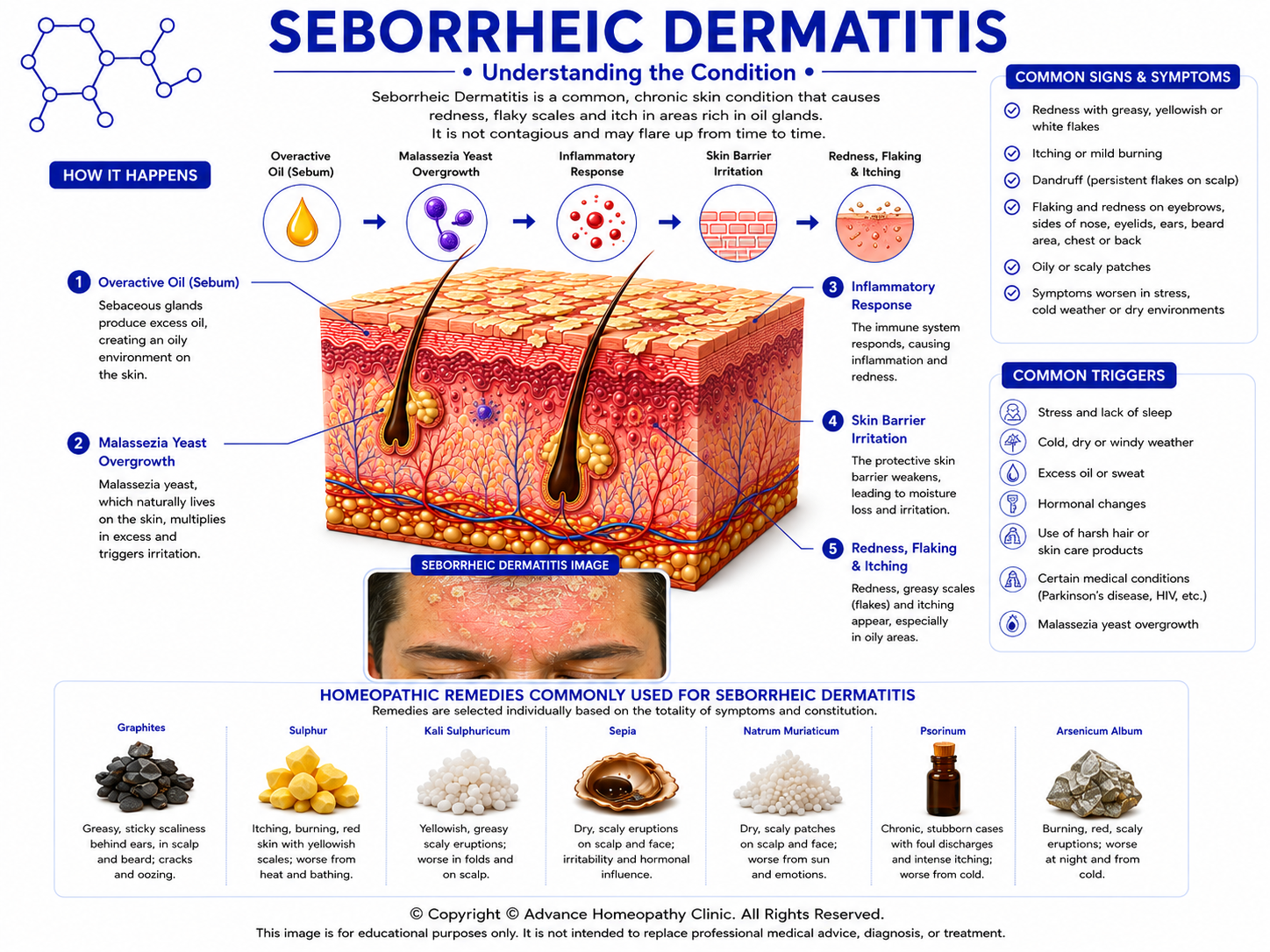
Common Signs & Symptoms of Seborrheic Dermatitis
Patients with seborrheic dermatitis may experience one or more of the following:
- Persistent dandruff or excessive scalp flaking
- Greasy yellowish or white scales
- Red, inflamed patches of skin
- Itching of the scalp or affected areas
- Scaling involving the eyebrows, eyelids, beard, ears, or sides of the nose
- Greasy patches affecting the chest or upper back
- Mild burning or irritation
- Recurrent episodes of worsening and improvement
- Cradle cap in infants
Risk Factors for Seborrheic Dermatitis
Several factors may increase the likelihood of developing seborrheic dermatitis or trigger disease flare-ups, including:
- Increased sebaceous gland activity
- Individual inflammatory response to Malassezia yeast
- Family history
- Cold, dry weather
- Emotional stress
- Neurological disorders such as Parkinson's disease
- HIV infection and other causes of reduced immune function
- Certain medications
- Infancy and older age
Conventional Management of Seborrheic Dermatitis
Treatment is individualised according to the severity of symptoms, areas affected, and frequency of disease recurrence. The primary goals are to reduce inflammation, control scaling, suppress excessive growth of Malassezia, relieve itching, and prevent recurrent flare-ups.
Conventional management may include:
- Medicated shampoos containing ketoconazole, selenium sulphide, zinc pyrithione, ciclopirox, or coal tar
- Gentle cleansing of affected skin
- Topical antifungal creams
- Low-potency topical corticosteroids for short-term use where indicated
- Topical calcineurin inhibitors for selected facial areas
- Regular scalp and skin care
- Dermatological follow-up for persistent or severe disease
Homeopathic Medicines Commonly Considered for Seborrheic Dermatitis
Some homeopathic medicines that may be considered by experienced homeopathic physicians for patients with seborrheic dermatitis include:
- Graphites
- Kali Sulphuricum
- Natrum Muriaticum
- Sulphur
- Thuja Occidentalis
- Mezereum
- Petroleum
- Arsenicum Album
Homeopathic medicines should only be prescribed by a qualified homeopathic physician after an individualized clinical evaluation.
Important: Complementary Care for Seborrheic Dermatitis
Seborrheic Dermatitis should always be evaluated by a qualified dermatologist or appropriately trained healthcare professional to confirm the diagnosis, assess the severity and extent of skin involvement, and distinguish it from other dermatological conditions such as psoriasis, atopic dermatitis, contact dermatitis, fungal infections, rosacea, lupus erythematosus, or other inflammatory skin disorders that may require different management. Patients with unusually severe, treatment-resistant, or widespread seborrheic dermatitis may require further evaluation to identify underlying medical conditions or contributing factors.
Patients with mild to moderate seborrheic dermatitis may be considered for individualized homeopathic treatment as a complementary approach following appropriate dermatological evaluation. Homeopathy may be integrated alongside medicated shampoos, prescribed topical antifungal or anti-inflammatory medications, appropriate skin-care measures, avoidance of individual triggers where possible, and regular dermatological follow-up. Individualized homeopathic prescribing is based on the patient's complete clinical presentation, constitutional characteristics, associated symptoms, medical history, disease pattern, environmental influences, and overall health rather than the diagnosis alone.
Patients should continue all recommended dermatological treatment, including medicated shampoos containing antifungal agents where indicated, prescribed topical antifungal preparations, topical corticosteroids or calcineurin inhibitors when appropriate, gentle skin-care measures, and regular follow-up with their dermatologist. Homeopathy should not be regarded as a substitute for evidence-based dermatological management, particularly in patients with persistent, extensive, or treatment-resistant disease.
Patients with extensive scalp involvement, severe facial seborrheic dermatitis, recurrent secondary bacterial infection, persistent symptoms despite appropriate treatment, or seborrheic dermatitis associated with significant immunosuppression or underlying neurological disorders should receive appropriate conventional medical management and further evaluation where indicated. Homeopathy should not replace recommended dermatological treatment or specialist assessment in these situations.
Patients who develop rapidly spreading redness, severe pain, extensive crusting or oozing, high fever, rapidly worsening skin lesions, significant swelling of the face, signs of secondary bacterial infection, or any sudden deterioration in their skin condition should seek immediate medical attention, as these situations may indicate a serious skin infection or another dermatological condition requiring urgent specialist care.
8. Chronic Urticaria (Chronic Hives)
What is Chronic Urticaria?
Chronic Urticaria, commonly known as chronic hives, is a condition characterised by the recurrent appearance of intensely itchy, raised skin swellings known as wheals, with or without deeper swelling of the skin called angioedema. The condition is classified as chronic when symptoms occur on most days for more than six weeks.
Unlike acute urticaria, which is frequently triggered by infections, medications, or allergic reactions, most cases of chronic urticaria are not caused by a persistent external allergy. In many patients, no specific trigger can be identified despite appropriate medical evaluation. Current evidence suggests that many cases result from abnormal activation of mast cells, specialised immune cells that release histamine and other inflammatory mediators within the skin. In a proportion of patients, autoimmune mechanisms may also contribute to disease development.
Individual wheals typically appear suddenly, remain for several minutes to a few hours, and usually disappear within 24 hours without leaving scars. However, new lesions may continue to develop elsewhere on the body, giving the impression of persistent disease. Some patients also experience episodes of angioedema involving the eyelids, lips, face, hands, feet, or other areas.
Although chronic urticaria is usually not life-threatening, persistent itching, sleep disturbance, unpredictable flare-ups, and recurrent swelling may significantly affect daily activities, work, emotional well-being, and overall quality of life. Identifying aggravating factors, excluding underlying medical conditions where appropriate, and developing an individualized management plan are important components of long-term care.
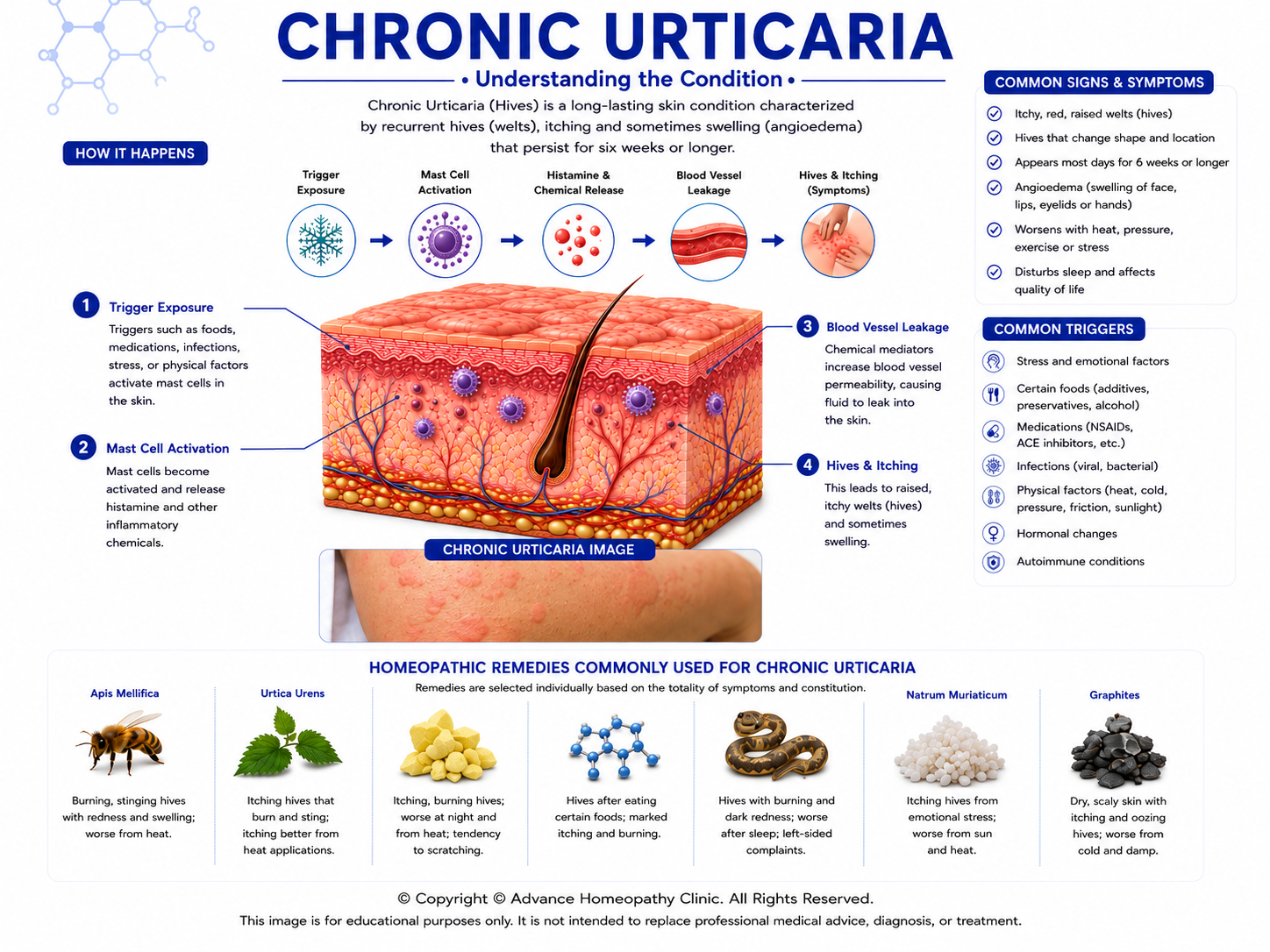
Common Signs & Symptoms of Chronic Urticaria
Patients with chronic urticaria may experience one or more of the following:
- Recurrent raised, itchy wheals (hives)
- Lesions varying in size and shape
- Rapid appearance and disappearance of individual wheals
- New wheals developing in different body areas
- Intense itching
- Episodes of angioedema involving the lips, eyelids, face, hands, or feet
- Symptoms occurring on most days for more than six weeks
- Sleep disturbance due to persistent itching
- Unpredictable flare-ups affecting daily activities
Risk Factors for Chronic Urticaria
Several factors may contribute to chronic urticaria or trigger disease flare-ups, including:
- Autoimmune disorders, particularly autoimmune thyroid disease
- Previous history of acute urticaria
- Viral or bacterial infections in some individuals
- Emotional stress, which may aggravate symptoms
- Heat, pressure, cold, vibration, exercise, or sunlight in patients with inducible urticarias
- Non-steroidal anti-inflammatory drugs (NSAIDs) in susceptible individuals
- Family history in selected cases
Conventional Management of Chronic Urticaria
Treatment is individualised according to symptom severity, frequency of episodes, presence of angioedema, and response to previous therapy. The primary goals are to control itching, suppress wheal formation, reduce disease activity, and improve quality of life.
Conventional management may include:
- Identification and avoidance of recognised aggravating factors where possible
- Second-generation non-sedating antihistamines
- Increased antihistamine doses under medical supervision when required
- Short courses of oral corticosteroids in selected severe flare-ups
- Omalizumab for antihistamine-resistant chronic spontaneous urticaria
- Cyclosporine in carefully selected refractory cases
- Investigation for associated medical conditions when clinically indicated
- Regular follow-up with the treating physician
Homeopathic Medicines Commonly Considered for Chronic Urticaria
Some homeopathic medicines that may be considered by experienced homeopathic physicians for patients with chronic urticaria include:
- Urtica Urens
- Apis Mellifica
- Rhus Toxicodendron
- Natrum Muriaticum
- Dulcamara
- Bovista
- Histaminum Hydrochloricum
- Sulphur
Homeopathic medicines should only be prescribed by a qualified homeopathic physician after an individualized clinical evaluation.
Important: Complementary Care for Chronic Urticaria
Chronic Urticaria should always be evaluated by a qualified dermatologist, allergist, or appropriately trained healthcare professional to confirm the diagnosis, assess disease severity, identify potential triggers where possible, and distinguish chronic urticaria from urticarial vasculitis, drug reactions, autoimmune diseases, infections, hereditary angioedema, or other conditions that may present with recurrent wheals or swelling. Patients with persistent symptoms may require additional investigations to identify associated autoimmune disorders or other underlying medical conditions when clinically indicated.
Patients with chronic spontaneous urticaria or chronic inducible urticaria may be considered for individualized homeopathic treatment as a complementary approach following appropriate medical evaluation. Homeopathy may be integrated alongside prescribed antihistamines, avoidance of identified triggers where possible, management of associated medical conditions, lifestyle advice, and regular follow-up with their treating physician. Individualized homeopathic prescribing is based on the patient's complete clinical presentation, constitutional characteristics, associated symptoms, medical history, potential triggering factors, and overall health rather than the diagnosis alone.
Patients should continue all recommended conventional treatment, including second-generation antihistamines, dose escalation where medically indicated, biologic therapy such as omalizumab for treatment-resistant disease, immunomodulatory therapy in selected patients, and regular follow-up with their dermatologist or allergist. Homeopathy should not be regarded as a substitute for evidence-based medical management, particularly in patients with persistent, severe, or treatment-resistant urticaria.
Patients with frequent or severe episodes of urticaria, recurrent angioedema, symptoms significantly affecting sleep or quality of life, chronic urticaria associated with autoimmune disease, or persistent symptoms despite appropriate medical treatment should continue specialist medical care and further evaluation where indicated. Homeopathy should not replace recommended medical treatment or specialist follow-up in these situations.
Patients who develop swelling of the tongue, lips, throat, difficulty breathing, wheezing, difficulty swallowing, dizziness, fainting, or rapidly progressive facial swelling, particularly when associated with widespread hives, should seek immediate emergency medical attention, as these symptoms may indicate anaphylaxis or severe angioedema, both of which require urgent assessment and treatment.
9. Lichen Planus
What is Lichen Planus?
Lichen Planus is a chronic immune-mediated inflammatory disease that can affect the skin, mouth (oral mucosa), nails, scalp, and genital mucous membranes. It develops when the immune system triggers inflammation directed against cells within the skin and mucosal surfaces, resulting in characteristic itchy skin lesions or persistent mucosal changes.
Although the exact cause remains incompletely understood, lichen planus is believed to result from an abnormal immune response in genetically susceptible individuals. In some cases, certain medications, dental materials, viral infections such as hepatitis C in specific populations, or other environmental factors may trigger lesions that resemble or contribute to the condition. However, many patients have no identifiable triggering factor.
The disease most commonly presents as small, flat-topped, violaceous (purple-coloured), itchy papules on the wrists, forearms, ankles, or lower back. When the mouth is affected, patients may develop white lace-like streaks, painful erosions, or ulcers that interfere with eating and oral hygiene. Nail involvement may lead to ridging, thinning, or permanent nail damage if left untreated, while scalp involvement (lichen planopilaris) may result in scarring hair loss.
Lichen planus is not contagious and cannot be transmitted from one person to another. While many cases affecting the skin gradually resolve over time, oral and mucosal forms may persist for several years and require long-term monitoring. Appropriate medical evaluation is important to establish the diagnosis, exclude other conditions with a similar appearance, monitor disease progression, and reduce the risk of complications.

Common Signs & Symptoms of Lichen Planus
Patients with lichen planus may experience one or more of the following:
- Intensely itchy, flat-topped, purple-coloured skin papules
- Fine white lines over the lesions (Wickham striae)
- Skin lesions affecting the wrists, forearms, ankles, lower back, or legs
- White lace-like patches inside the mouth
- Painful oral ulcers or erosions
- Burning sensation while eating spicy or acidic foods
- Nail ridging, thinning, splitting, or nail loss
- Scalp involvement with patchy hair loss or scarring in selected cases
- Brown pigmentation remaining after skin lesions heal (post-inflammatory hyperpigmentation)
Risk Factors for Lichen Planus
Several factors have been associated with lichen planus or lichenoid reactions, including:
- Genetic susceptibility
- Immune system dysregulation
- Increasing age, particularly middle adulthood
- Certain medications causing lichenoid drug eruptions
- Dental restorative materials in selected patients with oral lesions
- Hepatitis C infection in some geographical regions
- Emotional stress, which may aggravate symptoms in susceptible individuals
Conventional Management of Lichen Planus
Treatment depends on the site involved, disease severity, symptom burden, and risk of complications. The primary goals are to control inflammation, relieve itching or pain, promote healing, and prevent long-term tissue damage.
Conventional management may include:
- Clinical examination and confirmation of diagnosis
- Skin or mucosal biopsy where indicated
- Topical corticosteroids
- Topical calcineurin inhibitors for selected mucosal lesions
- Oral corticosteroids for severe or extensive disease
- Other systemic immunomodulatory medications in refractory cases
- Phototherapy for selected cutaneous disease
- Regular dental and oral medicine follow-up for oral lichen planus
- Long-term monitoring of persistent oral lesions
Homeopathic Medicines Commonly Considered for Lichen Planus
Some homeopathic medicines that may be considered by experienced homeopathic physicians for patients with lichen planus include:
- Arsenicum Album
- Sulphur
- Graphites
- Kali Arsenicosum
- Natrum Muriaticum
- Thuja Occidentalis
- Nitric Acid
- Mercurius Solubilis
Homeopathic medicines should only be prescribed by a qualified homeopathic physician after an individualized clinical evaluation.
Important: Complementary Care for Lichen Planus
Lichen Planus should always be evaluated by a qualified dermatologist or appropriately trained healthcare professional to confirm the diagnosis, determine the extent of skin and mucosal involvement, assess disease severity, and distinguish it from other inflammatory, autoimmune, infectious, or potentially precancerous conditions that may present with similar lesions. In selected patients, particularly those with oral, genital, nail, or scalp involvement, a skin or mucosal biopsy and additional investigations may be recommended to establish the diagnosis and guide appropriate management.
Patients with cutaneous, oral, or stable lichen planus may be considered for individualized homeopathic treatment as a complementary approach following appropriate dermatological evaluation. Homeopathy may be integrated alongside prescribed topical or systemic medications, appropriate skin and oral care, management of associated medical conditions, avoidance of aggravating factors where possible, and regular dermatological follow-up. Individualized homeopathic prescribing is based on the patient's complete clinical presentation, constitutional characteristics, disease pattern, associated symptoms, medical history, emotional well-being, and overall health rather than the diagnosis alone.
Patients should continue all recommended dermatological treatment, including topical corticosteroids, topical calcineurin inhibitors, systemic medications where indicated, phototherapy in selected patients, regular oral or genital examinations when mucosal involvement is present, and scheduled follow-up with their dermatologist or other relevant specialists. Homeopathy should not be regarded as a substitute for evidence-based medical management, particularly in patients with extensive disease, painful mucosal involvement, or scarring forms of lichen planus.
Patients with erosive oral lichen planus, extensive genital involvement, scarring scalp disease (lichen planopilaris), progressive nail destruction, persistent painful ulceration, severe impairment of eating or swallowing, or widespread treatment-resistant disease should continue appropriate specialist care and long-term follow-up. Homeopathy should not replace recommended medical treatment or surveillance in these situations.
Patients who develop persistent non-healing oral ulcers, rapidly enlarging lesions, significant bleeding, severe pain, difficulty swallowing, secondary skin infection, rapidly progressive hair loss associated with scalp inflammation, or any sudden worsening of their condition should seek prompt medical evaluation, as these situations may require urgent investigation, biopsy, or specialist management.
10. Melasma
What is Melasma?
Melasma is a chronic acquired pigmentary disorder characterised by symmetrical brown or greyish-brown patches that develop on sun-exposed areas of the skin, particularly the face. It most commonly affects the cheeks, forehead, upper lip, nose, and chin and occurs far more frequently in women than in men.
The condition develops because of increased melanin production by melanocytes, leading to excessive pigmentation of the skin. Unlike vitiligo, where pigment-producing cells are destroyed, the melanocytes in melasma remain present but become overactive, producing excess pigment. Understanding this distinction is important because the underlying mechanisms, treatment approaches, and prognosis differ considerably between these two conditions.
Melasma develops through a complex interaction of genetic susceptibility, ultraviolet (UV) radiation, visible light exposure, hormonal influences, and environmental factors. Pregnancy, oral contraceptive pills, hormone replacement therapy, and certain medications may contribute to its development in susceptible individuals. Chronic sun exposure remains one of the most important aggravating factors, even on cloudy days, as ultraviolet and visible light stimulate continued melanin production.
Melasma is not contagious, is not caused by poor hygiene, and does not progress to skin cancer. However, because the pigmentation often affects the central face, it may have a significant impact on self-confidence and emotional well-being. Although treatment can reduce pigmentation, recurrence is common, particularly if adequate sun protection is not maintained.

Common Signs & Symptoms of Melasma
Patients with melasma may experience one or more of the following:
- Symmetrical brown or greyish-brown patches on the face
- Pigmentation affecting the cheeks, forehead, upper lip, nose, or chin
- Gradual onset of facial pigmentation
- Well-defined or irregularly bordered pigmented patches
- Darkening of pigmentation after sun exposure
- Usually no itching, pain, or scaling
- Cosmetic concern due to facial discoloration
- Recurrent pigmentation despite previous treatment
Risk Factors for Melasma
Several factors are associated with the development or worsening of melasma, including:
- Chronic ultraviolet (UV) and visible light exposure
- Female sex
- Pregnancy (often referred to as the "mask of pregnancy")
- Oral contraceptive pills
- Hormone replacement therapy
- Family history
- Darker skin phototypes
- Certain cosmetics or photosensitising medications
- Thyroid disorders in selected patients
- Genetic predisposition
Conventional Management of Melasma
Treatment is individualised according to the severity of pigmentation, skin type, depth of pigment deposition, and previous treatment response. The primary goals are to reduce pigment production, lighten existing pigmentation, prevent recurrence, and protect the skin from further ultraviolet damage.
Conventional management may include:
- Daily broad-spectrum sunscreen with protection against both UVA and UVB radiation
- Sun-protective clothing and wide-brimmed hats where appropriate
- Topical depigmenting agents such as hydroquinone
- Azelaic acid
- Topical retinoids
- Combination depigmenting creams where indicated
- Chemical peels in selected patients
- Laser or light-based therapies for carefully selected cases
- Regular dermatological follow-up
Homeopathic Medicines Commonly Considered for Melasma
Some homeopathic medicines that may be considered by experienced homeopathic physicians for patients with melasma include:
- Sepia
- Natrum Muriaticum
- Lycopodium Clavatum
- Sulphur
- Thuja Occidentalis
- Berberis Aquifolium
- Kali Carbonicum
- Calcarea Carbonica
Homeopathic medicines should only be prescribed by a qualified homeopathic physician after an individualized clinical evaluation.
Important: Complementary Care for Melasma
Melasma should always be evaluated by a qualified dermatologist or appropriately trained healthcare professional to confirm the diagnosis, assess the pattern and extent of pigmentation, and distinguish it from other causes of facial hyperpigmentation such as post-inflammatory hyperpigmentation, drug-induced pigmentation, lichen planus pigmentosus, ochronosis, pigmented contact dermatitis, or other pigmentary disorders. A comprehensive assessment should also identify contributing factors such as sun exposure, hormonal influences, pregnancy, oral contraceptive use, genetic predisposition, cosmetic products, or certain medications, allowing an individualized treatment plan to be developed.
Patients with epidermal, dermal, or mixed type melasma may be considered for individualized homeopathic treatment as a complementary approach following appropriate dermatological evaluation. Homeopathy may be integrated alongside strict photoprotection, prescribed topical depigmenting agents, chemical peels where appropriate, laser or light-based procedures in selected patients, management of contributing hormonal factors, and regular dermatological follow-up. Individualized homeopathic prescribing is based on the patient's complete clinical presentation, constitutional characteristics, medical history, hormonal influences, associated symptoms, lifestyle factors, and overall health rather than the diagnosis alone.
Patients should continue all recommended dermatological treatment, including daily broad-spectrum sunscreen use, sun-avoidance measures, prescribed topical depigmenting medications, procedural treatments when indicated, and regular follow-up with their dermatologist. Homeopathy should not be regarded as a substitute for evidence-based dermatological management, particularly because consistent ultraviolet (UV) protection remains one of the most important factors in preventing disease progression and recurrence.
Patients with rapidly worsening pigmentation, atypical or asymmetrical facial lesions, pigmentation associated with new medications, significant hormonal abnormalities requiring endocrine or gynaecological assessment, or persistent pigmentation despite appropriate treatment should continue specialist medical evaluation to exclude other pigmentary disorders or underlying medical conditions. Homeopathy should not replace appropriate dermatological investigation or management in these situations.
Patients who develop rapid changes in the appearance of pigmented lesions, irregular borders, colour variation, bleeding, ulceration, persistent non-healing lesions, or any new pigmented lesion that appears suspicious for skin cancer should seek immediate dermatological evaluation, as these features require prompt specialist assessment and, where indicated, dermoscopic examination or biopsy.
11. Rosacea
What is Rosacea?
Rosacea is a chronic inflammatory skin disorder that primarily affects the central face, causing persistent redness, visible blood vessels, recurrent flushing, and, in many patients, acne-like inflammatory papules and pustules. Although rosacea may resemble acne, it is a distinct condition with different underlying mechanisms and treatment approaches.
The exact cause of rosacea remains incompletely understood. Current evidence suggests that the disease develops through a complex interaction between immune system dysregulation, abnormalities of the facial blood vessels (vascular dysfunction), increased skin sensitivity, genetic susceptibility, environmental factors, and alterations in the skin microbiome. In some individuals, increased numbers of Demodex mites naturally present on the skin may contribute to inflammation, although these organisms are also found on healthy skin and are not the sole cause of rosacea.
Rosacea most commonly develops in adults between 30 and 50 years of age and typically affects the cheeks, nose, chin, and forehead. The condition often follows a relapsing course, with episodes of facial flushing gradually progressing to persistent redness if left untreated. Some patients may also develop thickening of the skin over the nose (rhinophyma), while others experience eye involvement (ocular rosacea) causing irritation, dryness, redness, or inflammation of the eyelids.
Rosacea is not contagious and is not caused by poor hygiene. Although it does not usually lead to serious medical complications, persistent facial redness and recurrent flare-ups may have a significant impact on confidence, social interactions, and overall quality of life. Early diagnosis and appropriate management may help reduce disease progression and improve long-term symptom control.
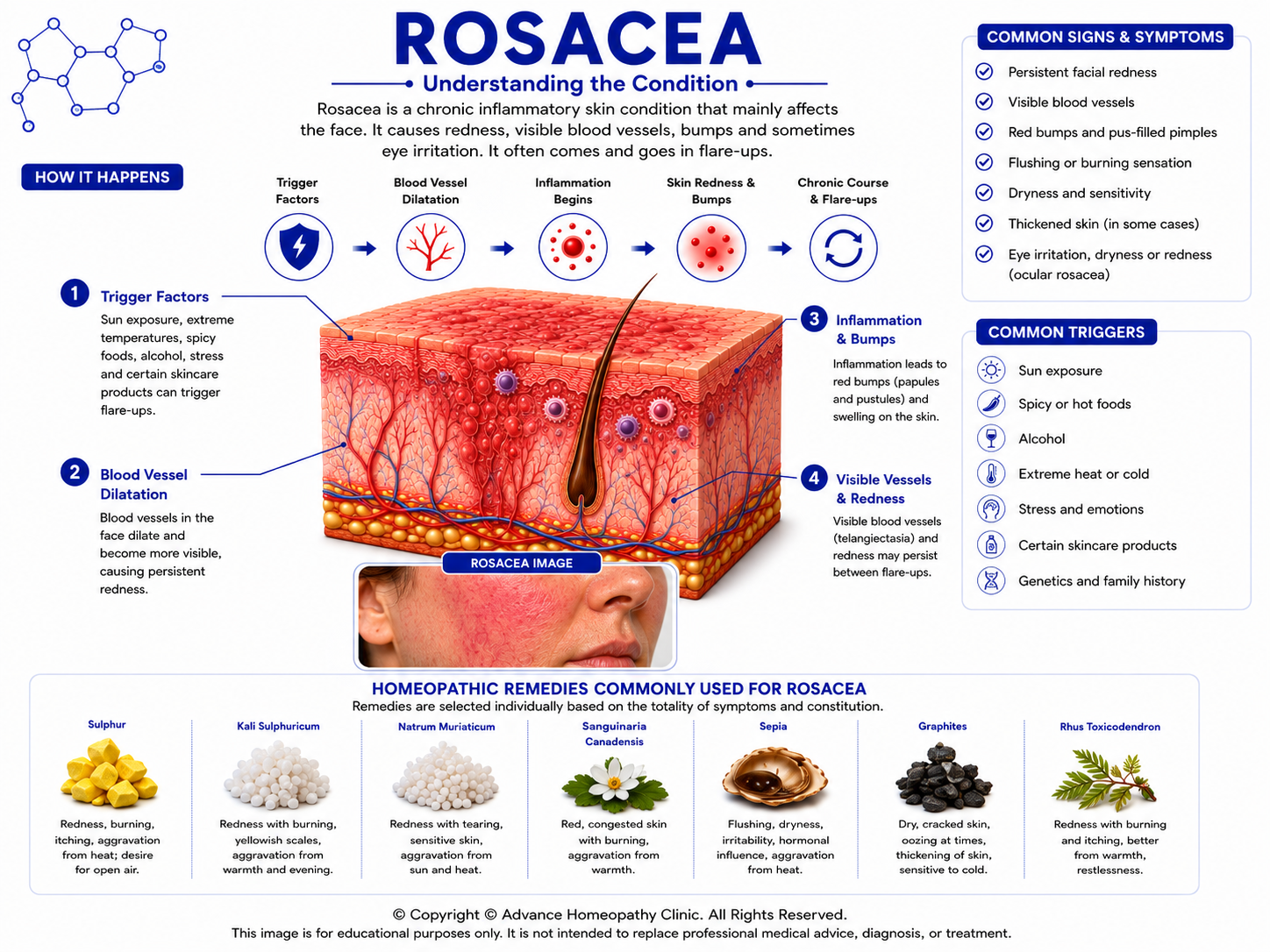
Common Signs & Symptoms of Rosacea
Patients with rosacea may experience one or more of the following:
- Persistent redness affecting the cheeks, nose, forehead, or chin
- Frequent facial flushing
- Visible small blood vessels (telangiectasia)
- Red inflammatory papules and pustules without blackheads or whiteheads
- Burning, stinging, or increased skin sensitivity
- Dry or rough facial skin
- Thickening of the skin over the nose (rhinophyma) in selected patients
- Eye irritation, dryness, redness, or eyelid inflammation in ocular rosacea
- Symptoms worsening during flare-ups
Risk Factors for Rosacea
Several factors may contribute to rosacea or trigger disease flare-ups, including:
- Fair skin
- Family history
- Increasing age, particularly between 30 and 50 years
- Female sex, although rhinophyma is more common in men
- Sun exposure
- Hot weather
- Emotional stress
- Alcohol consumption
- Hot beverages
- Spicy foods
- Vigorous exercise in some individuals
- Individual trigger factors that vary from person to person
Conventional Management of Rosacea
Treatment is individualised according to the subtype of rosacea, severity of symptoms, ocular involvement, and previous treatment response. The primary goals are to reduce inflammation, control flushing, minimise persistent redness, and prevent long-term skin changes.
Conventional management may include:
- Identification and avoidance of individual trigger factors
- Daily broad-spectrum sunscreen
- Gentle skin-care products for sensitive skin
- Topical metronidazole
- Topical azelaic acid
- Topical ivermectin
- Topical brimonidine or oxymetazoline for persistent facial redness in selected patients
- Oral tetracycline antibiotics for inflammatory disease
- Laser or intense pulsed light (IPL) therapy for persistent blood vessels
- Surgical management of rhinophyma where indicated
- Ophthalmological evaluation for ocular rosacea when required
- Regular dermatological follow-up
Homeopathic Medicines Commonly Considered for Rosacea
Some homeopathic medicines that may be considered by experienced homeopathic physicians for patients with rosacea include:
- Sulphur
- Belladonna
- Lachesis Mutus
- Pulsatilla Nigricans
- Sanguinaria Canadensis
- Natrum Muriaticum
- Sepia
- Carbo Vegetabilis
Homeopathic medicines should only be prescribed by a qualified homeopathic physician after an individualized clinical evaluation.
Important: Complementary Care for Rosacea
Rosacea should always be evaluated by a qualified dermatologist or appropriately trained healthcare professional to confirm the diagnosis, determine the clinical subtype and severity of the disease, and distinguish it from other facial skin disorders such as acne vulgaris, seborrheic dermatitis, contact dermatitis, lupus erythematosus, steroid-induced dermatitis, or other inflammatory skin conditions that may present with facial redness or papules. Patients should also be assessed for ocular rosacea, as inflammation involving the eyes may occur even when skin symptoms appear relatively mild.
Patients with mild to moderate rosacea may be considered for individualized homeopathic treatment as a complementary approach following appropriate dermatological evaluation. Homeopathy may be integrated alongside trigger avoidance, gentle skin-care measures, prescribed topical or oral medications, laser or light-based therapy where indicated, management of associated medical conditions, and regular dermatological follow-up. Individualized homeopathic prescribing is based on the patient's complete clinical presentation, constitutional characteristics, associated symptoms, medical history, disease pattern, environmental influences, and overall health rather than the diagnosis alone.
Patients should continue all recommended dermatological treatment, including gentle skin-care measures, broad-spectrum sunscreen use, prescribed topical medications, oral antibiotics when indicated, treatment for ocular rosacea where required, laser or vascular light therapies for persistent erythema or visible blood vessels, and regular follow-up with their dermatologist. Homeopathy should not be regarded as a substitute for evidence-based dermatological management, particularly in patients with progressive disease or ocular involvement.
Patients with persistent facial redness, papules and pustules unresponsive to treatment, progressive skin thickening of the nose (phymatous rosacea), ocular rosacea, significant impairment of quality of life, or severe recurrent flare-ups should continue appropriate conventional medical care and specialist follow-up. Homeopathy should not replace recommended medical treatment or procedural interventions when these are advised by the treating dermatologist or ophthalmologist.
Patients who develop eye pain, redness of the eyes, blurred vision, sensitivity to light, persistent eyelid inflammation, rapidly progressive facial swelling, severe skin infection, or sudden worsening of facial lesions should seek prompt medical evaluation, as these symptoms may indicate ocular rosacea or another serious ophthalmic or dermatological condition requiring urgent specialist assessment and treatment.
12. Hidradenitis Suppurativa (HS)
What is Hidradenitis Suppurativa?
Hidradenitis Suppurativa (HS), also known as Acne Inversa, is a chronic inflammatory disease of the hair follicles that causes recurrent painful nodules, abscesses, sinus tracts, and scarring in areas where skin surfaces rub together. The condition most commonly affects the armpits, groin, buttocks, inner thighs, beneath the breasts, and other body folds.
Despite its name, hidradenitis suppurativa is not primarily a disease of the sweat glands, as was once believed. Current evidence indicates that the disease begins with blockage and inflammation of the hair follicle, followed by rupture of the follicle and an exaggerated immune response that leads to persistent inflammation and tissue destruction. Secondary bacterial infection may occur in some lesions, but infection alone is not the underlying cause of the disease.
HS usually develops after puberty and follows a chronic relapsing course. Painful lumps may rupture and discharge blood or pus, often healing with permanent scarring. Repeated inflammation can result in interconnected sinus tracts beneath the skin, making advanced disease particularly difficult to manage.
Hidradenitis suppurativa is not contagious and cannot be transmitted from one person to another. The condition is frequently associated with obesity, cigarette smoking, metabolic syndrome, inflammatory bowel disease, and other inflammatory disorders. Because of its chronic nature, pain, drainage, odour, and visible scarring, HS may have a profound impact on physical comfort, emotional well-being, social relationships, and quality of life. Early diagnosis and long-term multidisciplinary management are therefore important.
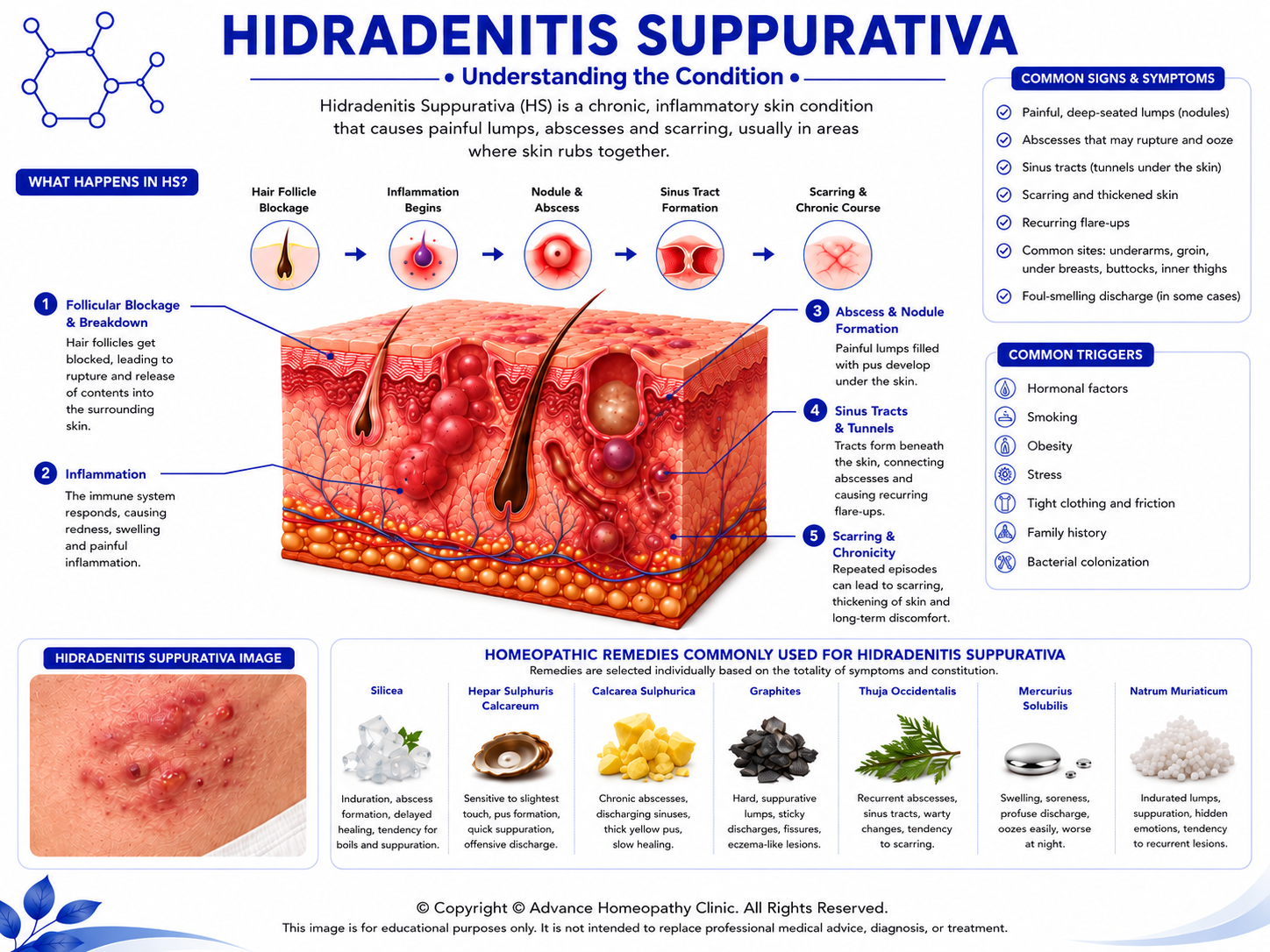
Common Signs & Symptoms of Hidradenitis Suppurativa
Patients with hidradenitis suppurativa may experience one or more of the following:
- Painful deep-seated nodules beneath the skin
- Recurrent abscesses
- Lesions affecting the armpits, groin, buttocks, inner thighs, beneath the breasts, or other skin folds
- Drainage of pus or blood from affected areas
- Persistent or recurrent foul-smelling discharge
- Formation of sinus tracts beneath the skin
- Progressive scarring and skin thickening
- Recurrent flare-ups over months or years
- Pain interfering with daily activities and movement
Risk Factors for Hidradenitis Suppurativa
Several factors are associated with hidradenitis suppurativa or may contribute to disease severity, including:
- Family history
- Genetic predisposition
- Cigarette smoking
- Obesity
- Metabolic syndrome
- Mechanical friction within skin folds
- Hormonal influences
- Inflammatory bowel disease
- Female sex
- Onset after puberty
Conventional Management of Hidradenitis Suppurativa
Treatment is individualised according to disease severity, extent of skin involvement, presence of sinus tracts, and previous response to therapy. The primary goals are to reduce inflammation, relieve pain, prevent disease progression, minimise scarring, and improve quality of life.
Conventional management may include:
- Early diagnosis and disease staging
- Weight management where appropriate
- Smoking cessation
- Topical antibiotics for selected early lesions
- Oral antibiotics for inflammatory disease
- Intralesional corticosteroid injections for selected nodules
- Biologic therapies for moderate to severe disease
- Surgical drainage in selected acute situations
- Surgical excision of chronic sinus tracts where indicated
- Regular dermatological follow-up
- Multidisciplinary care for advanced disease
Homeopathic Medicines Commonly Considered for Hidradenitis Suppurativa
Some homeopathic medicines that may be considered by experienced homeopathic physicians for patients with hidradenitis suppurativa include:
- Hepar Sulphuris Calcareum
- Silicea
- Calcarea Sulphurica
- Myristica Sebifera
- Sulphur
- Mercurius Solubilis
- Arsenicum Album
- Gunpowder
Homeopathic medicines should only be prescribed by a qualified homeopathic physician after an individualized clinical evaluation.
Important: Complementary Care for Hidradenitis Suppurativa
Hidradenitis Suppurativa should always be evaluated by a qualified dermatologist or appropriately trained healthcare professional to confirm the diagnosis, determine the severity and stage of disease, assess the extent of skin involvement, and distinguish it from recurrent boils, folliculitis, infected cysts, Crohn's disease involving the skin, pilonidal disease, or other inflammatory skin disorders. Clinical assessment should also identify contributing factors such as obesity, smoking, metabolic syndrome, hormonal influences, and associated inflammatory conditions, allowing a comprehensive long-term management plan to be developed.
Patients with early-stage or mild to moderate hidradenitis suppurativa may be considered for individualized homeopathic treatment as a complementary approach following appropriate dermatological evaluation. Homeopathy may be integrated alongside appropriate wound care, prescribed topical or systemic medications, lifestyle modification, weight management where appropriate, smoking cessation, pain management, and regular dermatological follow-up. Individualized homeopathic prescribing is based on the patient's complete clinical presentation, constitutional characteristics, disease pattern, associated symptoms, medical history, lifestyle factors, and overall health rather than the diagnosis alone.
Patients should continue all recommended dermatological treatment, including prescribed antibiotics when indicated, anti-inflammatory therapy, biologic medications for moderate to severe disease, surgical procedures where appropriate, wound care, pain management, and regular follow-up with their dermatologist. Homeopathy should not be regarded as a substitute for evidence-based medical or surgical management, particularly in patients with extensive disease, recurrent abscesses, or progressive scarring.
Patients with Hurley Stage II or III disease, recurrent painful abscesses, extensive sinus tract formation, significant scarring, persistent drainage, severe pain affecting daily activities, recurrent secondary bacterial infections, or disease that remains active despite appropriate treatment should continue specialist dermatological care and multidisciplinary management where indicated. Homeopathy should not replace biologic therapy, surgical intervention, or other advanced treatments when these are recommended by the treating dermatologist.
Patients who develop rapidly spreading redness, severe pain, high fever, rapidly enlarging abscesses, foul-smelling discharge, extensive cellulitis, signs of systemic infection, or sudden worsening of their condition should seek immediate medical attention, as these situations may indicate serious soft tissue infection or other complications requiring urgent medical or surgical treatment.
13. Pemphigus
What is Pemphigus?
Pemphigus is a rare but potentially serious autoimmune blistering disease in which the immune system produces antibodies that attack the proteins responsible for holding skin cells together. As these connections weaken, the cells separate from one another, leading to the formation of fragile blisters and painful erosions involving the skin, mucous membranes, or both.
The most common form, Pemphigus Vulgaris, frequently begins with painful ulcers inside the mouth before skin blisters become apparent. Other forms, such as Pemphigus Foliaceus, primarily affect the skin and generally do not involve the mucous membranes. Because early lesions may resemble several other dermatological conditions, accurate diagnosis by an experienced dermatologist is essential.
Pemphigus is an autoimmune disease and is neither infectious nor contagious. Without appropriate treatment, the disease may progress, resulting in widespread skin breakdown, fluid loss, secondary infections, nutritional difficulties, and other potentially life-threatening complications. Fortunately, advances in modern immunosuppressive therapy and biologic treatments have dramatically improved patient outcomes over recent decades.
The disease usually follows a chronic course requiring long-term medical supervision. Although many patients achieve prolonged remission with appropriate treatment, regular follow-up remains essential to monitor disease activity, medication response, and potential treatment-related adverse effects.
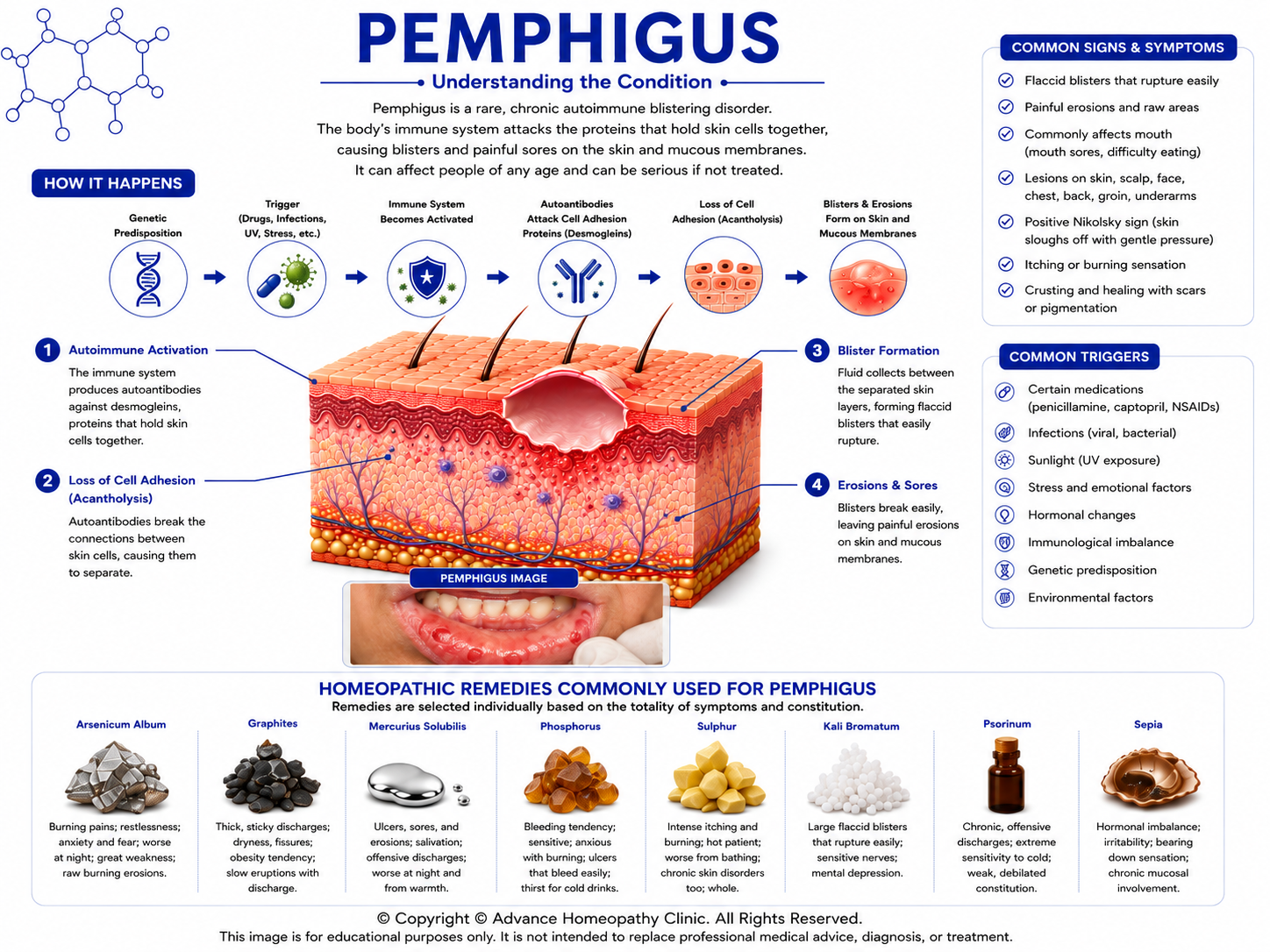
Common Signs & Symptoms of Pemphigus
Patients with pemphigus may experience one or more of the following:
- Fragile blisters that rupture easily
- Painful erosions of the skin
- Persistent mouth ulcers or painful oral erosions
- Difficulty eating or swallowing due to oral involvement
- Blisters affecting the scalp, face, chest, back, or other body areas
- Raw or crusted skin following blister rupture
- Pain more prominent than itching
- Secondary skin infections
- Delayed healing of affected areas
Risk Factors for Pemphigus
Several factors have been associated with pemphigus, including:
- Autoimmune predisposition
- Genetic susceptibility
- Increasing age, particularly middle adulthood and later life
- Certain medications in susceptible individuals
- Specific ethnic or geographical populations with increased genetic risk
- Other autoimmune diseases in selected patients
Conventional Management of Pemphigus
Pemphigus requires specialist dermatological care because untreated disease can become life-threatening. Treatment aims to suppress the abnormal autoimmune response, promote healing of skin and mucosal lesions, prevent infections, and maintain long-term remission.
Conventional management may include:
- Clinical examination and confirmation of diagnosis
- Skin or mucosal biopsy with histopathological examination
- Direct immunofluorescence studies
- Blood tests for pemphigus-specific autoantibodies where indicated
- Systemic corticosteroids
- Steroid-sparing immunosuppressive medications
- Biologic therapy such as rituximab for appropriate patients
- Wound care and infection prevention
- Nutritional support when oral involvement is severe
- Regular specialist dermatology follow-up
Homeopathic Medicines Commonly Considered for Pemphigus
Because pemphigus is a complex autoimmune disease requiring specialist medical management, homeopathy should be regarded only as a complementary approach and never as a substitute for evidence-based dermatological care.
Following a comprehensive individualized assessment, experienced homeopathic physicians may consider medicines such as:
- Arsenicum Album
- Cantharis
- Mezereum
- Sulphur
- Graphites
- Rhus Toxicodendron
- Mercurius Solubilis
- Kali Arsenicosum
Homeopathic medicines should only be prescribed by a qualified homeopathic physician after an individualized clinical evaluation.
Important: Complementary Care for Pemphigus
Pemphigus should always be evaluated and managed by a qualified dermatologist or appropriately trained healthcare professional to establish an accurate diagnosis, determine the subtype and severity of the disease, assess the extent of skin and mucosal involvement, and initiate appropriate treatment without delay. Diagnosis often requires skin or mucosal biopsy with histopathological examination and direct immunofluorescence studies, together with additional laboratory investigations where indicated. Early diagnosis and prompt treatment are essential because untreated pemphigus may lead to extensive skin damage, serious infections, dehydration, nutritional deficiencies, and other potentially life-threatening complications.
Patients with stable pemphigus receiving appropriate dermatological treatment may be considered for individualized homeopathic treatment as a complementary approach following specialist evaluation. Homeopathy may be integrated alongside systemic corticosteroids, immunosuppressive medications, biologic therapy, where indicated, wound care, nutritional support, infection-prevention measures, pain management, and regular dermatological follow-up. Individualized homeopathic prescribing is based on the patient's complete clinical presentation, constitutional characteristics, disease pattern, associated symptoms, medical history, treatment response, and overall health rather than the diagnosis alone.
Patients should continue all recommended dermatological treatment, including systemic corticosteroids, steroid-sparing immunosuppressive medications, biologic therapy such as rituximab where clinically indicated, appropriate wound care, management of secondary infections, nutritional support, and regular follow-up with their dermatologist. Homeopathy should not be regarded as a substitute for evidence-based medical treatment, particularly because uncontrolled pemphigus can progress rapidly and result in serious complications.
Patients with extensive blistering, widespread skin or mucosal involvement, painful oral ulcers affecting eating or drinking, recurrent infections, significant fluid loss, progressive disease despite treatment, or complications requiring hospitalization should continue specialist dermatological care and multidisciplinary management. Homeopathy should not replace immunosuppressive therapy, biologic treatment, or hospital-based care when the treating dermatologist recommends these.
Patients who develop rapidly increasing blister formation, widespread skin detachment, high fever, signs of skin infection, difficulty eating or swallowing due to severe oral involvement, dehydration, severe weakness, or any sudden deterioration in their general condition should seek immediate medical attention, as these situations may represent serious complications requiring urgent hospital treatment.
14. Warts (Verruca Vulgaris)
What are Warts?
Warts are benign viral skin growths caused by infection with the Human Papillomavirus (HPV). The virus infects the outer layer of the skin through tiny breaks or abrasions, stimulating excessive growth of skin cells and resulting in characteristic rough, raised lesions. Warts are among the most common viral skin infections and may occur at any age, although they are particularly frequent in children, adolescents, and young adults.
Different types of warts affect different parts of the body. Common warts (Verruca Vulgaris) typically occur on the hands and fingers, plantar warts develop on the soles of the feet, flat warts are commonly seen on the face and limbs, and filiform warts often occur around the face or neck. While many warts resolve spontaneously as the immune system clears the virus, others may persist for months or even years.
Warts are contagious, although transmission usually requires direct skin contact or contact with contaminated surfaces, particularly when the skin barrier is damaged. The risk of transmission varies depending on the HPV subtype, the location of the wart, and the individual's immune response. Many people are exposed to HPV without ever developing visible warts.
Although warts are generally harmless, they may become painful, cosmetically concerning, or interfere with daily activities, particularly when located on weight-bearing areas such as the soles of the feet. Medical assessment is important when lesions are atypical, rapidly changing, recurrent, or difficult to distinguish from other skin growths.

Common Signs & Symptoms of Warts
Patients with warts may experience one or more of the following:
- Rough, raised skin growths
- Flesh-coloured, grey, or brown lesions
- Small black dots representing thrombosed capillaries
- Plantar warts causing pain while walking
- Flat-topped warts on the face or limbs
- Multiple clustered warts
- Gradual enlargement over time
- Cosmetic concerns due to visible lesions
Risk Factors for Warts
Several factors increase the likelihood of developing warts, including:
- Infection with Human Papillomavirus (HPV)
- Direct contact with infected skin
- Walking barefoot in communal showers or swimming pools
- Minor skin trauma
- Nail biting or picking around the nails
- Children and adolescents
- Reduced immune function
- Atopic dermatitis or impaired skin barrier
- Close household contact with infected individuals
Conventional Management of Warts
Treatment depends on the type, location, number, and persistence of the lesions. Many warts disappear spontaneously, while others require treatment because of pain, cosmetic concerns, or persistence.
Conventional management may include:
- Observation for spontaneous resolution
- Topical salicylic acid preparations
- Cryotherapy using liquid nitrogen
- Electrocautery or curettage
- Laser therapy in selected cases
- Immunotherapy for resistant warts
- Surgical removal where indicated
- Dermatological follow-up for persistent or atypical lesions
Homeopathic Medicines Commonly Considered for Warts
Some homeopathic medicines that may be considered by experienced homeopathic physicians for patients with warts include:
- Thuja Occidentalis
- Causticum
- Nitric Acid
- Antimonium Crudum
- Dulcamara
- Calcarea Carbonica
- Natrum Muriaticum
- Ruta Graveolens
Homeopathic medicines should only be prescribed by a qualified homeopathic physician after an individualized clinical evaluation.
Important: Complementary Care for Warts
Warts should always be evaluated by a qualified dermatologist or appropriately trained healthcare professional to confirm the diagnosis, determine the type and extent of wart involvement, and distinguish them from other skin lesions such as corns, calluses, seborrhoeic keratoses, molluscum contagiosum, actinic keratoses, or, less commonly, precancerous or malignant skin lesions. Patients with atypical, rapidly changing, painful, bleeding, or persistent skin lesions may require further evaluation, including dermoscopic examination or biopsy, to establish an accurate diagnosis before treatment is initiated.
Patients with common warts, plantar warts, flat warts, or periungual warts may be considered for individualized homeopathic treatment as a complementary approach following appropriate dermatological evaluation. Homeopathy may be integrated alongside topical treatments, cryotherapy, chemical cauterization, immunotherapy where appropriate, appropriate skin-care measures, and regular dermatological follow-up. Individualized homeopathic prescribing is based on the patient's complete clinical presentation, constitutional characteristics, distribution and duration of the warts, associated symptoms, medical history, immune status, and overall health rather than the diagnosis alone.
Patients should continue all recommended dermatological treatment, including topical keratolytic preparations, cryotherapy, electrocautery, laser treatment, immunotherapeutic procedures where indicated, and regular follow-up with their dermatologist. Homeopathy should not be regarded as a substitute for evidence-based dermatological management, particularly in patients with extensive, persistent, or treatment-resistant warts or when diagnostic uncertainty exists.
Patients with multiple recurrent warts, extensive involvement, genital warts, warts in immunocompromised individuals, rapidly enlarging lesions, persistent lesions despite appropriate treatment, or lesions causing significant pain, bleeding, or functional impairment should continue specialist dermatological evaluation and management. Homeopathy should not replace recommended medical treatment or further investigations when the treating dermatologist advises these.
Patients who develop rapid changes in the size, colour, or appearance of a wart, persistent ulceration, spontaneous bleeding, severe pain, rapidly spreading lesions in immunocompromised individuals, or any skin lesion suspicious for skin cancer should seek prompt medical evaluation, as these situations may require dermoscopic examination, biopsy, or other specialist investigations to exclude more serious skin conditions.
A Note About Homeopathic Medicines
Homeopathy is an individualized system of medicine in which the choice of a homeopathic medicine is based on the patient's overall clinical presentation rather than the medical diagnosis alone. As discussed throughout this article, two patients with the same skin disease may receive different homeopathic medicines because their symptoms, disease characteristics, general health, and individual clinical profiles differ.
The names of homeopathic medicines mentioned in this article are provided for educational purposes only. Their inclusion should not be interpreted as a recommendation for self-treatment or as an indication that a particular medicine is suitable for every patient with the same diagnosis.
The selection of a homeopathic medicine requires a comprehensive clinical assessment performed by a qualified homeopathic physician. Factors such as the nature and distribution of the skin lesions, aggravating and relieving factors, associated symptoms, past medical history, constitutional characteristics, current medications, and previous treatment responses are carefully evaluated before prescribing.
Patients are advised not to begin, discontinue, or alter any prescribed dermatological treatment without consulting their treating physician. Many skin diseases require ongoing medical supervision, investigations, or specialist care, and homeopathy should be considered within the context of a comprehensive healthcare plan.
When used, homeopathic treatment should be undertaken under the guidance of a qualified healthcare professional who can monitor clinical progress, assess response to treatment, and determine whether further medical evaluation or referral is required.
Our Individualized Homeopathic Approach to Skin Diseases
Skin diseases are among the most visible medical conditions, yet patients with the same diagnosis often experience remarkably different symptoms, disease patterns, triggers, progression, and responses to treatment. Two individuals diagnosed with psoriasis, eczema, acne, or chronic urticaria may have entirely different clinical presentations despite sharing the same medical diagnosis. For this reason, responsible homeopathic prescribing is based on an individualized assessment of the patient rather than the diagnosis alone.
At Advance Homeopathy Clinic Dubai, every patient undergoes a comprehensive homeopathic consultation in addition to reviewing the established medical diagnosis. Our evaluation considers not only the dermatological condition but also the patient's overall health, constitutional characteristics, disease progression, previous treatments, associated medical conditions, and the complete pattern of symptoms. This individualized approach forms the basis for selecting the most appropriate homeopathic medicine.
Our assessment may include:
- The exact diagnosis established by the dermatologist or treating physician
- The onset, duration, progression, and distribution of the skin disease
- The appearance and characteristics of skin lesions
- Factors that aggravate or relieve symptoms
- Associated symptoms such as itching, pain, burning, dryness, discharge, or swelling
- Previous dermatological treatments and response to therapy
- Associated medical conditions, including autoimmune, allergic, endocrine, or inflammatory disorders
- Personal and family medical history
- Constitutional characteristics and physical generals
- Lifestyle and environmental factors that may influence the disease
- Emotional well-being and the impact of the skin condition on daily life and quality of life
Rather than selecting a medicine solely because a patient has psoriasis, eczema, acne, or another specific diagnosis, homeopathy seeks to understand how the disease is expressed in that individual. This explains why different patients with the same diagnosis may receive different homeopathic medicines, while patients with different diagnoses may occasionally receive the same medicine when their overall symptom patterns closely correspond.
Homeopathic medicines are selected after carefully evaluating the patient's complete clinical picture and comparing it with established homeopathic materia medica and repertory references. The objective is to individualize treatment according to the person's unique symptom profile rather than relying solely on the disease label.
Because many chronic skin diseases follow a relapsing and remitting course, regular follow-up consultations are an important part of long-term care. During follow-up visits, the physician evaluates changes in skin lesions, symptom severity, disease activity, response to treatment, overall health, and any new medical developments. When necessary, the homeopathic prescription may be modified according to the patient's evolving clinical presentation while ensuring continued coordination with conventional dermatological care.
Throughout treatment, we encourage patients to continue recommended dermatological investigations, prescribed medications, skin-care measures, and specialist follow-up whenever indicated. Homeopathy is offered as a complementary component of an integrated treatment plan, with patient safety, accurate diagnosis, and evidence-based medical care remaining central to every stage of management.
How Homeopathic Medicines Are Selected for Skin Diseases
One of the most common questions patients ask is:
"If two people have the same skin disease, why are they prescribed different homeopathic medicines?"
The answer lies in the fundamental principle of individualized homeopathic prescribing. While establishing an accurate medical diagnosis is essential, the diagnosis alone does not determine the choice of a homeopathic medicine. Instead, the physician evaluates the patient's complete clinical presentation to understand how the disease is expressed in that individual.
For example, two patients diagnosed with psoriasis may have lesions of similar appearance, yet they may differ in the location of the lesions, intensity of itching, factors that aggravate or relieve symptoms, associated joint complaints, sleep patterns, thermal preferences, emotional responses to illness, medical history, and many other clinical characteristics. These individual differences are carefully evaluated before selecting the most appropriate homeopathic medicine.
Similarly, patients with entirely different diagnoses may occasionally receive the same homeopathic medicine if their overall symptom patterns closely correspond. This reflects the individualized nature of homeopathic prescribing rather than treatment based solely on the disease name.
At Advance Homeopathy Clinic Dubai, the selection of a homeopathic medicine is based on a comprehensive clinical assessment that may include:
Medical Diagnosis
An accurate diagnosis established through clinical examination and appropriate investigations forms the foundation of responsible homeopathic care. Understanding the nature, severity, and expected course of the disease helps ensure that patients receive appropriate medical management alongside individualized homeopathic treatment.
Clinical Characteristics of the Skin Disease
The physician carefully evaluates the dermatological condition, including:
- Distribution of skin lesions
- Morphology and appearance of the lesions
- Duration and progression of the disease
- Frequency of flare-ups
- Severity of symptoms
- Presence of associated skin or nail involvement
- Response to previous treatments
Individual Symptom Pattern
Particular attention is given to symptoms that make each patient's presentation unique, including:
- Factors that aggravate or relieve symptoms
- Nature of itching, pain, burning, or other sensations
- Associated symptoms occurring alongside the skin disease
- Time of day when symptoms are worse or better
- Seasonal variation where applicable
General Health Assessment
Skin diseases often occur in the context of the patient's overall health. The physician therefore considers:
- Previous medical history
- Current medical conditions
- Family history
- Allergic disorders
- Autoimmune diseases
- Endocrine and metabolic conditions
- Current medications and ongoing treatments
Constitutional Characteristics
Homeopathic assessment also considers general characteristics of the individual that may contribute to understanding the overall clinical picture, including:
- Appetite and food preferences
- Thirst pattern
- Sensitivity to heat or cold
- Perspiration
- Sleep characteristics
- Energy levels
- Other relevant physical general symptoms
Emotional and Psychological Well-being
Many chronic skin diseases affect emotional well-being, confidence, sleep, work, and social interactions. When clinically relevant, the physician considers the emotional impact of the illness together with the patient's individual psychological responses as part of the overall assessment. This evaluation is not intended to suggest that emotional factors cause every skin disease but rather recognises that chronic medical conditions often influence multiple aspects of a person's health and quality of life.
Integration of Clinical Information
After evaluating all relevant clinical information, the physician compares the patient's symptom pattern with established homeopathic reference literature to identify the medicine that most closely corresponds to the individual's overall presentation. This process is systematic and individualized, aiming to select a medicine based on the complete clinical picture rather than on the diagnosis alone.
Because symptoms and disease activity may change over time, the selected medicine may also change during follow-up if the patient's clinical presentation evolves. Regular review allows treatment to remain individualized throughout the course of care.
Why Choose Advance Homeopathy Clinic Dubai for Skin Diseases?
Choosing the right healthcare provider for a chronic skin condition involves more than selecting a treatment. It requires confidence that the condition has been accurately diagnosed, thoroughly evaluated, and managed responsibly over time. At Advance Homeopathy Clinic Dubai, our approach combines individualized homeopathic care with a strong emphasis on medical diagnosis, patient education, and collaborative healthcare.
Individualized Homeopathic Care
No two patients experience a skin disease in the same way. Even when two individuals share the same diagnosis, they may differ in the distribution of skin lesions, severity of symptoms, aggravating and relieving factors, associated medical conditions, constitutional characteristics, and overall health profile.
Rather than prescribing a medicine solely according to the disease name, we conduct a comprehensive homeopathic assessment to understand the complete clinical picture before selecting an individualized homeopathic medicine.
Accurate Diagnosis Comes First
Responsible homeopathic treatment begins with an accurate medical diagnosis.
Many skin disorders closely resemble one another. Conditions such as eczema, psoriasis, fungal infections, lichen planus, lupus, vitiligo, drug eruptions, and certain skin cancers may share similar clinical features during the early stages of disease. Appropriate dermatological evaluation and investigations therefore form an essential part of responsible patient care.
Whenever indicated, we encourage patients to continue consultations with dermatologists and complete all recommended investigations, including skin biopsies, dermoscopy, allergy testing, microbiological studies, blood investigations, or other diagnostic procedures advised by their treating physicians.
Homeopathy as a Complementary Approach
We believe that homeopathy and conventional dermatology can work together in the best interests of the patient.
Many chronic skin diseases require topical therapies, systemic medications, phototherapy, biologic treatments, or regular specialist follow-up. Our objective is not to replace evidence-based medical care but to integrate individualized homeopathic treatment within a comprehensive management plan while encouraging patients to continue appropriate medical supervision whenever necessary.
Patient safety, accurate diagnosis, and continuity of care remain central to our clinical philosophy.
Comprehensive Clinical Evaluation
Our consultations extend beyond the visible skin lesions.
Depending on the individual's condition, the assessment may include:
- Detailed history of the skin disease
- Previous investigations and dermatological diagnosis
- Evolution and progression of symptoms
- Associated medical conditions
- Past medical and family history
- Physical general symptoms
- Constitutional characteristics
- Lifestyle and environmental influences
- Emotional impact of the illness
- Previous treatment response
This comprehensive evaluation allows treatment to be individualized according to the patient's overall clinical presentation rather than relying solely on the diagnosis.
Long-Term Management of Chronic Skin Diseases
Many dermatological conditions—including psoriasis, atopic dermatitis, chronic urticaria, rosacea, hidradenitis suppurativa, alopecia areata, and vitiligo—follow a chronic relapsing course.
For this reason, regular follow-up consultations are an important part of long-term care. During follow-up visits, we assess changes in disease activity, response to treatment, new symptoms, overall health, and any modifications required in the individualized homeopathic prescription.
Patient Education and Shared Decision-Making
We believe that informed patients make better healthcare decisions.
Throughout this article, we have explained:
- how different skin diseases develop,
- why accurate diagnosis is essential,
- the role of conventional dermatological care,
- and how individualized homeopathic medicines are selected.
We encourage patients to ask questions, understand their diagnosis, discuss available treatment options, and participate actively in decisions regarding their healthcare.
Experienced Homeopathic Care
Advance Homeopathy Clinic Dubai is led by Dr. Aalim Dhandhukia, Medical Director, who has more than 35 years of clinical and teaching experience in homeopathy. Our clinic provides individualized homeopathic consultations for patients of different age groups and nationalities while maintaining a responsible, evidence-informed, and patient-centred approach to clinical practice.
Frequently Asked Questions (FAQ)
1. Can homeopathy be used alongside conventional dermatological treatment?
Yes. Homeopathy may be used as a complementary approach alongside conventional dermatological care when considered appropriate by the treating physicians. Patients should continue prescribed medications and should not stop or modify any treatment without consulting their dermatologist or healthcare provider.
2. Are homeopathic medicines selected according to the skin disease?
No. In classical homeopathy, the choice of medicine is individualized. While the medical diagnosis is an essential part of the evaluation, the physician also considers the patient's symptom pattern, disease characteristics, general health, constitutional features, and overall clinical presentation before selecting a homeopathic medicine.
3. Can two patients with the same skin disease receive different homeopathic medicines?
Yes. Even when two individuals have the same diagnosis, they may differ in symptom severity, aggravating and relieving factors, associated symptoms, general health, and constitutional characteristics. These differences may lead to different homeopathic prescriptions.
4. Can the same homeopathic medicine be prescribed for different skin diseases?
Yes. Occasionally, patients with different dermatological diagnoses may receive the same homeopathic medicine if their overall symptom patterns closely correspond. The prescription is based on the individual's complete clinical picture rather than the diagnosis alone.
5. How long does homeopathic treatment for chronic skin diseases usually take?
The duration of treatment varies depending on several factors, including the diagnosis, duration of the disease, severity, previous treatments, associated medical conditions, and the individual's response to treatment. Because chronic skin diseases often follow a relapsing course, regular follow-up is important to monitor progress and adjust treatment when necessary.
6. Can I stop my dermatologist's medicines after starting homeopathy?
No. Patients should never discontinue prescribed medications without the advice of their treating dermatologist or physician. Any changes to conventional treatment should be made only under appropriate medical supervision.
7. Are homeopathic medicines safe for children with skin diseases?
Homeopathic treatment may be considered for children after an appropriate clinical evaluation by a qualified homeopathic physician. Parents should ensure that children with persistent, severe, or rapidly worsening skin conditions receive proper medical assessment and continue recommended paediatric or dermatological care.
8. Can homeopathy be considered during pregnancy or breastfeeding?
Pregnant or breastfeeding women should consult qualified healthcare professionals before starting any treatment. Management should always be individualized, considering the mother's health, the skin condition, and current medical recommendations.
9. Do all skin diseases require medical investigations?
No. Many common skin conditions can be diagnosed clinically. However, certain diseases may require investigations such as skin biopsy, dermoscopy, allergy testing, microbiological cultures, or blood tests to establish an accurate diagnosis or exclude other conditions.
10. Why is an accurate diagnosis important before starting homeopathic treatment?
Many skin diseases resemble one another but require different medical management. An accurate diagnosis helps ensure that serious conditions are not overlooked and that patients receive appropriate conventional treatment alongside individualized homeopathic care when indicated.
11. Can stress affect skin diseases?
Stress does not cause every skin disease, but it may influence the severity or frequency of flare-ups in certain conditions such as psoriasis, atopic dermatitis, chronic urticaria, and acne. Managing stress is often considered one component of comprehensive patient care.
12. Are skin diseases contagious?
Some skin conditions, such as warts and certain fungal or bacterial infections, are contagious. Others, including psoriasis, vitiligo, eczema, rosacea, and alopecia areata, are not contagious. The underlying cause depends on the specific condition.
13. Is every itchy rash eczema?
No. Itching can occur in many skin disorders, including eczema, psoriasis, fungal infections, allergic contact dermatitis, urticaria, scabies, lichen planus, and several other conditions. A proper medical examination is necessary to determine the correct diagnosis.
14. When should I seek urgent medical attention for a skin condition?
Prompt medical evaluation is recommended if a skin condition is associated with rapidly spreading redness, severe pain, blistering, fever, difficulty breathing, swelling of the face or throat, widespread rash, rapidly changing pigmented lesions, or any other concerning symptoms. These situations may require immediate medical assessment.
15. Can homeopathy cure all skin diseases?
No healthcare system can responsibly claim to cure every skin disease. The outcome depends on the specific diagnosis, severity, duration of the condition, associated medical problems, and individual patient factors. Patients should discuss realistic expectations and treatment goals with their healthcare providers.
16. Why are the names of homeopathic medicines mentioned in this article?
The medicine names are included for educational purposes to illustrate the individualized nature of homeopathic prescribing. They should not be interpreted as recommendations for self-treatment, as the appropriate medicine can only be selected after a comprehensive clinical evaluation.
A Commitment to Responsible Clinical Practice
Every recommendation provided at Advance Homeopathy Clinic Dubai is guided by four fundamental principles:
- Accurate diagnosis before treatment
- Individualized homeopathic prescribing
- Collaboration with conventional medical care
- Patient safety at every stage of treatment
These principles form the foundation of our clinical practice and reflect our commitment to providing responsible, ethical, and individualized homeopathic care for patients with skin diseases.
Commitment to Evidence-Informed Dermatology Care
At Advance Homeopathy Clinic Dubai, we are committed to providing individualized homeopathic care within the framework of responsible, patient-centred healthcare. Our clinical approach is guided by the principles of evidence-informed practice, which integrates the best available scientific evidence, clinical expertise, and the individual needs and preferences of each patient.
Skin diseases encompass a wide range of conditions that differ in their causes, severity, clinical course, and treatment requirements. Many conditions require careful medical evaluation, appropriate investigations, and ongoing dermatological supervision. For this reason, we strongly encourage patients to obtain an accurate diagnosis and to continue recommended conventional medical care whenever indicated.
Homeopathy is offered as a complementary therapeutic approach and is integrated into a comprehensive management plan that prioritises patient safety, informed decision-making, and continuity of care. Treatment recommendations are based on an individualized clinical assessment, considering the patient's diagnosis, symptom profile, overall health, previous treatment history, and personal healthcare goals.
We recognise that scientific knowledge continues to evolve. Medical research, clinical guidelines, and healthcare practices are regularly updated as new evidence becomes available. We remain committed to continuous professional development and to practising responsibly in accordance with current knowledge, ethical standards, and the principles of good clinical care.
Above all, our priority is to support patients by providing clear information, individualized care, and realistic guidance while working collaboratively with other healthcare professionals whenever appropriate.
Research in Homeopathy and Dermatological Disorders
Research Overview
Homeopathy has been investigated as a complementary approach in the management of various dermatological disorders, particularly chronic inflammatory and immune-mediated skin diseases. Published research has evaluated individualized homeopathic treatment in conditions including Atopic Dermatitis (Eczema), Psoriasis, Chronic Urticaria, Acne Vulgaris, Vitiligo, Alopecia Areata, and other chronic skin disorders, with outcomes commonly focusing on symptom severity, disease activity, quality of life, recurrence, treatment satisfaction, and patient-reported improvement.
The available scientific literature includes observational studies, pragmatic clinical studies, randomized controlled trials, systematic reviews, and narrative reviews. Among dermatological conditions, atopic dermatitis, psoriasis, and chronic urticaria have received comparatively greater research attention, while considerably fewer published studies are available for disorders such as hidradenitis suppurativa, pemphigus, lichen planus, rosacea, melasma, seborrheic dermatitis, and viral warts.
Because individualized homeopathic prescribing is based on each patient's unique clinical presentation, constitutional characteristics, disease pattern, associated symptoms, medical history, environmental influences, and overall health rather than the diagnosis alone, evaluating its effectiveness using conventional randomized clinical trial designs presents important methodological challenges. Consequently, the available evidence should be interpreted with an understanding of both its strengths and its limitations.
Current State of Research
Published research in dermatology includes observational studies, pragmatic clinical studies, randomized controlled trials, systematic reviews, and meta-analyses evaluating homeopathy as a complementary intervention alongside conventional dermatological care. Some individual studies have reported improvements in selected symptoms, disease severity, patient-reported quality of life, frequency of recurrence, and overall well-being in carefully selected patients receiving individualized homeopathic treatment.
However, the overall body of scientific evidence remains limited and heterogeneous. Many published studies involve relatively small sample sizes, variability in disease severity, individualized prescribing approaches, differences in outcome measures, short follow-up periods, and methodological limitations that make direct comparison between studies difficult.
Systematic reviews generally conclude that current evidence is insufficient to establish definitive effectiveness of homeopathy for the routine management of dermatological diseases. While some studies have reported encouraging findings in selected patient groups, further well-designed, adequately powered clinical trials using standardized diagnostic criteria, validated outcome measures, and longer follow-up are required before firm conclusions can be drawn regarding the role of individualized homeopathic care in dermatology.
Current international dermatology guidelines continue to recommend accurate diagnosis, appropriate laboratory investigations where indicated, skin biopsy when clinically required, topical and systemic medications, phototherapy, biologic therapy for selected immune-mediated disorders, surgical procedures where appropriate, infection control, sun protection, wound care, and regular follow-up with a dermatologist as the foundation of evidence-based management. Complementary therapies, including homeopathy, should therefore be regarded as supportive approaches that may be considered alongside—not as replacements for—recommended dermatological treatment.
Our Clinical Perspective
At Advance Homeopathy Clinic Dubai, we believe that successful management of skin disease begins with an accurate diagnosis, careful assessment of disease severity, identification of contributing factors, and timely evidence-based treatment whenever required. Conventional dermatological care remains the foundation of management for infectious, inflammatory, autoimmune, pigmentary, and blistering skin disorders, and should never be delayed or replaced by complementary therapies when medical or surgical intervention is clinically indicated.
Our role is to provide individualized homeopathic care as a complementary approach, integrated within each patient's overall dermatological treatment plan. Every patient is assessed as an individual, taking into account the nature and progression of the skin disease, constitutional characteristics, associated symptoms, medical history, environmental influences, emotional well-being, family history, and overall health before selecting an individualized homeopathic medicine.
Throughout this article, we have consistently emphasized that homeopathy is presented only as a complementary approach within modern dermatological care. We do not present homeopathy as a substitute for dermatological evaluation, prescribed medications, phototherapy, biologic therapy, surgical procedures, wound care, or any other evidence-based treatment recommended by the treating dermatologist.
Patients who develop rapidly progressive skin disease, widespread blistering, rapidly spreading skin infections, persistent non-healing ulcers, suspicious pigmented lesions, severe allergic reactions with facial swelling or breathing difficulty, significant mucosal involvement, or any sudden deterioration in their skin condition should undergo immediate medical evaluation, as these situations may require urgent specialist assessment and treatment.
Our approach combines individualized homeopathic prescribing, careful clinical assessment, collaboration with dermatologists and other healthcare professionals whenever appropriate, together with an evidence-informed understanding of current medical research. As scientific knowledge continues to evolve, we remain committed to integrating emerging evidence into clinical practice while maintaining the principles of individualized patient care, patient safety, responsible integrative healthcare, and ethical medical practice.
