

Integrated & Holistic Homeopathic Treatment for Heart & Cardiovascular Conditions in Dubai (Supportive Care)
Comprehensive Homeopathic Care for Heart Diseases in Dubai
Heart diseases, collectively known as cardiovascular diseases (CVDs), are among the leading causes of illness and death worldwide. They encompass a wide range of conditions affecting the heart and blood vessels, including hypertension (high blood pressure), coronary artery disease, heart failure, heart rhythm disorders, diseases of the heart valves, and disorders affecting the major arteries and veins. Over the past few decades, remarkable advances in preventive cardiology, diagnostic investigations, medications, minimally invasive procedures, and cardiac surgery have significantly improved survival rates and quality of life for millions of patients.
Despite these advances, cardiovascular diseases remain a major public health challenge. Many individuals require lifelong treatment and regular medical follow-up to reduce the risk of serious complications such as heart attack, stroke, heart failure, kidney disease, and peripheral vascular disease. Alongside conventional medical care, many patients seek complementary therapies to support their overall health, improve quality of life, and assist in managing chronic symptoms associated with cardiovascular disease.
At Advance Homeopathy Clinic Dubai, we provide individualized homeopathic care for patients living with cardiovascular diseases. Homeopathy is offered only as a complementary therapy alongside conventional cardiology treatment and never as a replacement for evidence-based cardiovascular care. We strongly encourage every patient to continue the investigations, medications, and treatment plan recommended by their cardiologist and to maintain regular follow-up with their healthcare team throughout their treatment journey.
Our experienced homeopathic doctors perform a comprehensive medical evaluation that includes your cardiovascular diagnosis, medical history, current medications, cardiovascular risk factors, presenting symptoms, lifestyle, emotional well-being, family history, and overall health before developing an individualized homeopathic treatment plan.
Our clinic provides individualized homeopathic care for patients with common cardiovascular conditions, including:
- Hypertension
- Coronary Artery Disease
- Dyslipidemia
Patients from more than 20 countries and over 100 nationalities have trusted Advance Homeopathy Clinic Dubai for individualized homeopathic care. We provide both in-clinic and online consultations, together with a Free First Consultation, allowing you to understand whether homeopathy may play an appropriate complementary role as part of your overall cardiovascular care.
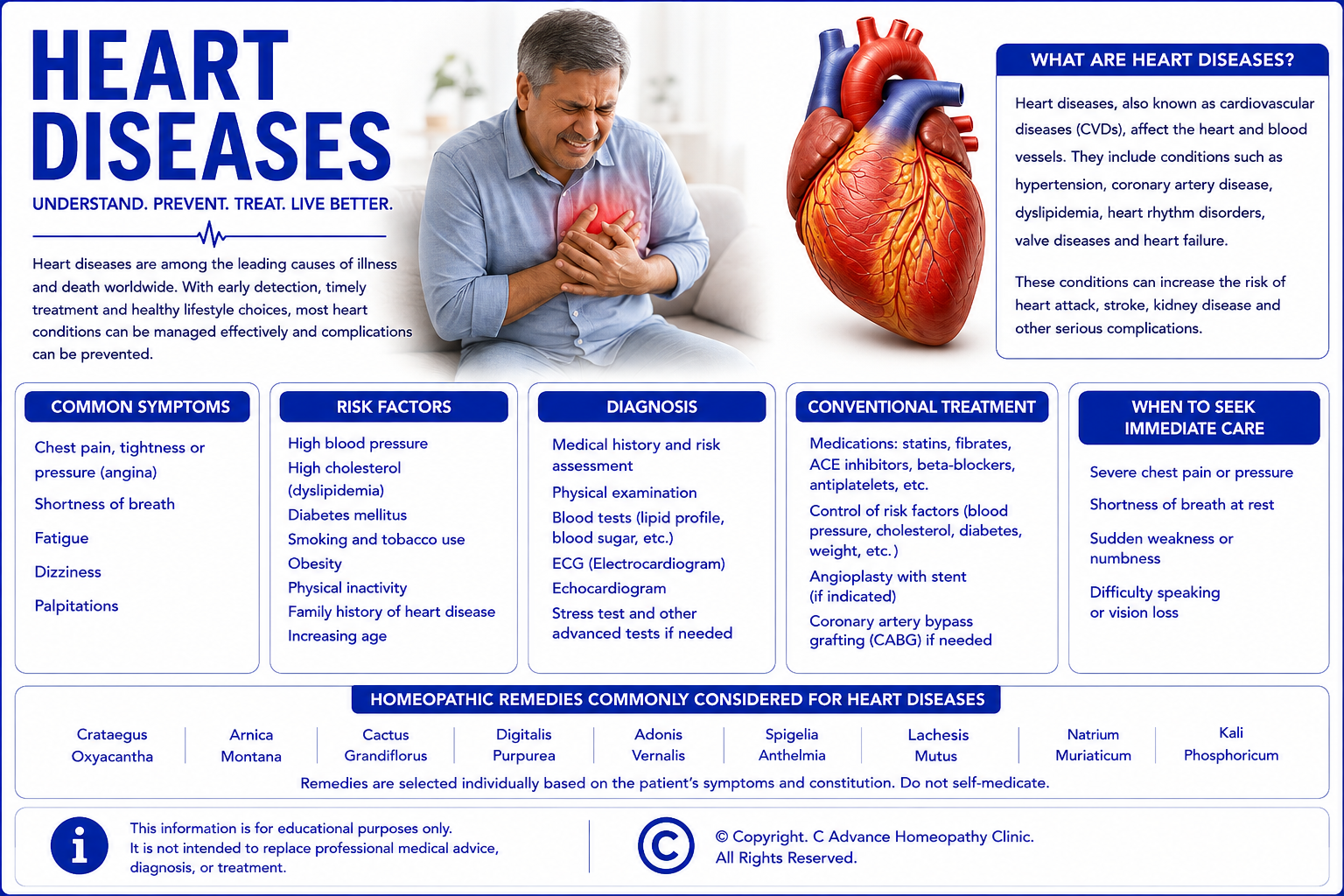
Understanding Heart Diseases
Heart diseases, also known as cardiovascular diseases, comprise a group of disorders affecting the heart and blood vessels. These conditions may interfere with the heart's ability to pump blood effectively or reduce blood flow to the heart muscle and other vital organs.
Among the most common cardiovascular conditions are hypertension, coronary artery disease, and dyslipidemia. Hypertension places excessive pressure on the walls of the arteries and is one of the leading risk factors for heart attack, stroke, heart failure, chronic kidney disease, and vision loss. Coronary artery disease develops when cholesterol-rich fatty deposits gradually accumulate within the coronary arteries, reducing blood supply to the heart muscle and increasing the risk of angina and myocardial infarction (heart attack). Dyslipidemia refers to abnormal levels of blood lipids, including elevated low-density lipoprotein (LDL) cholesterol, elevated triglycerides, reduced high-density lipoprotein (HDL) cholesterol, or a combination of these abnormalities. These lipid disorders accelerate the development of atherosclerosis and significantly increase cardiovascular risk.
Several factors contribute to the development of cardiovascular disease, including advancing age, smoking, diabetes mellitus, obesity, physical inactivity, unhealthy dietary habits, hypertension, abnormal cholesterol levels, chronic stress, excessive alcohol consumption, and a family history of heart disease.
Modern cardiology focuses on prevention, early diagnosis, comprehensive risk factor management, evidence-based medical therapy, and advanced interventional procedures that have significantly reduced cardiovascular complications and improved long-term survival. Regular medical evaluation and appropriate management of cardiovascular risk factors remain the cornerstone of preventing serious complications.
How Homeopathy May Support Patients with Heart Diseases
Homeopathy does not replace conventional cardiovascular treatment. Instead, it may be considered as part of an individualized complementary care plan for selected patients receiving ongoing cardiology treatment.
Depending on the individual's clinical condition, homeopathic care may be considered to help support symptoms such as:
- Palpitations
- Fatigue
- Emotional stress
- Anxiety associated with chronic illness
- Sleep disturbances
- Reduced sense of well-being
- Recovery following illness
- Overall quality of life
Every patient is unique. The selection of homeopathic medicines is individualized and depends on the patient's cardiovascular diagnosis, symptom profile, medical history, current medications, constitutional characteristics, emotional state, lifestyle, and overall health.
1. Hypertension
What is Hypertension?
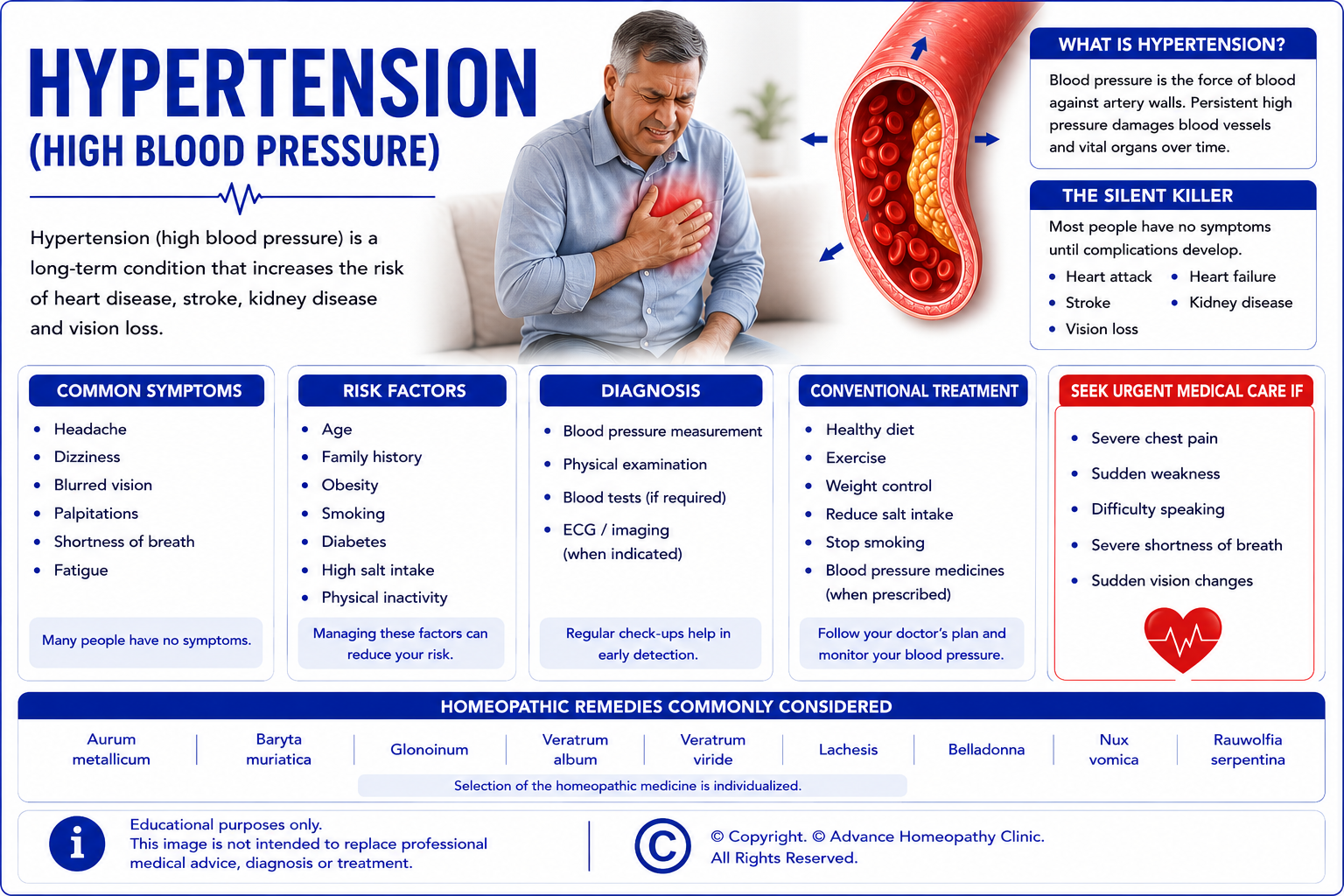
Hypertension, commonly known as high blood pressure, is one of the most prevalent cardiovascular disorders worldwide. Blood pressure is the force exerted by circulating blood against the walls of the arteries. When this pressure remains consistently elevated over time, it places additional strain on the heart, blood vessels, kidneys, brain, and eyes.
Hypertension is often referred to as the "silent killer" because many individuals experience no symptoms until serious complications develop. If left untreated, persistent high blood pressure significantly increases the risk of heart attack, stroke, heart failure, chronic kidney disease, vision loss, peripheral arterial disease, and other potentially life-threatening health problems.
Most patients have primary (essential) hypertension, where no single identifiable cause exists. A smaller proportion develop secondary hypertension, which may result from kidney disease, endocrine disorders, obstructive sleep apnoea, certain medications, or other underlying medical conditions.
Fortunately, hypertension can usually be effectively controlled through healthy lifestyle measures, regular blood pressure monitoring, and evidence-based medical treatment. Early diagnosis and effective blood pressure control play an important role in reducing long-term cardiovascular complications.
Common Symptoms of Hypertension
Many individuals with hypertension experience no symptoms.
When symptoms occur, they may include:
- Headache
- Dizziness
- Blurred vision
- Palpitations
- Shortness of breath
- Nosebleeds (occasionally)
- Fatigue
Risk Factors for Hypertension
- Increasing age
- Family history of hypertension
- Obesity
- High salt intake
- Physical inactivity
- Smoking
- Excessive alcohol consumption
- Diabetes mellitus
- Chronic kidney disease
- Chronic stress
- Obstructive sleep apnoea
Conventional Treatment for Hypertension
Treatment depends on the severity of hypertension, associated medical conditions, and the individual's overall cardiovascular risk. Conventional management commonly includes lifestyle modification, weight reduction, regular physical activity, dietary changes, smoking cessation, moderation of alcohol intake, stress management, and medications such as angiotensin-converting enzyme (ACE) inhibitors, angiotensin receptor blockers (ARBs), calcium channel blockers, beta-blockers, diuretics, or other antihypertensive medicines when clinically indicated. Regular blood pressure monitoring and long-term follow-up with a healthcare professional are essential to reduce the risk of cardiovascular complications.
Homeopathic Medicines Commonly Considered for Hypertension
Some homeopathic medicines that experienced homeopathic physicians may consider as part of an individualized treatment plan include:
- Aurum Metallicum
- Baryta Muriatica
- Glonoinum
- Veratrum Viride
- Veratrum Album
- Natrum Muriaticum
- Lachesis Mutus
- Belladonna
- Nux Vomica
- Rauwolfia Serpentina
Homeopathic medicines should only be prescribed by a qualified homeopathic physician after an individualized clinical evaluation.
Important: Complementary Care for Hypertension
Hypertension should always be evaluated and managed by a qualified physician, cardiologist, or appropriately trained healthcare professional to confirm the diagnosis, identify possible secondary causes of hypertension, assess overall cardiovascular risk, detect target organ damage, and develop an individualized long-term treatment plan. Comprehensive evaluation commonly includes repeated blood pressure measurements using standardized techniques, home or ambulatory blood pressure monitoring where indicated, assessment of cardiovascular risk factors, complete blood count, kidney function tests, blood glucose or HbA1c, lipid profile, urine analysis, electrocardiogram (ECG), and additional investigations such as echocardiography, renal imaging, or endocrine evaluation when clinically appropriate. Early diagnosis and effective blood pressure control are essential because uncontrolled hypertension significantly increases the risk of heart attack, stroke, heart failure, chronic kidney disease, peripheral arterial disease, vision loss, and premature cardiovascular death.
Patients with well-controlled or stable hypertension may be considered for individualized homeopathic treatment as a complementary approach following appropriate cardiovascular evaluation. Homeopathy may be integrated alongside healthy dietary modification, sodium restriction, weight management, regular physical activity, smoking cessation, moderation of alcohol intake, stress management, adequate sleep, prescribed antihypertensive medication, and regular follow-up with their treating physician or cardiologist. Individualized homeopathic prescribing is based on the patient's complete clinical presentation, constitutional characteristics, cardiovascular risk profile, associated medical conditions, medical history, lifestyle factors, emotional well-being, and overall health rather than the diagnosis alone.
Patients should continue all recommended conventional treatment, including regular blood pressure monitoring, antihypertensive medications, lipid management, diabetes management where appropriate, treatment of chronic kidney disease, lifestyle modification, cardiovascular risk reduction, and regular cardiology or primary care follow-up. Homeopathy should not be regarded as a substitute for evidence-based hypertension management, particularly in patients with Stage 2 or severe hypertension, resistant hypertension, hypertensive heart disease, chronic kidney disease, diabetes mellitus, established cardiovascular disease, pregnancy-related hypertension, or hypertension associated with secondary endocrine or renal disorders.
Patients with persistently uncontrolled blood pressure despite appropriate treatment, evidence of heart failure, chronic kidney disease, left ventricular hypertrophy, previous heart attack or stroke, resistant hypertension, secondary hypertension, significant cardiovascular risk factors, or progressive target organ damage should continue specialist cardiology, nephrology, or other appropriate medical care. Homeopathy should not replace recommended antihypertensive medications, cardiovascular investigations, renal evaluation, or specialist management when these are advised by the treating physician.
Patients who develop severe chest pain, sudden shortness of breath, sudden weakness or numbness affecting one side of the body, difficulty speaking, sudden loss of vision, severe headache associated with neurological symptoms, confusion, seizures, loss of consciousness, blood pressure associated with symptoms suggestive of a hypertensive emergency, or any sudden deterioration in their general condition should seek immediate emergency medical attention, as these symptoms may indicate hypertensive emergency, heart attack, stroke, acute heart failure, aortic dissection, or another life-threatening cardiovascular condition requiring urgent hospital-based evaluation and treatment.
2. Coronary Artery Disease
What is Coronary Artery Disease?
Coronary artery disease (CAD), also known as ischaemic heart disease or coronary heart disease, is one of the most common forms of cardiovascular disease worldwide. It occurs when the coronary arteries that supply oxygen-rich blood to the heart muscle become narrowed or blocked due to the gradual accumulation of cholesterol, inflammatory cells, calcium, and fatty deposits known as atherosclerotic plaques.
As these plaques enlarge over time, they restrict blood flow to the heart muscle, reducing the supply of oxygen and nutrients required for normal cardiac function. Patients may develop chest pain (angina), shortness of breath, reduced exercise tolerance, or fatigue. In some individuals, the first manifestation of coronary artery disease may be a heart attack (myocardial infarction) caused by complete blockage of a coronary artery.
Coronary artery disease develops gradually over many years and is closely associated with hypertension, diabetes mellitus, dyslipidemia, smoking, obesity, sedentary lifestyle, and advancing age. Early diagnosis and comprehensive management are essential to reduce the risk of serious cardiovascular complications and improve long-term survival.
Modern cardiology has transformed the treatment of coronary artery disease through risk factor modification, evidence-based medications, minimally invasive coronary angioplasty with stent placement, coronary artery bypass graft (CABG) surgery, and structured cardiac rehabilitation programmes.

Common Symptoms of Coronary Artery Disease
Symptoms vary depending on the severity of the disease. Common symptoms include:
- Chest pain, tightness, heaviness, or pressure (angina)
- Pain radiating to the left arm, shoulder, neck, jaw, or back
- Shortness of breath
- Fatigue
- Reduced exercise tolerance
- Palpitations
- Excessive sweating during chest discomfort
- Nausea or dizziness
- Heart attack in advanced disease
Some individuals, particularly those with diabetes, may have silent coronary artery disease with few or no symptoms until significant blockage has developed.
Risk Factors for Coronary Artery Disease
Several factors increase the likelihood of developing coronary artery disease, including:
- Hypertension
- Dyslipidemia (high cholesterol)
- Diabetes mellitus
- Smoking and tobacco use
- Obesity
- Physical inactivity
- Unhealthy diet
- Family history of premature heart disease
- Increasing age
- Chronic stress
- Chronic kidney disease
Conventional Treatment for Coronary Artery Disease
Treatment depends on the extent of arterial narrowing, severity of symptoms, and the individual's overall cardiovascular risk.
Conventional management commonly includes:
- Lifestyle modification
- Smoking cessation
- Heart-healthy diet
- Regular physical activity
- Blood pressure control
- Cholesterol-lowering therapy (statins and other lipid-lowering medications)
- Antiplatelet therapy
- Medicines to relieve angina and improve heart function
- Diabetes management
- Coronary angioplasty with stenting (Percutaneous Coronary Intervention – PCI), when indicated
- Coronary artery bypass grafting (CABG), when indicated
- Long-term follow-up with a cardiologist
- Cardiac rehabilitation after appropriate cardiac events or procedures
Homeopathic Medicines Commonly Considered for Coronary Artery Disease
Some homeopathic medicines that experienced homeopathic physicians may consider as part of an individualized treatment plan include:
- Cactus Grandiflorus
- Crataegus Oxyacantha
- Digitalis Purpurea
- Adonis Vernalis
- Aurum Metallicum
- Spigelia Anthelmia
- Latrodectus Mactans
Homeopathic medicines should only be prescribed by a qualified homeopathic physician after an individualized clinical evaluation.
Important: Complementary Care for Coronary Artery Disease
Coronary Artery Disease (CAD) should always be evaluated and managed by a qualified cardiologist or appropriately trained healthcare professional to confirm the diagnosis, determine the severity and extent of coronary artery involvement, assess overall cardiovascular risk, identify associated medical conditions, and develop an individualized long-term treatment plan. Comprehensive evaluation commonly includes clinical assessment, electrocardiogram (ECG), echocardiography, cardiac biomarkers during suspected acute coronary syndromes, exercise stress testing where appropriate, coronary CT angiography, invasive coronary angiography when indicated, lipid profile, blood glucose or HbA1c, kidney function tests, assessment of blood pressure, and evaluation of other cardiovascular risk factors. Accurate diagnosis is essential because early identification and appropriate treatment significantly reduce the risk of heart attack, heart failure, life-threatening arrhythmias, sudden cardiac death, and other major cardiovascular complications.
Patients with stable Coronary Artery Disease receiving appropriate cardiology care may be considered for individualized homeopathic treatment as a complementary approach following specialist cardiovascular evaluation. Homeopathy may be integrated alongside heart-healthy dietary modification, smoking cessation, regular physical activity as advised by the treating cardiologist, cardiac rehabilitation, weight management, diabetes control, lipid management, blood pressure control, stress management, prescribed cardiovascular medications, and regular cardiology follow-up. Individualized homeopathic prescribing is based on the patient's complete clinical presentation, constitutional characteristics, cardiovascular diagnosis, associated medical conditions, symptom profile, medical history, lifestyle factors, emotional well-being, and overall health rather than the diagnosis alone.
Patients should continue all recommended conventional treatment, including antiplatelet therapy, statins and other lipid-lowering medications where indicated, beta-blockers, ACE inhibitors or angiotensin receptor blockers (ARBs), anti-anginal medications, diabetes management, cardiac rehabilitation, coronary angioplasty with stent placement (Percutaneous Coronary Intervention – PCI) when indicated, coronary artery bypass grafting (CABG) when clinically appropriate, and regular cardiology follow-up. Homeopathy should not be regarded as a substitute for evidence-based cardiovascular management, particularly in patients with acute coronary syndrome, previous myocardial infarction, significant coronary artery stenosis, heart failure, reduced left ventricular function, diabetes mellitus, chronic kidney disease, or other high-risk cardiovascular conditions.
Patients with persistent or worsening angina, reduced exercise tolerance, previous heart attack, heart failure, recurrent hospital admissions, multivessel coronary artery disease, significant left main coronary artery disease, abnormal stress test results, progressive symptoms despite appropriate treatment, or abnormal cardiac investigations should continue specialist cardiology care and regular monitoring. Homeopathy should not replace recommended cardiac investigations, coronary angiography, revascularization procedures, evidence-based cardiovascular medications, cardiac rehabilitation, or surgical intervention when these are advised by the treating cardiologist.
Patients who develop chest pain lasting more than a few minutes, chest pain radiating to the arm, shoulder, jaw, neck, or back, sudden shortness of breath, excessive sweating, nausea associated with chest discomfort, sudden collapse, loss of consciousness, severe palpitations with dizziness, symptoms suggestive of stroke, or any sudden deterioration in their general condition should seek immediate emergency medical attention, as these symptoms may indicate acute myocardial infarction (heart attack), unstable angina, life-threatening cardiac arrhythmia, acute heart failure, cardiogenic shock, or another cardiovascular emergency requiring urgent hospital-based evaluation and treatment.
3. Dyslipidemia
What is Dyslipidemia?
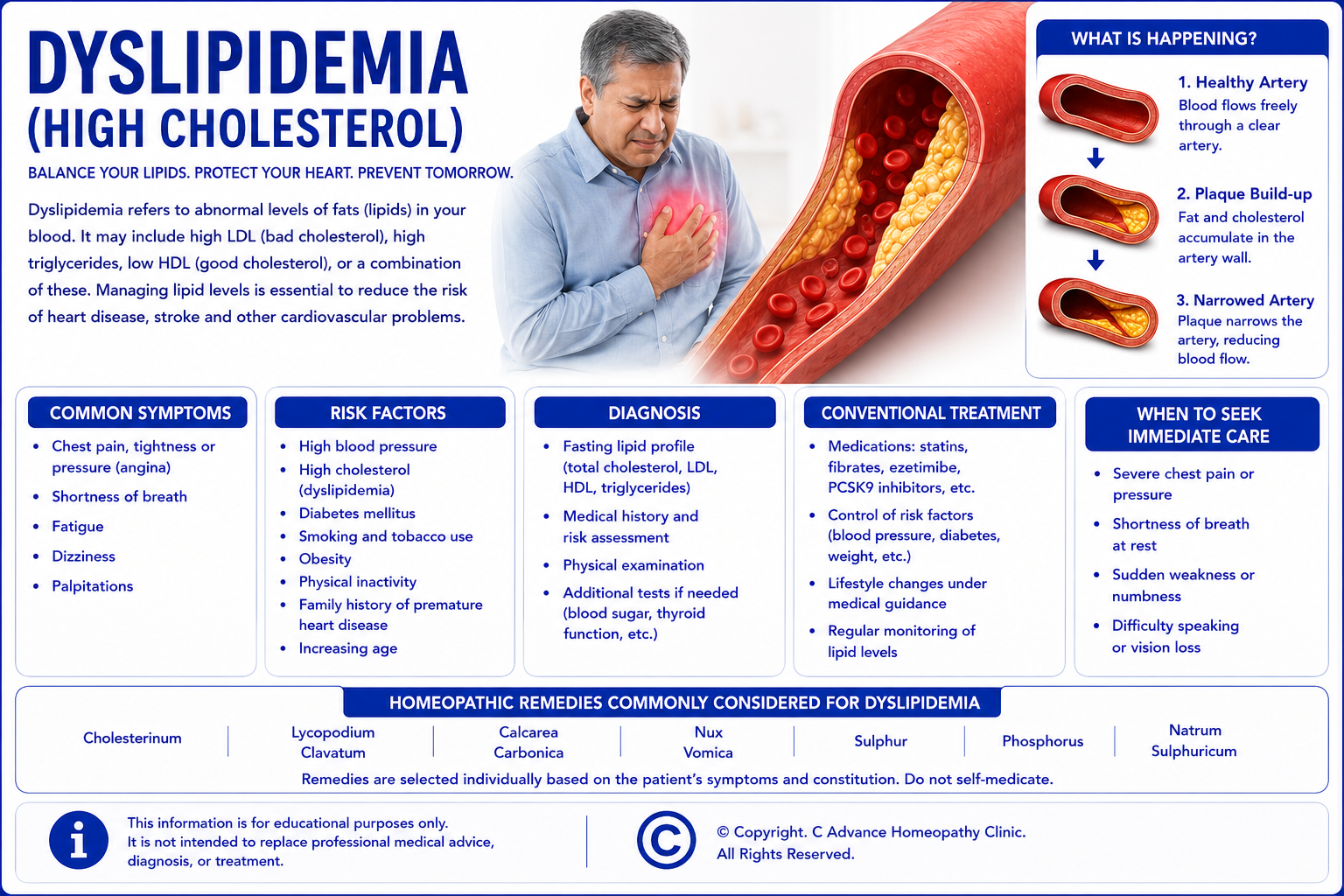
Dyslipidemia refers to abnormal levels of lipids (fats) in the bloodstream. It may involve elevated low-density lipoprotein (LDL) cholesterol, elevated triglycerides, reduced high-density lipoprotein (HDL) cholesterol, or a combination of these abnormalities.
Abnormal lipid levels contribute significantly to the development of atherosclerosis, a process in which fatty deposits accumulate within the walls of arteries throughout the body. As these plaques enlarge, they progressively narrow blood vessels and reduce blood flow, increasing the risk of coronary artery disease, heart attack, stroke, and peripheral arterial disease.
Most individuals with dyslipidemia have no noticeable symptoms, making routine blood testing essential for early detection. Appropriate treatment can substantially reduce cardiovascular risk and help prevent serious long-term complications.
Dyslipidemia may result from genetic factors, unhealthy dietary habits, obesity, diabetes mellitus, hypothyroidism, chronic kidney disease, certain medications, or other medical conditions. Many patients require long-term lifestyle modification together with lipid-lowering medication to achieve recommended cholesterol targets.
Common Symptoms of Dyslipidemia
Dyslipidemia itself usually does not cause symptoms.
In some patients, the following findings may be observed:
- Xanthomas (fatty deposits beneath the skin)
- Xanthelasma (yellowish cholesterol deposits around the eyelids)
- Corneal arcus, particularly in younger individuals with inherited lipid disorders
- Symptoms related to coronary artery disease, stroke, or peripheral arterial disease when complications develop
Risk Factors for Dyslipidemia
Several factors increase the likelihood of developing dyslipidemia, including:
- Diet high in saturated fats and trans fats
- Obesity
- Physical inactivity
- Diabetes mellitus
- Hypothyroidism
- Chronic kidney disease
- Smoking
- Excessive alcohol consumption
- Family history of lipid disorders
- Increasing age
Conventional Treatment for Dyslipidemia
The primary objective of treatment is to reduce overall cardiovascular risk and prevent complications such as heart attack and stroke.
Conventional management commonly includes:
- Heart-healthy dietary modification
- Weight management
- Regular physical activity
- Smoking cessation
- Limiting alcohol intake
- Diabetes management
- Treatment of underlying medical conditions
- Statins
- Ezetimibe
- PCSK9 inhibitors
- Fibrates
- Other lipid-lowering therapies, when clinically indicated
- Regular lipid profile monitoring and cardiovascular risk assessment
Homeopathic Medicines Commonly Considered for Dyslipidemia
Some homeopathic medicines that experienced homeopathic physicians may consider as part of an individualized treatment plan include:
- Cholesterinum
- Lycopodium Clavatum
- Calcarea Carbonica
- Nux Vomica
- Sulphur
- Phosphorus
- Natrum Sulphuricum
Homeopathic medicines should only be prescribed by a qualified homeopathic physician after an individualized clinical evaluation.
Important: Complementary Care for Dyslipidemia
Dyslipidemia should always be evaluated and managed by a qualified physician, cardiologist, endocrinologist, or appropriately trained healthcare professional to confirm the diagnosis, identify underlying causes, assess overall cardiovascular risk, detect associated metabolic disorders, and develop an individualized long-term management plan. Comprehensive evaluation commonly includes fasting or non-fasting lipid profile, assessment of blood pressure, blood glucose or HbA1c, kidney function tests, liver function tests where appropriate, thyroid function testing when indicated, body mass index (BMI), family history assessment, evaluation for inherited lipid disorders, and calculation of overall cardiovascular risk using validated risk assessment tools. Early identification and treatment are essential because dyslipidemia is one of the leading contributors to atherosclerotic cardiovascular disease, including coronary artery disease, stroke, and peripheral arterial disease.
Patients with stable Dyslipidemia may be considered for individualized homeopathic treatment as a complementary approach following appropriate cardiovascular evaluation. Homeopathy may be integrated alongside heart-healthy dietary modification, regular physical activity, weight management, smoking cessation, moderation of alcohol intake, diabetes management where appropriate, treatment of associated metabolic disorders, prescribed lipid-lowering medications, and regular follow-up with their treating physician or cardiologist. Individualized homeopathic prescribing is based on the patient's complete clinical presentation, constitutional characteristics, cardiovascular risk profile, associated medical conditions, medical history, lifestyle factors, emotional well-being, and overall health rather than the diagnosis alone.
Patients should continue all recommended conventional treatment, including lifestyle modification, statins, ezetimibe, PCSK9 inhibitors, fibrates, or other lipid-lowering therapies when clinically indicated, diabetes management, blood pressure control, treatment of obesity, regular lipid profile monitoring, and long-term cardiovascular risk assessment. Homeopathy should not be regarded as a substitute for evidence-based lipid management, particularly in patients with established coronary artery disease, previous heart attack or stroke, familial hypercholesterolemia, diabetes mellitus, chronic kidney disease, or other high-risk cardiovascular conditions.
Patients with persistently elevated LDL cholesterol despite appropriate treatment, familial hypercholesterolemia, recurrent cardiovascular events, markedly elevated triglycerides, previous heart attack or stroke, peripheral arterial disease, diabetes mellitus with high cardiovascular risk, progressive atherosclerotic disease, or abnormal cardiovascular investigations should continue specialist cardiology, endocrinology, or lipid clinic follow-up. Homeopathy should not replace recommended lipid-lowering medications, cardiovascular investigations, genetic evaluation, or specialist management when these are advised by the treating physician.
Patients who develop sudden chest pain, sudden weakness or numbness affecting one side of the body, difficulty speaking, sudden vision loss, severe shortness of breath, collapse, loss of consciousness, symptoms suggestive of acute pancreatitis in the presence of markedly elevated triglycerides such as severe upper abdominal pain with persistent vomiting, or any sudden deterioration in their general condition should seek immediate emergency medical attention, as these symptoms may indicate heart attack, stroke, acute pancreatitis, acute limb ischemia, or another life-threatening cardiovascular emergency requiring urgent hospital-based evaluation and treatment.
A Note About Homeopathic Medicines
Homeopathy is a system of complementary medicine that has been practised worldwide for more than 200 years. It is based on the principle of individualization, where the selection of a homeopathic medicine depends not only on the diagnosed disease but also on the patient's unique physical symptoms, emotional characteristics, constitutional makeup, medical history, and overall health.
Unlike conventional medicine, where patients with the same diagnosis often receive similar medications, homeopathic treatment is individualized. Two patients diagnosed with hypertension or coronary artery disease may receive different homeopathic medicines because their symptom patterns, constitutional characteristics, associated medical conditions, and overall health profiles differ.
At Advance Homeopathy Clinic Dubai, every prescription is carefully individualized following a comprehensive consultation. Our homeopathic physicians evaluate your cardiovascular diagnosis, laboratory investigations, imaging reports when available, current medications, cardiovascular risk factors, lifestyle, emotional health, family history, and characteristic symptoms before selecting an appropriate homeopathic medicine.
Homeopathy should always be regarded as a complementary therapy and not as a substitute for evidence-based cardiovascular care. Patients should continue regular follow-up with their cardiologist and should never stop or alter prescribed medications without medical advice.
Our Homeopathic Approach
At Advance Homeopathy Clinic Dubai, we believe that successful homeopathic care begins with understanding the patient rather than focusing solely on the diagnosis. Every consultation is designed to provide a comprehensive understanding of your cardiovascular health while respecting the essential role of modern cardiology.
Our comprehensive evaluation includes:
- Detailed review of your cardiovascular diagnosis
- Complete medical and family history
- Assessment of current symptoms and their progression
- Review of laboratory investigations and cardiac reports
- Evaluation of cardiovascular risk factors
- Review of current medications
- Assessment of diet, sleep, stress, exercise, and lifestyle
- Individual constitutional assessment
- Selection of an individualized homeopathic medicine
- Regular follow-up to assess progress and review treatment
We work alongside your existing medical treatment and encourage ongoing collaboration with your cardiologist whenever appropriate. Our objective is to provide individualized complementary care while maintaining the highest standards of patient safety.
Why Choose Advance Homeopathy Clinic Dubai?
Advance Homeopathy Clinic Dubai is committed to providing ethical, evidence-informed, and patient-centred homeopathic care.
Patients choose our clinic because we offer:
- DHA Licensed Homeopathy Clinic in Dubai
- Individualized homeopathic treatment tailored to every patient
- Medical Director Dr. Aalim Dhandhukia with over 35 years of clinical and teaching experience
- Comprehensive one-to-one consultations
- Evidence-informed clinical practice
- Homeopathy integrated with modern medical understanding
- In-clinic and online consultations
- Patients from over 20 countries and 100+ nationalities
- Multilingual patient support
- Free First Consultation to understand whether homeopathy may complement your healthcare needs
Our philosophy is simple: provide honest guidance, individualized care, and realistic expectations regarding the role of homeopathy in cardiovascular diseases.
Frequently Asked Questions (FAQs)
Can homeopathy cure heart disease?
No. Homeopathy should not be considered a cure for heart disease. Current scientific evidence does not support replacing conventional cardiology treatment with homeopathy. At our clinic, homeopathy is offered only as a complementary therapy alongside standard medical care.
Can I stop my blood pressure or cholesterol medicines if I start homeopathic treatment?
No. Blood pressure medicines, statins, blood thinners, and other prescribed cardiac medications have been proven to reduce the risk of heart attack, stroke, heart failure, and premature death. Patients should never stop or change these medicines without consulting their treating physician.
Can homeopathy be taken together with conventional cardiac medicines?
In many cases, yes. Homeopathy is commonly used alongside conventional treatment. However, patients should always inform all healthcare providers about every treatment they are receiving.
Is homeopathy safe for patients with hypertension or coronary artery disease?
When prescribed by a qualified homeopathic physician and used together with appropriate conventional medical care, homeopathy is generally considered safe for many patients. It should never delay emergency treatment or replace evidence-based cardiovascular care.
Which heart conditions do you commonly manage?
Our clinic commonly provides complementary homeopathic care for patients with:
- Hypertension
- Coronary Artery Disease
- Dyslipidemia
Every patient undergoes a detailed evaluation before treatment is recommended.
How are homeopathic medicines selected?
Homeopathic medicines are selected after a detailed consultation considering your diagnosis, symptoms, medical history, constitutional characteristics, lifestyle, emotional health, and overall well-being. Treatment is individualized rather than based solely on the diagnosis.
How long does homeopathic treatment take?
The duration varies depending on the diagnosis, severity of disease, overall health, response to treatment, and individual treatment goals. Your homeopathic physician will discuss realistic expectations during your consultation.
Our Commitment to Evidence-Based Cardiovascular Care
At Advance Homeopathy Clinic Dubai, we strongly support evidence-based medicine.
Cardiovascular diseases require timely diagnosis, careful risk factor management, and appropriate treatment to prevent serious complications. We encourage every patient to maintain regular follow-up with their cardiologist, monitor blood pressure and cholesterol levels, follow a heart-healthy lifestyle, and adhere to prescribed medications.
Although several clinical studies have explored individualized homeopathic treatment for hypertension, the current body of scientific evidence remains limited. Existing studies are generally small and require further confirmation through larger, high-quality clinical trials.
For this reason, homeopathy should be considered only as a complementary therapy and never as a replacement for conventional cardiovascular treatment.
Our commitment is to provide transparent, ethical, and scientifically responsible information so that patients can make informed decisions regarding their healthcare.
Research in Homeopathy and Cardiovascular Diseases
Research Overview
Homeopathy has been investigated as a complementary approach in the management of selected cardiovascular conditions, particularly essential hypertension, which has received considerably more research attention than other cardiovascular disorders. Published research has also explored homeopathic interventions in patients with stable coronary artery disease, dyslipidemia, chronic heart failure, and selected cardiovascular symptoms, although the quantity and quality of evidence vary substantially between conditions.
The available scientific literature includes randomized controlled trials, observational studies, pragmatic clinical studies, case series, systematic reviews, and narrative reviews. Most published studies have evaluated outcomes such as blood pressure control, symptom severity, quality of life, medication use, patient-reported well-being, and cardiovascular risk factors rather than major cardiovascular outcomes such as heart attack, stroke, hospitalization, or cardiovascular mortality.
Among cardiovascular disorders, essential hypertension has been the most extensively studied in homeopathic research. A small number of randomized controlled trials have evaluated individualized homeopathic treatment as an adjunct to conventional hypertension management, while observational studies have examined changes in blood pressure and patient-reported outcomes in routine clinical practice. However, comparatively little high-quality research is available for coronary artery disease and dyslipidemia, and there is currently insufficient evidence to determine whether homeopathy influences the progression of atherosclerosis, prevents cardiovascular events, or modifies long-term cardiovascular risk.
Because individualized homeopathic prescribing is based on each patient's complete clinical presentation, constitutional characteristics, associated medical conditions, cardiovascular risk profile, medical history, lifestyle factors, and overall health rather than the diagnosis alone, evaluating individualized treatment using conventional randomized clinical trial methodology presents important methodological challenges. Consequently, the available evidence should be interpreted with appropriate consideration of both its strengths and its limitations.
Current State of Research
Published cardiovascular research includes randomized controlled trials, observational studies, pragmatic clinical studies, systematic reviews, and meta-analyses evaluating homeopathy as a complementary intervention alongside conventional cardiovascular care. Some individual studies have reported improvements in blood pressure control, symptom scores, quality of life, and patient satisfaction among selected patients receiving individualized homeopathic treatment in addition to standard medical care.
However, the overall body of scientific evidence remains limited and heterogeneous. Many published studies involve relatively small sample sizes, variability in patient selection, individualized prescribing approaches, differences in diagnostic criteria, inconsistent outcome measures, short follow-up periods, and methodological limitations that make comparison between studies difficult. Importantly, most studies have evaluated surrogate outcomes, such as blood pressure or patient-reported symptoms, rather than demonstrating reductions in heart attacks, strokes, heart failure, hospitalization, or cardiovascular mortality.
Systematic reviews generally conclude that current evidence is insufficient to establish homeopathy as an effective treatment for cardiovascular diseases or to recommend its routine use as part of standard cardiology practice. While some studies have reported encouraging findings in selected patients with hypertension, further well-designed, adequately powered, independently replicated clinical trials using standardized diagnostic criteria, validated cardiovascular outcome measures, longer follow-up, and clinically meaningful endpoints are required before firm conclusions can be drawn regarding the role of individualized homeopathic care in cardiovascular disease.
Current international cardiovascular guidelines continue to recommend early diagnosis, aggressive management of cardiovascular risk factors, healthy lifestyle modification, blood pressure control, lipid-lowering therapy, antiplatelet treatment when indicated, diabetes management, cardiac rehabilitation, coronary angioplasty, coronary artery bypass surgery, and regular specialist cardiology follow-up as the foundation of modern cardiovascular care. Complementary therapies, including homeopathy, should therefore be regarded only as supportive approaches that may be considered alongside—but never as replacements for—evidence-based cardiovascular treatment.
Our Clinical Perspective
At Advance Homeopathy Clinic Dubai, we believe that successful cardiovascular care begins with early diagnosis, comprehensive cardiovascular risk assessment, evidence-based medical treatment, healthy lifestyle modification, and regular long-term follow-up. Conventional cardiology remains the cornerstone of preventing heart attacks, strokes, heart failure, kidney disease, and other serious cardiovascular complications, and should never be delayed or replaced by complementary therapies when medical, interventional, or surgical treatment is clinically indicated.
Our role is to provide individualized homeopathic care as a complementary approach, integrated within each patient's overall cardiovascular management plan. Every patient undergoes a comprehensive assessment that includes the cardiovascular diagnosis, symptom profile, blood pressure, lipid profile, electrocardiogram (ECG), echocardiography and other cardiac investigations where available, cardiovascular risk factors, current medications, associated medical conditions, constitutional characteristics, lifestyle, emotional well-being, and overall health before an individualized homeopathic medicine is selected.
Throughout this article, we have consistently emphasized that homeopathy is presented only as a complementary approach within modern cardiovascular care. We do not present homeopathy as a substitute for antihypertensive medications, statins, antiplatelet agents, anticoagulants, diabetes management, cardiac rehabilitation, coronary angioplasty (PCI), coronary artery bypass grafting (CABG), implantable cardiac devices, or any other evidence-based cardiology treatment recommended by the treating physician.
Patients with hypertension should continue regular blood pressure monitoring and antihypertensive therapy. Patients with coronary artery disease should continue all prescribed cardiac medications, risk-factor modification, and specialist follow-up. Patients with dyslipidemia should continue evidence-based lipid-lowering therapy and long-term cardiovascular risk management. Homeopathy should never delay emergency medical evaluation or lead to discontinuation of treatments that have been proven to reduce cardiovascular morbidity and mortality.
Patients who experience chest pain, sudden shortness of breath, symptoms suggestive of heart attack or stroke, loss of consciousness, severe palpitations with collapse, or any sudden deterioration in their cardiovascular condition should seek immediate emergency medical attention, as these situations may represent life-threatening cardiovascular emergencies requiring urgent hospital-based evaluation and treatment.
Our approach combines individualized homeopathic prescribing, careful clinical assessment, collaboration with cardiologists and other healthcare professionals whenever appropriate, and an evidence-informed understanding of current cardiovascular research. As scientific knowledge continues to evolve, we remain committed to integrating emerging evidence into clinical practice while maintaining the principles of individualized patient care, patient safety, responsible integrative healthcare, and ethical medical practice.
