
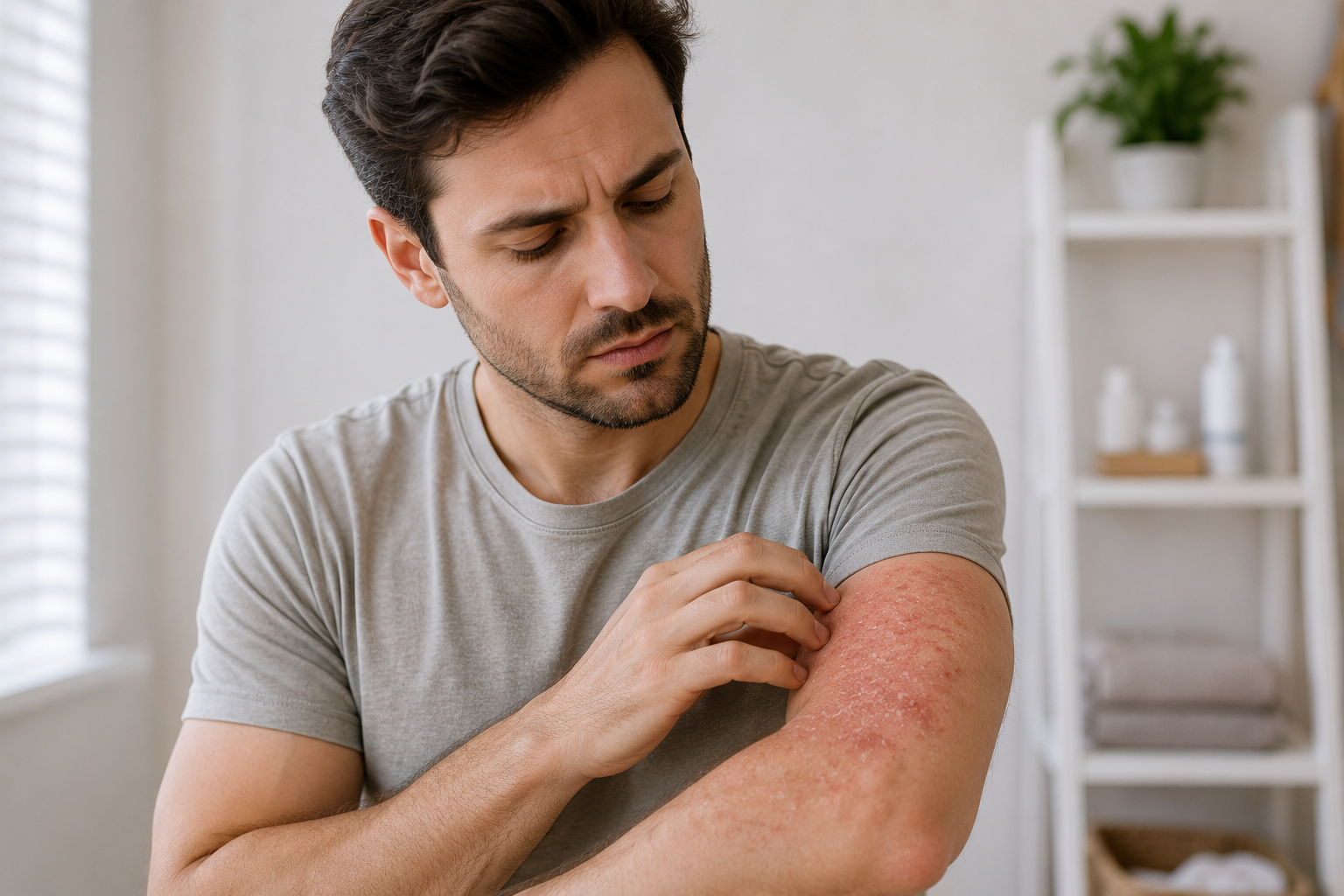
Skin disorders can appear in many different forms—from itching, dryness and recurrent eruptions to pigmentation changes, scaling, hives and chronic inflammatory skin conditions.
Although many skin conditions may look similar initially, their causes, clinical course and treatment requirements can be very different.
At Advance Homeopathy Clinic Dubai, we provide individualized homeopathic care for patients with recurrent and chronic skin disorders alongside appropriate dermatological diagnosis and conventional medical treatment where required.
Patients may consult our clinic for skin concerns such as:
- Atopic dermatitis
- Eczema
- Psoriasis
- Vitiligo
- Urticaria and recurrent hives
- Skin allergies
- Lichen planus
- Lichen planus pigmentosus
- Acne and recurrent skin eruptions
- Other chronic or recurring skin complaints
Our approach begins by understanding the actual dermatological diagnosis rather than treating every rash, itching or discoloration as the same type of skin problem.
We assess the location and appearance of skin lesions, duration, pattern of recurrence, itching, aggravating factors, associated medical conditions, previous treatment and other individual characteristics relevant to the patient.
Homeopathic prescribing is individualized. Two patients with the same skin diagnosis may differ considerably in the appearance, location, triggers, associated symptoms and overall pattern of illness and therefore may not receive the same homeopathic prescription.
Advance Homeopathy Clinic has branches in Al Qusais and Dubai Silicon Oasis (DSO) and is led by Dr. Aalim Dhandhukia, MD (Homeopathy), Medical Director and Homeopathy Practitioner, with more than 35 years of clinical and teaching experience.
Understanding Skin Disorders
The skin is the body's largest organ and performs several important protective and regulatory functions.
Skin disorders may arise from many different mechanisms, including:
- Inflammation
- Allergic reactions
- Immune-related conditions
- Autoimmune disease
- Infection
- Genetic predisposition
- Environmental exposure
- Hormonal factors
- Other medical conditions
Because different conditions may produce similar-looking rashes, proper diagnosis is important.
Common Symptoms of Skin Disorders
Depending on the condition, patients may experience:
- Itching
- Dryness
- Redness
- Scaling
- Thickening of the skin
- Cracking
- Oozing
- Recurrent eruptions
- Hives
- Swelling
- Changes in pigmentation
- White patches
- Dark pigmentation
- Burning
- Pain
- Acne or recurrent pimples
- Changes in nails or scalp
The pattern and combination of these symptoms can help differentiate one skin disorder from another.
Why Correct Dermatological Diagnosis Matters
Itching alone does not identify the cause of a skin condition.
For example, eczema, allergic dermatitis, fungal infections, psoriasis and other skin disorders can sometimes share overlapping symptoms.
Similarly, white patches on the skin may have different causes and should not automatically be assumed to be vitiligo.
Appropriate dermatological examination helps establish the diagnosis before treatment is planned.
Our Approach to Homeopathic Treatment for Skin Disorders
At Advance Homeopathy Clinic, we assess both the dermatological diagnosis and the individual expression of the skin condition.
Homeopathic treatment is not selected simply according to the name of the disease.
Detailed Skin Case Assessment
During the consultation, the doctor may evaluate:
- Confirmed diagnosis
- Age at onset
- Duration of the skin problem
- Location of lesions
- Distribution over the body
- Appearance of lesions
- Itching
- Burning or pain
- Dryness or scaling
- Oozing or cracking
- Pigmentation changes
- Frequency of recurrence
- Seasonal pattern
- Environmental triggers
- Associated allergies
- Previous skin disorders
- Family history
- Current medication
- Previous topical or systemic treatment
- Dermatology reports
- Relevant laboratory investigations
- Associated medical conditions
This helps develop a detailed understanding of the individual case.
Understanding Individual Triggers and Patterns
Skin symptoms may vary according to:
- Weather
- Heat
- Cold
- Sweating
- Dry climate
- Environmental exposure
- Contact with specific substances
- Allergens
- Other individual circumstances
Not every apparent association represents a true trigger, so patterns should be identified carefully rather than assumed.
Individualized Homeopathic Prescription
Two patients diagnosed with eczema may differ significantly in:
- Location
- Degree of itching
- Dryness
- Oozing
- Cracking
- Time of aggravation
- Weather sensitivity
- Associated allergies
Similarly, patients with psoriasis or vitiligo can differ greatly in distribution, progression and associated symptoms.
These individual characteristics are considered during homeopathic prescription.
Follow-Up and Progress Assessment
Skin conditions often require follow-up over time.
Depending on the diagnosis, progress may be assessed through:
- Extent of skin involvement
- Frequency of flare-ups
- Severity of itching
- Degree of redness
- Scaling
- Skin cracking
- Sleep disturbance due to itching
- Spread or stability of pigmentation changes
- Requirement for topical medication
- Functional or daily-life impact
- Photographs where clinically appropriate
- Relevant specialist assessment
Regular comparison helps assess whether the clinical pattern is changing.
Homeopathic Treatment for Eczema and Atopic Dermatitis
Atopic dermatitis, commonly called eczema, is a chronic inflammatory skin condition characterized by dry, itchy and inflamed skin. It commonly begins in childhood but can occur at any age.
The severity and pattern can vary considerably.
Common Features of Atopic Dermatitis
Patients may experience:
- Dry skin
- Intense itching
- Redness
- Scaling
- Cracking
- Oozing
- Thickened skin after repeated scratching
- Recurrent flare-ups
The location of lesions may also vary according to age and individual presentation.
Understanding the Individual Eczema Pattern
During homeopathic assessment, the doctor may consider:
- Age at onset
- Areas affected
- Degree of itching
- Night-time aggravation
- Dry or oozing lesions
- Seasonal changes
- Associated allergies
- History of asthma or allergic rhinitis
- Family history
- Previous dermatological treatment
Atopic dermatitis is often associated with an atopic tendency, including other allergic conditions.
Eczema in Children
Atopic dermatitis frequently begins during childhood.
Parents may notice:
- Recurrent itching
- Dry skin
- Sleep disturbance
- Skin scratching
- Repeated flare-ups
- Associated nasal or respiratory allergies
Children with significant eczema should continue appropriate pediatric and dermatological care.
Continuing Appropriate Skin Care
Moisturizers prescribed topical treatments and other dermatologist-recommended measures may remain important.
Patients should not stop necessary skin treatment simply because homeopathic care has begun.
Homeopathic Treatment for Psoriasis
Psoriasis is a chronic inflammatory skin disease that commonly produces scaly plaques and may cause pain, swelling or warmth in affected areas.
The condition can vary from limited skin involvement to more extensive disease.
Common Features of Psoriasis
Patients may experience:
- Red or discolored plaques
- Scaling
- Dryness
- Cracking
- Itching
- Burning
- Nail changes
- Recurrent flare-ups
The scalp, elbows, knees and other areas may be involved.
Individualized Assessment of Psoriasis
The homeopathic consultation may consider:
- Age at onset
- Distribution
- Extent of lesions
- Scaling
- Itching
- Cracking or bleeding
- Nail involvement
- Pattern of recurrence
- Previous treatments
- Family history
- Associated joint symptoms
Psoriasis and Joint Symptoms
Some people with psoriasis develop psoriatic arthritis.
Patients with psoriasis who develop persistent joint swelling, pain or morning stiffness should receive appropriate rheumatological assessment.
Homeopathy Alongside Dermatology Care
Patients with moderate or severe psoriasis may require topical, systemic or biologic treatment.
These treatments should not be stopped or modified without discussing the decision with the dermatologist or specialist responsible for the patient's care.
Homeopathic Treatment for Vitiligo
Vitiligo is a chronic autoimmune disorder in which pigment-producing cells are affected, resulting in areas of skin losing pigment and becoming lighter or white.
The extent and progression vary widely between individuals.
Common Features of Vitiligo
Patients may develop:
- White or depigmented patches
- Symmetrical patches in some cases
- Changes affecting the hands, face or other areas
- Progressive or stable areas of pigment loss
- Hair depigmentation in some affected areas
Individualized Assessment of Vitiligo
The doctor may review:
- Age at onset
- Areas affected
- Speed of progression
- Stable versus spreading patches
- Family history
- Associated autoimmune conditions
- Thyroid history
- Previous dermatological treatments
- Relevant investigations
Vitiligo and Autoimmune Conditions
Because vitiligo is autoimmune in nature, it may sometimes occur alongside other autoimmune disorders.
Appropriate medical assessment may therefore be relevant when there are symptoms suggesting another autoimmune condition.
Monitoring Changes in Pigmentation
Clinical photography can be useful in documenting whether lesions are stable, spreading or showing changes over time.
Patients should continue appropriate dermatology follow-up, including consideration of available conventional treatment options.
Homeopathic Treatment for Urticaria and Recurrent Hives
Urticaria, commonly called hives, causes raised, itchy swellings that may appear suddenly and change location.
Episodes may be short-lived or recurrent.
Common Features of Urticaria
Symptoms can include:
- Raised itchy wheals
- Red or skin-colored swellings
- Burning or itching
- Lesions appearing and disappearing
- Swelling of different areas
- Repeated episodes
Possible Triggers of Hives
Urticaria may sometimes be associated with:
- Foods
- Medications
- Infection
- Heat
- Cold
- Pressure
- Other environmental factors
However, a clear trigger is not identified in every patient.
Chronic Urticaria
Patients with hives recurring over a prolonged period may require medical assessment to determine whether they have chronic urticaria and whether additional investigation is required.
When Hives Become an Emergency
Hives associated with:
- Difficulty breathing
- Swelling of the tongue
- Throat swelling
- Difficulty swallowing
- Dizziness
- Collapse
require immediate emergency medical attention.
Homeopathic treatment should not delay treatment of anaphylaxis or another severe allergic reaction.
Homeopathic Care for Skin Allergies
Skin reactions may arise after contact with allergens, irritants, foods, medicines or other substances.
Correctly identifying the type of reaction is important.
Recurrent Allergic Skin Reactions
Patients may experience:
- Itching
- Redness
- Rashes
- Hives
- Swelling
- Recurrent eruptions
The pattern, timing and suspected exposure should be recorded.
Contact Dermatitis
Contact dermatitis can develop when the skin reacts to an irritant or allergen.
Identifying and avoiding the causative substance may form an important part of management.
Skin Allergy and Other Atopic Conditions
Some patients with skin allergies may also experience:
- Allergic rhinitis
- Asthma
- Recurrent respiratory allergy
- Other atopic conditions
The broader allergic history forms part of the case assessment.
Homeopathic Treatment for Lichen Planus
Lichen planus is an inflammatory condition that may affect the skin and, in some patients, the mouth, scalp, nails or genital area.
The presentation varies depending on the site involved.
Cutaneous Lichen Planus
Skin lesions may be associated with:
- Itching
- Raised lesions
- Pigmentation following inflammation
- Recurrent eruptions
Persistent or widespread disease requires appropriate dermatological assessment.
Oral Lichen Planus
Oral lichen planus may affect the inside of the mouth and can cause:
- White patterned lesions
- Red or inflamed areas
- Burning
- Pain
- Sensitivity
Persistent oral lesions should be appropriately assessed and monitored by a qualified medical or dental specialist.
Lichen Planus Pigmentosus
Lichen planus pigmentosus can produce areas of dark pigmentation, often affecting exposed or flexural areas.
The diagnosis should be established dermatologically because several pigmentation disorders can appear similar.
Homeopathic Care for Acne and Recurrent Skin Eruptions
Acne is a common skin condition that may occur in teenagers and adults.
It can involve:
- Blackheads
- Whiteheads
- Papules
- Pustules
- Nodules
- Cysts
- Post-inflammatory pigmentation
- Scarring
Acne in Adolescents
Hormonal changes during adolescence can contribute to acne.
The severity, distribution and risk of scarring should be considered when deciding on treatment.
Acne in Adults
Adult acne may have different contributing factors.
In women, persistent acne associated with menstrual irregularity or excessive hair growth may warrant assessment for hormonal conditions such as PMOS/PCOS.
When Dermatological Acne Treatment Is Important
Moderate to severe inflammatory acne and acne causing scarring may require dermatological treatment.
Homeopathic care should not delay treatment when there is a significant risk of permanent scarring.
Skin Disorders in Children
Children commonly experience skin problems ranging from eczema and allergic rashes to infections and other dermatological conditions.
Eczema and Atopic Skin in Children
Atopic dermatitis is particularly common in childhood and may be associated with significant itching and sleep disturbance.
The child's overall allergic history is considered during assessment.
Recurrent Skin Allergies in Children
Parents may report:
- Recurrent rashes
- Itching
- Hives
- Dry skin
- Sensitivity to environmental exposures
The child should be properly examined to determine whether the condition is allergic, inflammatory, infectious or another type of skin disorder.
When a Child Needs Dermatology Assessment
Persistent, severe, infected or rapidly spreading skin lesions should receive appropriate pediatric or dermatological evaluation.
Skin Disorders and Autoimmune Disease
Some skin conditions have an autoimmune component.
Examples include:
- Vitiligo
- Alopecia areata
- Pemphigus
- Certain connective tissue diseases
NIAMS specifically identifies vitiligo, alopecia areata and pemphigus among autoimmune diseases involving the skin.
Why Associated Medical Conditions Matter
When a skin disorder is autoimmune, the doctor may also review:
- Thyroid disease
- Other autoimmune diagnoses
- Family history
- Joint complaints
- Other systemic symptoms
This information helps place the skin condition within the broader medical picture.
Coordinating With Specialist Care
Patients with autoimmune skin disease may require:
- Dermatology care
- Rheumatology care
- Endocrinology assessment
- Other specialist monitoring
Homeopathic care should complement appropriate specialist treatment.
Skin Disorders and Pigmentation Changes
Changes in skin color are common reasons patients seek dermatological advice.
Pigmentation changes may involve either loss of pigment or increased pigmentation.
Loss of Pigmentation
Vitiligo is one important cause of depigmented patches, but not every light or white skin patch is vitiligo.
Clinical examination is therefore important.
Hyperpigmentation and Dark Patches
Dark pigmentation can occur after inflammation or in several dermatological conditions.
Examples may include:
- Post-inflammatory pigmentation
- Lichen planus pigmentosus
- Other pigmentary disorders
The diagnosis should be established before treatment.
Medical Diagnosis and Investigations for Skin Disorders
Many skin diseases can be diagnosed clinically, while others may require additional investigations.
Dermatological Examination
A dermatologist may assess:
- Appearance
- Distribution
- Color
- Scaling
- Borders
- Texture
- Associated hair or nail changes
- Progression over time
When Additional Testing May Be Needed
Depending on the suspected diagnosis, testing may include:
- Blood investigations
- Allergy tests
- Skin scraping
- Patch testing
- Skin biopsy
- Other disease-specific investigations
Not every patient requires these tests.
What to Bring to Your Homeopathic Consultation
Patients are encouraged to bring:
- Dermatology reports
- Biopsy reports
- Allergy test reports
- Blood investigations
- Previous photographs
- Previous prescriptions
- Current medication list
- Details of topical treatments
- Information about previous systemic treatments
This helps us understand the diagnosis and disease progression more accurately.
Managing Skin Disorders Alongside Homeopathic Treatment
Chronic skin conditions often require a combination of treatment, appropriate skin care and follow-up.
Homeopathic treatment should be integrated responsibly with necessary dermatological care.
Continuing Necessary Skin Medication
Patients should not discontinue prescribed topical corticosteroids, immunomodulators, systemic medicines, biologic treatment or other dermatological therapy without appropriate medical supervision.
Medication changes should be discussed with the physician responsible for treatment.
Skin Care and Moisturization
Appropriate skin care can be particularly important in conditions involving dryness and impaired skin barrier function.
For example, atopic dermatitis management commonly involves individualized skin care and moisturization alongside other treatments.
Avoiding Unnecessary Restrictions
Patients with chronic skin disease are sometimes advised to avoid long lists of foods or environmental exposures without clear evidence that these are relevant.
Restrictions should ideally be based on the actual diagnosis and identifiable individual triggers rather than assumptions.
When Skin Symptoms Require Prompt Medical Attention
Some skin symptoms require urgent medical evaluation.
Severe Allergic Skin Reaction
Seek emergency medical attention when a rash or hives are associated with:
- Difficulty breathing
- Throat swelling
- Tongue swelling
- Significant facial swelling
- Dizziness
- Collapse
Rapidly Spreading or Painful Rash
A rapidly spreading rash associated with:
- Fever
- Severe pain
- Blistering
- Skin peeling
- Mouth or eye involvement
requires prompt medical assessment.
Signs of Skin Infection
Medical attention may be needed for:
- Increasing redness
- Warmth
- Swelling
- Pus
- Significant tenderness
- Fever
- Rapid spread
New or Changing Pigmented Lesions
New, changing, bleeding or otherwise concerning moles or pigmented lesions require dermatological evaluation.
Homeopathy should not delay assessment of suspected skin cancer, severe infection or serious drug reactions.
Homeopathic Treatment for Skin Disorders at Advance Homeopathy Clinic Dubai
Advance Homeopathy Clinic provides individualized homeopathic consultations for adults and children with a range of recurrent and chronic skin conditions.
Our assessment considers:
- Confirmed diagnosis
- Age at onset
- Distribution of skin lesions
- Appearance and characteristics
- Itching or burning
- Pattern of recurrence
- Possible triggers
- Associated allergies
- Autoimmune history
- Relevant investigations
- Previous treatment
- Current medication
- Individual symptom characteristics
Our aim is to provide structured homeopathic care while maintaining appropriate dermatological diagnosis, monitoring and conventional treatment.
Frequently Asked Questions About Homeopathic Treatment for Skin Disorders
Can Homeopathy Be Used for Skin Disorders?
Patients with recurrent or chronic skin conditions may seek individualized homeopathic care as a complementary approach.
The suitability of treatment depends upon the diagnosis, severity and clinical circumstances.
Appropriate dermatological care should continue when necessary.
Is Homeopathic Treatment for Skin Disorders Individualized?
Yes.
Two patients with the same skin diagnosis may differ considerably in lesion location, appearance, itching, triggers, associated symptoms and medical history.
Homeopathic prescribing therefore considers the individual case rather than using the same medicine for every patient.
Can Homeopathy Be Used for Eczema?
Patients with eczema or atopic dermatitis may seek individualized homeopathic care.
Appropriate skin care and dermatologist-prescribed treatment should continue where required.
Can Homeopathy Be Used for Psoriasis?
Patients with psoriasis may seek complementary homeopathic care.
Moderate or severe psoriasis and psoriasis associated with joint symptoms should continue to receive appropriate dermatology and rheumatology management.
Can Homeopathy Be Used for Vitiligo?
Patients with vitiligo may seek individualized homeopathic care alongside dermatological treatment.
Vitiligo is a chronic autoimmune pigment disorder, so diagnosis and appropriate assessment of associated autoimmune conditions may be relevant.
Can Homeopathy Be Used for Urticaria?
Patients with recurrent or chronic urticaria may seek individualized homeopathic care.
Acute hives associated with breathing difficulty or throat swelling require immediate emergency treatment.
Can Children with Eczema Receive Homeopathic Treatment?
Children with atopic dermatitis may seek complementary homeopathic care.
Atopic dermatitis commonly begins in childhood, and appropriate pediatric skin care and dermatology treatment should continue where required.
Should I Stop My Skin Medication After Starting Homeopathy?
No.
Patients should not stop prescribed creams, tablets, injections or other dermatological treatment simply because homeopathic care has begun.
Any medication change should be discussed with the prescribing physician.
Does Homeopathy Treat All Skin Rashes the Same Way?
No.
Skin rashes can have many different causes, including inflammatory, allergic, autoimmune, infectious and other conditions.
A correct diagnosis is important before deciding on treatment.
How Long Does Homeopathic Treatment for Skin Disorders Take?
There is no standard duration applicable to every patient.
Treatment depends on factors such as:
- Diagnosis
- Duration of the condition
- Extent of skin involvement
- Frequency of flare-ups
- Associated medical conditions
- Previous treatment
- Current medication
- Individual response
Progress should be assessed through regular follow-up and objective comparison of the skin condition.
Book a Consultation for Homeopathic Treatment for Skin Disorders in Dubai
If you or your child experiences a recurrent or chronic skin condition and you are considering homeopathic treatment for skin disorders in Dubai, you can book a consultation at Advance Homeopathy Clinic.
Our doctors review the diagnosis, pattern and distribution of skin lesions, triggers, medical history, dermatology reports, previous treatments and individual characteristics before considering an individualized homeopathic treatment plan.
Patients are encouraged to continue appropriate dermatological assessment, investigations and medically necessary treatment alongside complementary homeopathic care.
Advance Homeopathy Clinic Dubai
Al Qusais Branch
206, SAJAYA 2Al Qusais 1, Dubai, UAE
Dubai Silicon Oasis Branch
1808, SIT TowerDubai Silicon Oasis
Dubai, UAE
Book a consultation with Advance Homeopathy Clinic Dubai to discuss your skin condition and our individualized approach to homeopathic care.
